


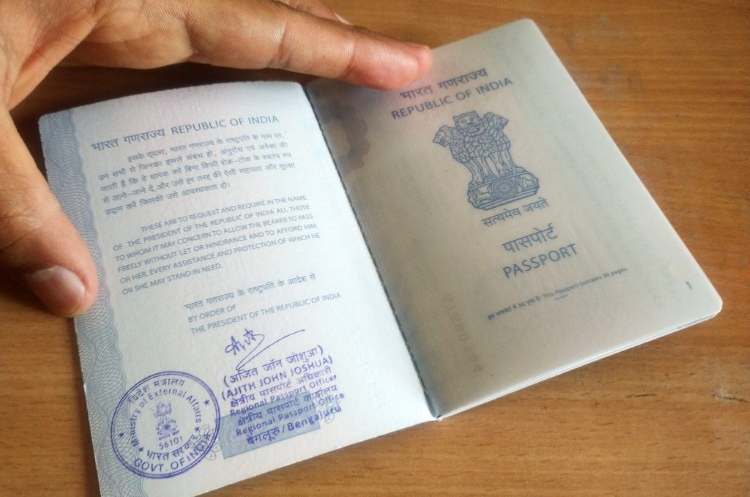
A passport is the most recognisable document the Indian state issues to its citizens. It carries the national emblem, is issued by a sovereign government, and allows its holder to cross international borders as an Indian national.
Yet, during the Special Intensive Revision (SIR) of electoral rolls, the Ministry of External Affairs clarified that an Indian passport should be understood primarily as a travel document rather than as conclusive proof of citizenship, a distinction that took on particular significance amid the SIR debate.
It is correctly established as a matter of law that a passport is not conclusive proof of citizenship. It is a travel document, issued under the Passports Act, 1967, a statute that itself permits passports to be issued to non-citizens in specified circumstances.
READ I The caste census debate is really about citizenship
Passport as proof of citizenship
If a passport does not settle the question, what should an ordinary citizen produce when the state asks whether he/she may vote? The question reaches well beyond documentation. It goes to the relationship between citizenship, evidence and democratic participation.
The Election Commission has framed the SIR as an exercise meant to ensure that no eligible citizen is left off the rolls while no ineligible person is included on them. It undertook the exercise under Article 324 of the Constitution and Section 21(3) of the Representation of the People Act, 1950.
On May 27, 2026, the Supreme Court, in Association for Democratic Reforms v. Election Commission of India, upheld the commission’s authority to conduct the Bihar SIR, holding that the exercise did not conflict with the Act or its rules and bore a direct and proportionate connection to the constitutional goal of free and fair elections.
At the same time, the court held that the commission’s power to assess citizenship is limited and prima facie in character. It cannot conclusively adjudicate citizenship, a determination that remains the exclusive preserve of the Citizenship Act, 1955, and the authorities constituted under it. This is not a minor qualification. It is the load-bearing distinction on which the legitimacy of the entire exercise depends.
Citizenship is a legal status
Indian citizenship is governed by the citizenship provisions of the Constitution and the Citizenship Act, 1955. It does not depend, in every context, on possession of any single document such as a passport, Aadhaar card, voter identity card or birth certificate.
The Supreme Court’s treatment of Aadhaar during the Bihar SIR litigation illustrates this distinction. In its orders of August and September 2025, the Court made clear that Aadhaar is not proof of citizenship, while directing the Election Commission to accept it as an additional identity document, the twelfth document, for the limited purpose of electoral-roll verification under Section 23(4) of the Representation of the People Act, 1950.
The distinction matters because different documents establish different facts and carry different evidentiary weight. The commission’s framework should therefore make clear what each document establishes and what combination of evidence is ultimately sufficient. The inclusion of passports among the accepted documents, despite the ministry’s public position that a passport is not conclusive proof of citizenship, illustrates the uncertainty that can arise when this distinction is left implicit.
Older authority also bears on the issue. In Lal Babu Hussein v. Electoral Registration Officer, (1995) 3 SCC 100, the Supreme Court held that existing inclusion in the electoral roll carries substantial probative value and that deletion on the ground of suspected non-citizenship requires notice and a meaningful opportunity to rebut the allegation.
In Association for Democratic Reforms v. Election Commission of India, 2026 INSC 564 (ADR), however, the court distinguished Lal Babu Hussein on its facts, holding that its observations arose in the context of periodically conducted intensive revisions and could not be extended to create an enduring presumption of eligibility for entries subsequently carried forward through summary revisions.
The delay in the ADR judgment meant that the SIR process continued for months while key questions about its scope, evidentiary requirements and safeguards remained unresolved. That uncertainty also had implications for West Bengal and other States where similar revisions are underway, since the judgment would ultimately shape the legal framework within which those exercises proceed.
Article 326 provides that elections to the Lok Sabha and the state legislative assemblies rest on adult suffrage, and that every citizen who has attained eighteen years of age and is not otherwise disqualified is entitled to be registered as a voter.
This creates a constitutional link between citizenship and electoral registration. It does not, however, specify that possession of any particular document is the constitutional test of citizenship. Section 16 of the RPA disqualifies non-citizens from registration, while Sections 19 and 23 regulate the conditions of registration and the correction of entries in the rolls. None of these provisions supplies the evidentiary hierarchy that an exercise of this scale and consequence requires.
Problem of arbitrary standards
The commission has a legitimate interest in ensuring that the rolls contain only eligible voters. But the manner in which evidence is assessed must also satisfy the basic constitutional requirement that administrative discretion not collapse into administrative uncertainty. Article 14 demands more than a formally available procedure; it requires State action to be non-arbitrary and reasonably structured.
The right to vote itself, as settled authority holds, is not a fundamental right under Article 19 but a constitutional and statutory right operating within the framework of Article 326 and the Representation of the People Acts. That does not place its regulation beyond constitutional scrutiny.
Since Maneka Gandhi v. Union of India, (1978) 1 SCC 248, the Court has read Articles 14 and 21 together to require fairness and reasonableness in State action affecting life and personal liberty. While Article 21 does not directly constitutionalise the adult franchise, the broader principle of non-arbitrariness under Article 14 remains applicable to the State’s administration of the electoral process.
Article 325 adds a further dimension. It mandates a single general electoral roll for every constituency and prohibits exclusion from that roll on grounds only of religion, race, caste or sex. The provision reflects a foundational constitutional commitment to a common electoral roll rather than separate rolls based on communal identity. A revision process that focuses on identifying doubtful entries must therefore also ensure adequate protection against the erroneous exclusion of eligible voters.
Amit Upadhyay and Abhinav Mehrotra are Associate Professors, Jindal Global Law School, O. P. Jindal Global University, Sonipat, Haryana. Originally published under Creative Commons by 360info
