


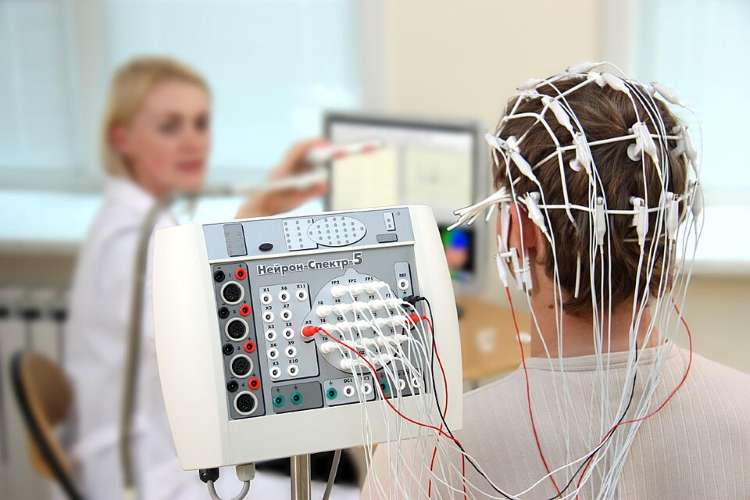
Natural EEG and health monitoring: Brain activity can now be recorded outside laboratories using wearable devices and smartphones, opening up the possibility of monitoring dwindling attention levels, fatigue and other mental states in everyday settings. For decades, the human brain has been studied only in laboratories and clinics. Electroencephalography or EEG, a method to record the brain’s spontaneous electrical activity, has been widely used to diagnose and monitor neurological conditions.
EEGs deliver millisecond-level precision and accurately capture internal brain dynamics in controlled environments such as laboratories or clinics via specialized tools. That trade-off shaped EEG as a scientific tool but also limited its role in everyday life.
That boundary is now beginning to blur.
READ I Artemis II opens a new frontier in public health
Attention fluctuates during lectures, fatigue accumulates during long workdays, and how we engage with the world rises and falls depending on context. Studying such states requires tools that move with people, rather than confining them to artificial environments.
Advances in wearable EEG hardware and mobile computing are enabling brain activity to be recorded beyond the laboratory, in classrooms, homes, workplaces and other natural settings. This transition, described as natural EEG, reflects a broader move towards real-time neuromonitoring where neural signals are tracked continuously and in context rather than analyzed offline after the fact.

Recent engineering advances suggest this shift is technically achievable. At its centre is a simple question: which aspects of EEG remain meaningful outside the lab? How can they be made usable in natural environments, such as monitoring changes in attention during lectures, fatigue during long work shifts, or drowsiness while driving?
Smartphones have unexpectedly enabled this shift. Modern phones combine computing power, storage, cameras, and wireless connectivity on a single device. CameraEEG, an Android-based application developed specifically for natural EEG experiments, demonstrates how mobile devices can synchronously record brain activity alongside a video of the surrounding environment.
By capturing both EEG and visual context, such systems make it possible to study how natural stimuli relate to brain responses in real-world conditions rather than artificial experimental ones. This is a practical step toward studying cognition as it naturally occurs.
The artifact problem in natural EEG
However, recording EEG outside the lab introduces substantial challenges.
The most immediate obstacle is noise. In natural environments, EEG signals are heavily contaminated by eye blinks or movements, muscle activity, body motion, and environmental interference: basically any non-neural activity, known as artifact, that gets detected in EEG recording, thus reducing their accuracy. This becomes especially severe in mobile, wearable low-density, single-channel systems, meaning devices using a small number of electrodes rather than the hundreds found in hospital-based EEG.
Cleaning this contamination to ensure accurate EEG data is known as artifact suppression or removal. Many traditional artifact-removal techniques were originally designed for high-density clinical EEG. The availability of only a few sensor electrodes makes separating neural activity from noise much harder, and these methods often fail.
However, recent peer-reviewed work shows cleaning noisy EEG is possible even with a single sensor. Researchers have adapted techniques originally developed for large, multi-channel clinical systems to function reliably on mobile devices with just one channel. These newer approaches demonstrate that meaningful brain activity can be separated from noise, even under severe hardware constraints.
Addressing the problem of artifacts is a foundational requirement for natural EEG. Progress in this area demonstrates that natural EEG recordings need not be dominated by noise alone, even under severe hardware constraints.
Bridging clinical and consumer EEG
A second challenge lies in translating EEG algorithms from clinical settings to wearable devices. Most EEG algorithms are trained on high-quality, multi-channel recordings collected under controlled conditions. Consumer and wearable devices, by contrast, use fewer electrodes, have different sensor layouts, and typically produce noisier, lower-quality signal recordings. Treating these two systems as directly comparable often leads to brittle models and unreliable performance.
One way to bridge this gap is through projection-based transfer learning. Instead of trying to make wearable EEG identical to hospital recordings, this approach focuses on extracting patterns that matter for a specific task or scenario and comparing those patterns across devices. This way, models trained on high-quality clinical data can still guide predictions on consumer-grade EEG, without assuming the raw signals are the same across both. Recent studies have applied this strategy to dual-channel EEG, demonstrating its usefulness in fatigue detection and motor rehabilitation.
Further deployment of such models on smartphones introduces additional constraints, including limited computational resources, power consumption, and the need for real-time operation. Recent studies have shown these challenges are manageable. Studies using EEG to detect whether a person’s eyes are open or closed have shown that pre-trained EEG models can be successfully deployed on Android smartphones, operating reliably under mobile conditions.
Together with applications such as CameraEEG, these efforts illustrate that projection-based models can move beyond offline analysis and into on-device, real-time natural EEG systems.
From validation to early application
The authors tested natural EEG systems to verify their feasibility. One such example is laboratory-based drowsiness detection, where video-based indicators of fatigue are combined with simultaneous EEG recording. While video alone is already well-established for drowsiness detection, the EEG provides a complementary internal measure of cognitive state. These findings demonstrate that EEG can capture meaningful information relevant to real-world tasks, even as recording conditions move closer to natural use.
Researchers are now using natural EEG systems to understand how the brain responds to everyday experiences, such as listening to music. The CameraEEG app was used to study brain activity while participants listened to Indian classical music, integrating EEG recordings with video captured during live listening conditions. The results suggest that EEG can detect meaningful shifts in brain activity during passive listening, highlighting EEG’s potential for investigating music perception and supporting therapeutic applications.
At present, these systems remain research prototypes. Their importance lies in demonstrating feasibility of EEG-based internal state monitoring and defining realistic boundaries.
EEG as an internal monitoring signal
Natural EEG has implications for both people with neurological or cognitive disorders and healthy individuals. Natural EEG can support long-term monitoring outside hospital environments, providing contextual information about daily functioning that complements clinical assessments rather than replacing them. For healthy individuals, the same technologies offer a way to track internal states such as fatigue, workload or attention during routine activities.
These developments point to a shift in how EEG is used. Rather than functioning primarily as a diagnostic instrument or direct control interface, EEG may be most effective as an internal monitoring signal, a way to observe cognitive and affective states over time. Such monitoring does not require precise decoding of thoughts or intentions. Instead, it relies on relative changes in brain activity within the same individual that reflect cognitive states such as engagement, mental workload and fatigue.
This perspective aligns with a growing interest in self-regulation and mental awareness, while grounding these ideas in signal processing and machine learning rather than subjective interpretation alone.
Safeguards and the path forward
As EEG moves closer to everyday use, safeguards become essential. Responsible systems must avoid diagnostic claims outside the scope of the modality, minimize data retention, and ensure that sensitive signals, particularly video, are handled with care. Wherever possible, processing should occur locally on-device, with user control over data and clear limits on interpretation to prevent misuse.
Natural EEG is still in transition, from laboratory science to real-world technology. But the foundations are now in place. The methods are established, the limitations understood. The remaining challenge lies in engineering robust, unobtrusive systems. Interactive domains such as gaming and adaptive interfaces may offer practical entry points, as they naturally accommodate experimentation and state-dependent adaptation.
The question is no longer whether brain signals can be recorded outside the lab, but how thoughtfully they can be integrated into daily life to genuinely support human well-being.
Vishnu KN is a doctoral researcher at the Neural Engineering Lab, Department of Biosciences and Bioengineering (BSBE), Indian Institute of Technology Guwahati, focusing on deep learning methods for EEG classification and cross-device translation. Doli Hazarika is a doctoral researcher at the Neural Engineering Lab, Department of Biosciences and Bioengineering (BSBE), Indian Institute of Technology Guwahati, specializing in artifact removal and real-time signal processing for wearable EEG systems. Cota Navin Gupta is an Assistant Professor, Department of Biosciences and Bioengineering, Indian Institute of Technology Guwahati, where he leads the Neural Engineering Lab. Originally published under Creative Commons by 360info
