



India launched the National Quantum Mission in April 2023 with large promises: quantum computers of 50-1,000 qubits within eight years, a 2,000-km quantum communication network, and a place for India among the leading quantum technology nations. The Cabinet approved ₹6,003.65 crore for the mission over eight years. On paper, this looked like a serious commitment to a frontier technology.
The first year of National Quantum Mission tells a less convincing story. In FY 2024-25, the National Quantum Mission received an allocation of only ₹86 crore. Of this, ₹43.07 crore was disbursed and ₹32.77 crore was utilised. That means 38% utilisation of the allocation and barely 0.5% of the total approved mission outlay.
The mismatch is not a technical detail. It goes to the heart of India’s quantum strategy. A mission designed to build sovereign capability in quantum computing, communication, sensing and materials cannot operate on token annual allocations and still claim strategic seriousness.
READ I UPI MDR debate: Why free payments need a cost model
National Quantum Mission funding gap
The FY 2024-25 allocation of ₹86 crore is about 1.4% of the National Quantum Mission’s implied annual average requirement over eight years. At this pace, the mission would receive only ₹688 crore across its full duration, less than 12% of the approved ₹6,003.65 crore.
That gap matters because quantum technology is capital-intensive. It needs specialised equipment, cleanroom facilities, cryogenic systems, precision fabrication, and long-cycle research teams. These are not expenses that can be switched on and off through routine annual budgeting.
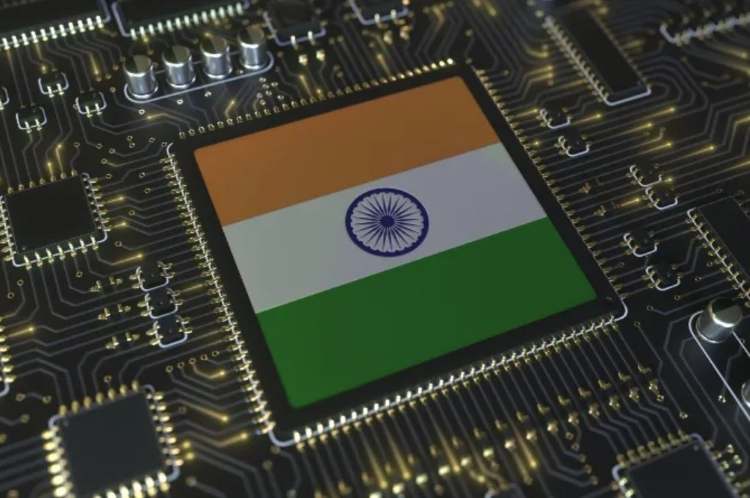

The problem becomes clearer when India’s allocation is placed against global spending. China has invested heavily in quantum research infrastructure. The United States has backed quantum and semiconductor research through large federal programmes. The European Union’s Quantum Flagship is a billion-euro effort. India’s first-year allocation of ₹86 crore, roughly $10.3 million, would struggle to support even one globally competitive quantum computing facility.
This is not an argument for matching China or the United States rupee for dollar. It is an argument for recognising scale. A country cannot announce global quantum ambitions and fund them like a small research scheme.
READ I Fiscal Health Index: When rankings hide weak states
Quantum technology and utilisation problem
The more worrying number is not just the allocation. It is utilisation. The National Quantum Mission used ₹32.77 crore out of ₹43.07 crore disbursed. That is 76% utilisation within an already small disbursement.
Under-utilisation in a mission of this kind should not be dismissed as bureaucratic delay. It points to deeper constraints. Quantum research needs procurement systems that understand scientific equipment. It needs laboratories that can absorb funds quickly. It needs trained personnel, industry partners, and academic institutions capable of executing long-horizon projects.


A conventional annual budget cycle is poorly suited to this task. Quantum infrastructure takes years to design, procure, install, test and stabilise. If funds arrive late, are uncertain, or are routed through fragmented institutions, utilisation will remain weak. The result is a familiar Indian policy problem: ambitious targets, modest funding, slow execution, and then a debate over why the mission failed to deliver.
The National Quantum Mission cannot be judged only by expenditure. But expenditure is a useful signal. A frontier technology programme that neither receives adequate money nor absorbs what it receives is not yet institutionally ready for the goals it has set.
READ I India technology spending slowdown is less worrying than it looks
India’s quantum sovereignty challenge
Quantum technology is not another laboratory programme. It sits at the intersection of computing, communications, cybersecurity, defence, materials science and industrial competitiveness. Countries that move early will build patents, supply chains, standards, and talent clusters. Late entrants may end up dependent on imported hardware, foreign cloud access, and externally defined protocols.
That is the sovereignty risk. India has seen this pattern before in semiconductors, telecom equipment, operating systems and critical manufacturing technologies. The cost of delayed investment is not merely higher import dependence. It is loss of bargaining power in future technology regimes.
The National Quantum Mission was meant to prevent that outcome. But sovereignty cannot be secured through announcements. It needs institutions that can fund research consistently, build infrastructure, attract talent, and connect laboratories to industry.
Quantum budgeting needs certainty
India needs to treat quantum technology as strategic infrastructure, not as a discretionary research line. That requires multi-year allocation certainty. Quantum projects need five- to ten-year planning horizons. Annual budget uncertainty forces laboratories to delay procurement, avoid long commitments, and pursue modest goals.
A dedicated funding stream with credible annual releases would help. So would clearer milestones for each technology vertical: computing, communication, sensing and materials. The mission must also distinguish between early-stage research, infrastructure creation, and commercialisation. Each requires different timelines and different risk tolerance.
The present approach risks the worst of both worlds. India may not spend enough to compete globally, yet may spend enough to create the appearance of a national mission. That would weaken accountability without building capability.
India’s choice is straightforward. It can either commit resources adequate to its quantum ambitions or accept a future of dependence in critical quantum domains. The current model, built on ambitious targets and constrained funding, is unlikely to deliver either leadership or efficient utilisation.
Quantum computing may still be years away from large-scale commercial use. But the countries that dominate it will not be those that waited for certainty. They will be those that invested early, built institutions, and accepted the long gestation of frontier science. India has announced the right mission. It now has to fund it like one.
Sagari Gupta is a public policy researcher and writer with more than eight years of experience. She had stints at NCAER and the Ministry of Consumer Affairs.