


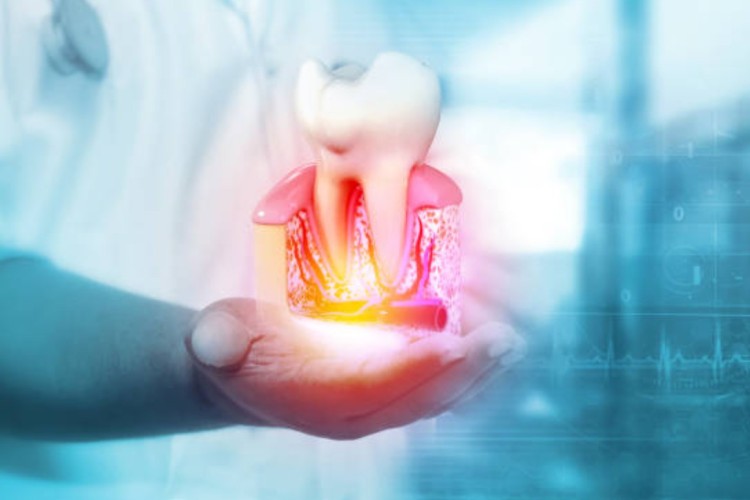
The newly constituted National Dental Commission of India faces both an institutional test and a public health opportunity. It can clean up dental regulation after years of drift under the Dental Council of India. But that will not be enough. Its larger challenge is to shift dentistry from a narrow professional silo into the architecture of primary care.
The Union government notified the National Dental Commission and its three autonomous boards on March 19, 2026, bringing the National Dental Commission Act, 2023 into force and repealing the Dentists Act, 1948. The old Dental Council of India has been dissolved. That is not a routine administrative change. It is an attempt to replace an elected and inward-looking regulatory structure with one that is meant to be more transparent, standard-driven, and publicly accountable.
READ | Healthcare real estate is driving costs, access, priorities
That correction was overdue. India’s dental regulation had fallen behind the demands of a modern health system. Dental education remained uneven. Quality assurance was weak. Access to care was skewed towards cities and private practice. Public health goals barely shaped the profession.
Why oral health is a primary care issue
The case for reform does not rest only on governance. It rests on the place of oral health in public health.
Oral diseases remain among the world’s most widespread health conditions. Untreated dental caries, periodontal disease, and oral cancers impose chronic pain, disability, and loss of function. In poorer settings, they also go untreated for long periods, raising both health and financial costs.
Yet oral health is still treated as if it sits outside the core health system. That is a mistake. Poor oral health is linked to diabetes, cardiovascular disease, adverse pregnancy outcomes, respiratory infections, nutrition, and speech. Dental problems are often early markers of wider health risks. The mouth is not peripheral to health. It is one of the first places where broader disease burdens show up.
That is why dental care should be treated as primary care. First-contact, preventive, community-based oral health services can reduce downstream costs, widen access, and improve early detection. School screening, oral cancer checks, diet counselling, tobacco control, and basic restorative services belong closer to the community than to specialised urban practice.
READ | Universal health coverage begins with prevention, not insurance
National Dental Commission and education reform
The new commission has been given the legal basis to do what the old system could not do well. It can frame regulations, assess institutions, evaluate workforce requirements, promote research, set standards for ethics and community care, and issue fee-guidance principles for private dental colleges.
More important, it can reorient dental education.
India does not need only more dentists. It needs dentists trained for population needs. That means greater emphasis on prevention, early diagnosis, basic restorative care, rural service, public health practice, and collaboration with primary-care teams. The Undergraduate and Postgraduate Dental Education Board, along with the Dental Assessment and Rating Board, can help push training away from a narrow clinic-and-procedure model towards a broader community-health role.
That shift matters because India’s dental workforce remains urban-centric. The burden of disease does not. If training, accreditation, and incentives remain detached from where need is greatest, the new commission will merely regulate the old imbalance more efficiently.
Affordable dental care and health equity
The commission has also been tasked with improving access to affordable dental care, especially in underserved regions. That objective should not be treated as a rhetorical add-on. It is central to whether this reform succeeds.
Oral disease follows social gradients. Income, education, housing, food insecurity, and geography shape both exposure and treatment. Rural residents, poor households, children in deprived settings, and persons with disabilities face higher barriers to care and worse outcomes. Oral health inequality is therefore not a side issue. It is a direct measure of health-system inequality.
For that reason, dental reform cannot be confined to professional regulation. It has to connect with public policy on nutrition, tobacco, primary healthcare delivery, school health, and universal health coverage. A system that waits for patients to reach private clinics after disease has advanced is neither efficient nor equitable.
Basic dental services should be included within broader primary-care frameworks. That means screening, prevention, referral pathways, oral health promotion, and routine linkage with non-communicable disease programmes. A common risk-factor approach already exists in principle. Poor diet, tobacco use, alcohol consumption, and stress drive both oral disease and other non-communicable diseases. Policy should respond accordingly.
Integrating dental care into primary healthcare
The obstacle is not a lack of evidence. It is the structure of the system.
Oral health has long been kept apart from mainstream health financing. Dental care is often treated as a separate benefit, outside universal packages and public-health priorities. Medical and dental training are separated. Referral systems are weak. Electronic records are not integrated. Rural shortages persist. Scope-of-practice rules are often rigid. Public expectations also reinforce separation, with dental care seen as something apart from ordinary healthcare.
READ | India’s global health opportunity amid US withdrawal
These barriers are administrative, financial, and professional. They are also political. The division between medicine and dentistry has helped keep oral health outside the distributive logic of public health. When that happens, prevention weakens and private expenditure rises.
The National Dental Commission cannot solve all of this on its own. But it can change the terms of the debate. It can set standards for community dental care. It can build a national register. It can align curricula with preventive and primary-care roles. It can push institutions to value public service rather than only specialised procedure-based training.
The National Dental Commission’s real test
The commission’s real test will not be whether it produces more regulations than its predecessor. It will be whether it changes what the system considers important.
If the reform results only in cleaner administration, better ratings, and more standardised admissions, it will still have achieved something. But the larger opportunity will have been missed. India does not need a better supervised version of the same dental order. It needs oral health to be recognised as part of the first line of care.
That would mean treating dental care not as a cosmetic or optional service, but as a core health entitlement linked to equity, prevention, and public health outcomes. It would mean shifting attention from elite institutions and urban practice towards community care, school screening, rural outreach, and early intervention. It would also mean judging the new commission not merely by institutional compliance, but by whether affordable oral healthcare reaches those who have long been left out.
The National Dental Commission begins with strong legal authority and a rare reform moment. It should use both to bring dentistry closer to where public health begins.