


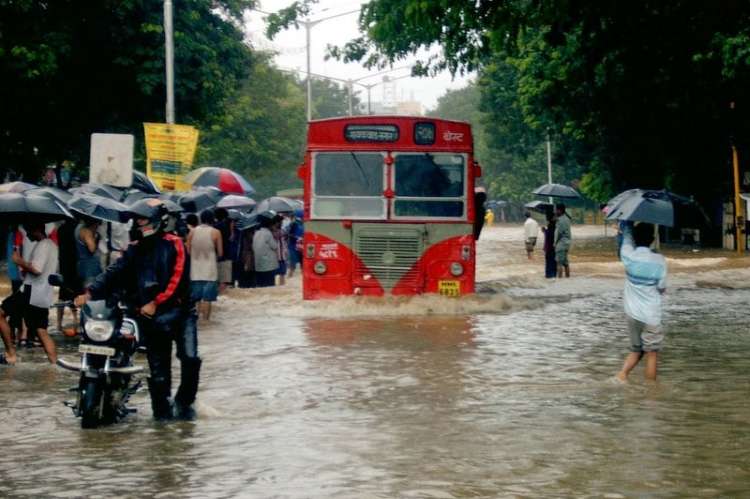
In the first week of July, in Mumbai’s Mankhurd, torrential monsoon rains triggered a building collapse that buried five children beneath the debris, transforming one of the city’s wettest July days in half a century into a humanitarian tragedy. Streets disappeared beneath floodwaters, transport networks ground to a halt, and emergency services struggled to reach stranded residents.
Thousands of kilometres away, London faced an entirely different manifestation of the same crisis. During the June 2026 heatwave, temperatures exceeded 36°C, commuters fainted inside sweltering Underground trains, and climate activists covered Tube stations with stickers reading, ‘Heatwave, sponsored by Shell’, highlighting the perceived role of fossil fuels in intensifying global warming.
These events unfolded in vastly different economic and geographic settings. Yet they reflected a common reality: climate change no longer distinguishes between developed and developing nations. Whether through floods, heatwaves, landslides or dust storms, extreme weather is increasingly becoming the defining challenge of the twenty-first century.
READ I Mega Science Vision 2035 puts climate research to work
Climate change warning signs
The scientific evidence underpinning this reality has become overwhelming. The World Meteorological Organization (WMO) reported in 2023 that the global mean near-surface temperature in 2023 was 1.45 ± 0.12°C above the pre-industrial average, bringing the world dangerously close to the 1.5°C threshold established under the Paris Agreement.
At the same time, atmospheric concentrations of the three principal greenhouse gases reached unprecedented levels. Carbon dioxide stood at approximately 150 percent of pre-industrial concentrations, methane at 264 percent, and nitrous oxide at 124 percent. These figures represent not merely statistical milestones but indicators of an accelerating climate system that is storing increasing amounts of energy.
The consequences became starkly visible across Europe during the summer of 2026. More than 3,700 deaths were associated with the June heatwave in France, Belgium and the Netherlands. Mortality within homes increased by an estimated 91 percent during the final week of June as prolonged high night-time temperatures prevented buildings from cooling.
Spain recorded temperatures of 43.7°C, the Czech Republic reached 41.9°C, while Germany experienced 41.7°C. In several locations, overnight temperatures remained above 29°C, marking some of the warmest nights recorded in over a century.
The impacts extended well beyond public health. Belgium experienced unprecedented electricity price spikes as air-conditioning demand surged during the evening peak. Outdoor cultural events, including the historic Battle of Waterloo reenactment, were cancelled because of dangerous heat conditions. Public transport systems, particularly in older European cities designed for temperate climates rather than prolonged heatwaves, struggled to function safely.
READ I India’s climate ambition is outrunning state capacity
Heat dome effect
Meteorologists partly attributed these conditions to an Omega blocking pattern, commonly known as a heat dome. Under this phenomenon, a persistent high-pressure ridge becomes trapped between two low-pressure systems, resembling the Greek letter Omega (Ω).
The resulting atmospheric “traffic jam” prevents weather systems from moving normally, allowing hot air to accumulate over the same region for days or even weeks. While Omega blocks are natural atmospheric phenomena, climate change significantly increases the baseline temperatures upon which they operate, making heatwaves both hotter and longer. Europe is warming at roughly twice the global average, amplifying these risks further.
India presents a parallel but more complex picture. Rather than experiencing only heat, the country increasingly confronts multiple climate extremes simultaneously. In Kerala’s Wayanad district, heavy rainfall triggered landslides near Meenakshi Bridge, claiming lives, injuring several others and destroying homes. Rainfall over twenty-four hours reached nearly ten times the average daily rainfall normally expected during July.
Maharashtra witnessed similar devastation. Landslides destroyed homes in Ratnagiri, disrupted traffic along the Mumbai-Pune Expressway near Khandala, and contributed to at least 13 fatalities over a three-day period. Waterlogging paralysed Western Railway services, while several flights into Mumbai were diverted because of severe weather.
Ironically, these local disasters occurred during a season when India simultaneously recorded an overall 38 percent deficit in monsoon rainfall. Instead of consistent seasonal rainfall, the country experienced highly uneven precipitation, with some districts receiving 600 to 1,700 percent of their normal rainfall through intense cloudburst events. More than 94,000 people across hundreds of villages were affected by floods and landslides.
READ I Cooling infrastructure must be India’s next climate priority
Erratic monsoon patterns a concern
This growing contrast illustrates one of climate science’s most important observations: climate change increases variability as much as it changes averages. Monsoon rain no longer falls where or when it traditionally did. Instead, prolonged dry spells are increasingly interrupted by brief episodes of exceptionally intense rainfall that overwhelm drainage systems, trigger flash floods and destabilise mountain slopes.
Another striking example occurred on May 30, when western Rajasthan experienced an extraordinary sequence of extreme weather events. A powerful dust storm swept across Bikaner and neighbouring districts, turning the sky orange-brown, reducing visibility almost to zero, uprooting trees, damaging buildings and disrupting electricity supplies. Wind speeds reached 70-80 kilometres per hour before heavy monsoon rainfall followed.
Although western disturbances provided the immediate meteorological trigger, the sequence itself reflected a broader climate pattern. Extreme heat dried soils and increased dust availability. Strong winds lifted enormous quantities of loose sediment into the atmosphere before unstable weather systems produced sudden rainfall. Rather than isolated incidents, heatwaves, dust storms and intense monsoon rainfall increasingly occur as interconnected components of cascading climate events.
An equally important contributor to India’s climate uncertainty is the growing influence of El Niño. This naturally occurring warming of the equatorial Pacific Ocean alters atmospheric circulation patterns across much of the world. In India, El Niño often weakens the southwest monsoon, increasing drought risks in some regions while simultaneously enhancing atmospheric instability capable of producing intense localised cloudbursts elsewhere.
Scientists have warned that particularly strong El Niño episodes may rival some of the most severe historical events, dramatically increasing agricultural, water and food security risks. Although El Niño is a natural climate oscillation, its interaction with long-term global warming creates increasingly unpredictable outcomes. Human-induced climate change effectively raises the baseline upon which natural variability operates, making both droughts and floods more severe.
This apparent contradiction reflects a broader climate principle frequently summarised as “Wet Gets Wetter, Dry Gets Drier.” As global temperatures rise, evaporation increases, allowing the atmosphere to retain substantially more water vapour. Regions already prone to heavy rainfall often receive even more intense precipitation, while dry regions experience greater evaporation and prolonged drought. The hydrological cycle becomes faster, stronger and more erratic.
India increasingly embodies this paradox. National rainfall deficits coexist with devastating floods. Agricultural drought occurs alongside urban inundation. Reservoirs run low in one region while neighbouring districts confront catastrophic flooding. Climate change is not simply producing more rainfall or less rainfall; it is fundamentally redistributing water in increasingly unpredictable ways.
Beyond meteorological explanations lies the deeper question of vulnerability. Climate disasters rarely affect everyone equally. Poor households living in informal settlements, farmers dependent upon rain-fed agriculture, elderly citizens lacking access to cooling, and workers employed outdoors bear a disproportionate share of climate risks. A collapsed building in Mumbai, a flooded Himalayan village, or an overheated apartment in Europe each reveals how social inequality magnifies environmental hazards.
The economic costs are equally profound. Damage to transport infrastructure, agriculture, energy systems and public health increasingly strains government budgets. Insurance losses continue to rise, while repeated climate shocks discourage investment and deepen existing inequalities. Developing countries face the added challenge of financing adaptation while simultaneously pursuing economic growth.
Scientific advances have greatly improved weather forecasting, seasonal outlooks and disaster early-warning systems. Yet prediction alone cannot eliminate vulnerability.
Governments must invest in climate-resilient infrastructure, strengthen urban drainage, modernise building standards, expand heat action plans, protect wetlands and forests, and improve emergency response capabilities. Climate adaptation can no longer remain a secondary policy objective; it must become central to national development planning.
At the international level, the challenge demands greater cooperation on emissions reductions, climate finance, technology transfer and disaster preparedness. Climate change is reshaping economies, public health, infrastructure and national security in real time.
The scientific debate over whether climate change is occurring has long been settled. The pressing question today is whether governments, institutions and societies can respond with the urgency that an increasingly volatile planet demands.
Abhiroop Chowdhury is Professor and Dean, Jindal Global School of Environment and Sustainability, O.P. Jindal Global University in Sonipat, Haryana. Originally published under Creative Commons.