



Migration policy reform: India’s emigration regime still rests largely on the Emigration Act, 1983, a law framed for a different economic era. The Act requires Indian nationals seeking overseas employment to obtain emigration clearance from one of ten offices of the Protector of Emigrants, unless they fall into exempt categories. In practice, this applies mainly to workers classified as Emigration Check Required—typically those with lower educational qualifications or those travelling to select countries. The intent was protection. The outcome, four decades later, is a system that is cumbersome, unevenly enforced, and poorly aligned with today’s labour markets.
India’s demographic and economic profile has changed dramatically since 1983. The country now seeks to position labour mobility as an asset – exporting skills, earning remittances, and supporting global supply chains. Yet its legal and institutional architecture for migration remains fragmented, reactive, and tilted towards control rather than facilitation.
READ I New migration survey can fix policy blind spots
Port clearances to recruiter regulation
India has long regulated emigration, but the approach has evolved unevenly. The Emigration Act, 1952 prohibited the emigration of unskilled workers while allowing skilled workers to travel abroad after clearance by Protectors of Emigrants at ports of embarkation. Until the mid-1960s, overseas employment was almost entirely sea-based. Only in February 1964 were airports in Bombay, Calcutta, Delhi, and Madras formally notified as ports for skilled emigration.

The 1983 Act marked a shift in emphasis. It introduced mandatory registration of recruiting agents, standardised employment contracts, and greater scrutiny of labour flows to vulnerable destinations, particularly in West Asia. These provisions helped curb some abuses. But they also entrenched a compliance-heavy model that treats migrants primarily as risks to be managed, not workers to be enabled.
Four decades on, recruitment channels have diversified, informal brokers remain active, and digital hiring has reduced the relevance of physical clearance offices. The regulatory framework has not kept pace.
READ I Distress migration: Need to focus on mental health
Migration policy without a strategy
India is now attempting to consolidate migration policy through the Immigration and Foreigners Act, 2025, which replaces a patchwork of older laws to strengthen monitoring, security, and penalties for violations. This may improve border management and enforcement against fraud. It does not, however, amount to a migration strategy.
Outbound labour migration continues to be overseen by the India Centre for Migration (ICM) under the Ministry of External Affairs, with grievance redress through portals such as MADAD and Samadhan. Training programmes for migrant workers and officials have expanded. These are useful administrative tools. What is missing is a clear national framework that links overseas migration, skill certification, bilateral labour agreements, and worker protection into a single policy logic.
Internal migration is treated even more diffusely. Schemes such as One Nation One Ration Card, PMAY, and Affordable Rental Housing Complexes help mobile workers at the margins. They do not substitute for a coherent internal migration policy anchored in labour rights and social security portability.
READ I Skilled migration threatens to derail Viksit Bharat dream
Exporting labour in a closed-citizenship world
India is now the world’s largest source of international migrants. Official estimates put the global Indian diaspora at 35.4 million, comprising 15.8 million Indian citizens (NRIs) and 19.6 million persons of Indian origin (PIOs). Advanced economies face ageing populations and labour shortages, but remain reluctant to offer political or citizenship rights. This is most evident in the Gulf Cooperation Council (GCC) countries and Singapore, where long-term migrant workers exist without political identity.

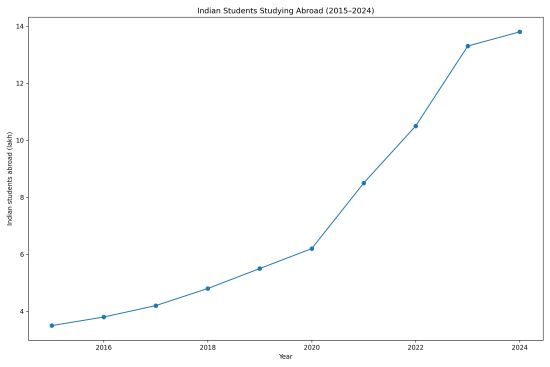
The risks are growing. In 2025 alone, 3,258 Indian nationals were deported by the United States, the highest annual figure since 2009. Student migration has also surged. India is now the largest source of international students to the US, Canada, the UK, Australia, and Germany. Around 13.35 lakh Indian students were studying abroad in 2023, a figure projected to rise to 13.8 lakh in 2025. This migration is largely self-financed, driven by middle-class households betting on global degrees and upward mobility. The financial and emotional exposure is substantial, but policy oversight remains minimal.
Internal migration: The neglected fault line
While external migration attracts attention, internal migration remains India’s most acute policy failure. Movement across states and cities is essential for efficient labour allocation and economic growth. Migrants bring skills, ideas, and resilience. Yet the legal framework to protect them is weak.
The Inter-State Migrant Workmen Act, 1979 exists largely on paper. Enforcement is poor, registrations are incomplete, and employer accountability is weak. Social security portability—covering housing, healthcare, education, and pensions—remains patchy despite Aadhaar-based identification. Access to basic services often depends on local residency, excluding migrants by design.
The costs are visible. Unplanned urbanisation has produced overcrowded settlements, environmental stress, and social friction. Migrants face job insecurity, discrimination, and limited access to public services. India’s migration framework is not failing because people move. It is failing because institutions have not adapted to mobility.
Remittances mask policy gaps
Migration continues because the economic incentives are overwhelming. Push factors such as low rural incomes and job scarcity combine with pull factors like higher wages, better education, and skill formation. According to the International Organisation for Migration, India-to-US, India-to-UAE, and India-to-Saudi Arabia corridors rank among the world’s largest. Men account for about 65% of India’s external migrants.
Remittances have been a macroeconomic cushion. India has remained the world’s largest recipient for over a decade. In 2024-25, remittance inflows crossed $135 billion, well above $100 billion for the third consecutive year, strengthening the balance of payments and supporting household consumption.
Global frameworks such as the World Trade Organisation’s General Agreement on Trade in Services (GATS) offer only broad principles. In practice, bilateral labour agreements matter far more. India has signed several, but coverage remains uneven and enforcement weak.
Need a migration policy built around workers
India’s migration challenge is not excessive movement. It is inadequate governance. A credible national migration policy must integrate internal and external mobility, align skill certification with overseas demand, and ensure full portability of social security for domestic migrants. Less-skilled and less-educated workers—who are least familiar with rules and most vulnerable to exploitation—require the strongest institutional support.
Control-oriented laws from the 1980s cannot manage 21st-century labour markets. India’s demographic dividend will pay off only if mobility is treated as an economic enabler, not an administrative inconvenience. Migration policy must shift from gatekeeping to worker protection, from fragmented schemes to enforceable rights. The cost of delay is borne not by institutions, but by millions who move in search of work.