


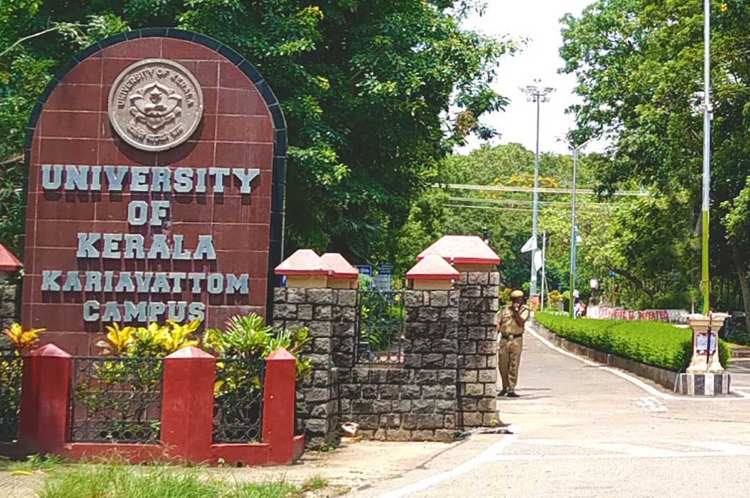
Kerala universities need academic autonomy: Kerala’s state universities present a paradox. The University of Kerala ranked fifth among state public universities in the 2025 National Institutional Ranking Framework, and Cochin University of Science and Technology ranked sixth. However, a prolonged dispute between the Governor, acting as Chancellor, and the state government has made it hard to appoint permanent vice-chancellors.
The United Democratic Front government’s University Laws Amendment Bill, due to come before the Assembly in the session beginning November 30, would give the Syndicate the Senate’s place in selecting the university’s nominee to search committees at four universities. The change could increase the government’s influence over appointments. It leaves open the larger question of how much say universities should have in their own affairs.
The word university once described a community of masters and scholars who held rights in common. The idea still has practical force. A university teaches people to think for themselves, creates knowledge through research and gives its members the freedom to question received ideas. Students help create that knowledge through their questions, theses and fieldwork. They also have a place in the institution’s government. A university that silences its students, or turns them into party cadres, loses one of its main sources of criticism.


Kerala has made affordable higher education available to students who might otherwise have had little chance of attending university. It has also built pockets of serious research, including in polymer science at Mahatma Gandhi University. These achievements can coexist with trouble elsewhere in the system. At government-aided colleges affiliated with the University of Kerala, vacant undergraduate seats rose from 899 in 2019 to 4,481 in 2025. Those figures cannot tell us why students chose other options. They do give the university reason to examine what it offers and how well it serves the students it was built for.
READ I India’s higher education reforms: Turning access into opportunity
Limits of a single health sciences university
Some of the constraints on academic judgment were written into law. Kerala created the Kerala University of Health Sciences (KUHS) to bring uniformity to medical and allied education. Common standards for professional training are a legitimate aim. Section 74 of the KUHS Act went further. Subject to specified exceptions, a college teaching health and allied sciences needs KUHS’s consent and the state government’s sanction to associate with another university. The law also transferred existing affiliations from several multidisciplinary universities to KUHS.
The cost is clearest in public health. Kerala’s 2026–27 Master of Public Health admissions prospectus accepts graduates in veterinary science as well as those in medicine and several allied fields. A degree in economics, sociology or law does not on its own qualify an applicant. Yet economists can help explain how food prices affect diets, sociologists can study why some communities are harder for health workers to reach, and lawyers can assess what local authorities can do about unsafe housing or water. Kerala’s own health achievements owed much to women’s education, public food distribution and strong local government. Its multidisciplinary universities should be free to build public health programmes around that experience.
READ I Emotional intelligence: The missing link in India’s education system
Prevention needs a career service
The weakness in public health education has a counterpart in administration. The Kerala Public Health Act of 2023 provides for committees and officers at state, district and local levels. It makes the Director of Health Services the State Public Health Officer. Tamil Nadu gives prevention a separate Directorate of Public Health and Preventive Medicine. Kerala should establish a dedicated directorate and a career cadre, with scope for recruits trained outside clinical medicine. In December 2025, the Union health ministry was reported to have urged Kerala to speed up work on such a cadre.
A separate directorate would give year-round surveillance and prevention a permanent administrative home. It would also give universities a reason to train people for that work. The test would come between outbreaks, when health officers still need to work with local governments on mosquito control, sanitation and safe water, even as hospitals make more immediate demands on the health budget.
READ I Higher education reforms need to put teachers first
Kerala universities can do without uncertainties
At Sree Sankaracharya University of Sanskrit in Kalady, the Syndicate reportedly decided to treat as a special case the result of a student who had failed his Bachelor of Fine Arts course in 2005 and subsequently completed a master’s programme. In March 2026, Governor Rajendra Vishwanath Arlekar removed the interim Vice-Chancellor, K.K. Geethakumary, and gave Ciza Thomas additional charge. The Raj Bhavan notification gave no reason for the removal. The academic question raised by the case stands on its own. A university should be able to show which regulation permits an exception to its degree requirements and whether it would apply the same rule to any student in those circumstances.
The CPI(M)-led government bears responsibility for its part in weakening those safeguards. In 2023, the Supreme Court set aside Gopinath Ravindran’s reappointment as Vice-Chancellor of Kannur University, finding that the state government had intervened improperly and that the Chancellor had failed to exercise independent judgment.
Responsibility for protecting students rests with the institutions themselves. After veterinary student J.S. Sidharthan died in 2024, the CBI charged 19 students and alleged that he had been subjected to repeated assault and humiliation. The university subsequently expelled 19 students. A university’s duty begins when a student is still in a position to ask for help.
The Kerala Universities bill gives legislators a chance to require vice-chancellor search committees to publish their selection criteria, disclose conflicts of interest and record the reasons for their recommendations. The rules should bind the government and the Chancellor alike. A university community should be able to see how its next vice-chancellor was chosen, whichever coalition is in office.