


India’s energy security: Coal, oil and natural gas have dominated the modern energy economy for more than a century. Coal powered the first phase of industrial expansion. Oil then displaced it at the centre of the global system because it was easier to move, refine and use across transport, industry and warfare. Natural gas expanded later, especially in power generation and fertiliser production. Even after decades of climate diplomacy and clean-energy investment, fossil fuels still account for more than four-fifths of global primary energy demand. Oil remains central to transport and to the wider functioning of the world economy.
Petroleum is more than a fuel. It is a strategic commodity, a fiscal resource, and an instrument of power. Crude oil is a naturally occurring hydrocarbon mixture formed over millions of years from organic matter buried under sediment. Once refined, it yields petrol, diesel, jet fuel, kerosene, lubricants, bitumen and feedstocks for petrochemicals. Its economic significance lies not only in its range of uses but in its energy density, storability and transportability. That is why oil has remained difficult to replace at scale, despite rapid technological change.
READ | US superpower status will be diminished by any Iran exit
Petroleum power and the geopolitics of oil
The geography of petroleum shaped global politics long before the climate transition began. The modern oil industry emerged in the 19th century, but its strategic value became decisive in the 20th. The concentration of reserves in West Asia gave the region an influence far beyond its economic size. OPEC countries still hold the overwhelming majority of the world’s proven crude oil reserves, and the Middle East alone accounts for a very large share.
This concentration of reserves helped produce the political architecture that came to be associated with the petrodollar era. After the oil shocks of the 1970s, oil exporters accumulated large dollar surpluses, while the United States deepened its strategic commitment to Gulf security. That arrangement tied together energy flows, military presence and financial power. American bases and naval deployments in the region were not simply about alliance management. They were also about protecting sea lanes, reassuring partner regimes and stabilising the world’s most important oil-producing region.
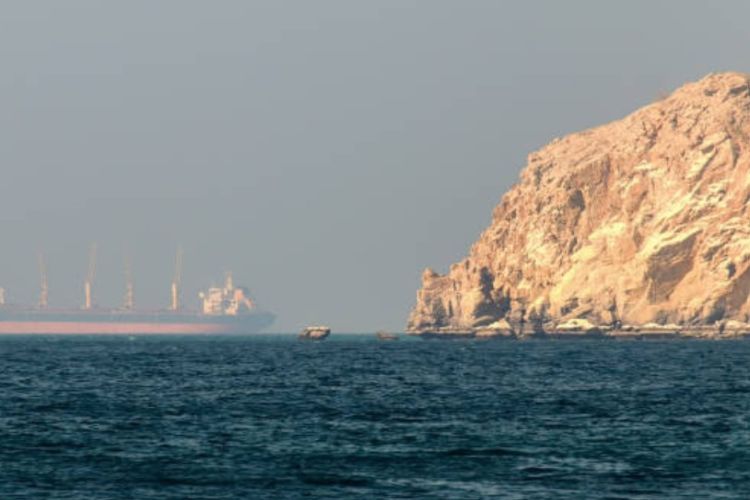
That legacy remains visible today. Recent disruption around the Strait of Hormuz is a reminder that the global energy system still depends on a narrow set of vulnerable chokepoints. The IEA said in March 2026 that flows through the Strait were central to the market shock, noting that about 20 million barrels a day transited Hormuz in 2025, roughly a quarter of global seaborne oil trade.
READ | India’s fertiliser imports hit by Iran war’s quiet shock
India’s oil dependence and energy security
India sits uncomfortably inside this structure. It is one of the world’s largest energy consumers, but remains heavily dependent on imported crude oil. Domestic petroleum output is modest, and the IEA estimates that local production met only about 13% of India’s supply needs in 2023. That makes India structurally vulnerable to external supply shocks.
The economic risk is straightforward. When oil prices rise sharply, India imports inflation, widens its trade deficit, strains household budgets and narrows fiscal room. When the disruption is linked to West Asia, the risk becomes sharper because the issue is not merely price but also physical flows, shipping costs, insurance, refining margins and the security of maritime routes. A prolonged crisis in and around the Gulf can unsettle not just India’s fuel bill but also fertiliser prices, freight costs, exchange-rate stability and industrial input costs.
India’s response cannot rest on renewable expansion alone. More solar and wind reduce dependence on coal and gas in electricity generation, but oil vulnerability lies mainly in transport, petrochemicals, aviation, freight and industrial logistics. That is why energy security requires a different toolkit: more diversified crude sourcing, larger and better-used strategic petroleum reserves, refineries that can process a wider range of crude grades, stronger shipping and insurance resilience, and faster electrification of road transport.
The direction of travel is visible. The IEA expects India to be the single largest source of global oil demand growth to 2030, but also notes that electrification of the vehicle fleet will prevent a much bigger rise in gasoline demand.
This is why oil cannot be treated as just another commodity. For India, it is a macroeconomic variable, a strategic exposure and a foreign-policy constraint rolled into one.
READ | India growth outlook stays firm despite Iran energy shock
India’s clean energy push – real, but incomplete
India has moved faster on clean energy than many critics acknowledge. It achieved 50% of installed electricity capacity from non-fossil sources in June 2025, ahead of schedule. By November 2025, non-fossil installed power capacity had risen to 262.74 GW, or 51.5% of total installed capacity. Solar capacity had crossed 140 GW by late March 2026, while wind capacity had moved beyond 55 GW.
That progress matters. It reduces long-term dependence on imported fuels, improves energy security, and gives India greater room to absorb external shocks. Policy support for solar manufacturing, green hydrogen, biofuels, transmission expansion and industrial decarbonisation is no longer marginal. It is becoming part of the core growth strategy.
But the transition should not be romanticised. A greener power mix does not eliminate oil dependence, because oil’s grip is strongest in transport, logistics, petrochemicals and strategic supply chains. That is the harder frontier. India may add renewables at record speed and still remain exposed to oil shocks for years.
The larger lesson is sobering. The world is moving towards cleaner energy, but not yet away from oil fast enough to escape its geopolitical logic. Petroleum still sits at the intersection of power, conflict, shipping and finance. It continues to shape alliances, military deployments and economic vulnerability.
India’s energy transition is therefore not only an environmental project. It is a sovereignty project. Every gain in renewable capacity, storage, electrified mobility, biofuels and green hydrogen reduces exposure to a volatile external order. But until oil loses its strategic centrality, black liquid gold will continue to cast a long shadow over both global politics and India’s economic security.