


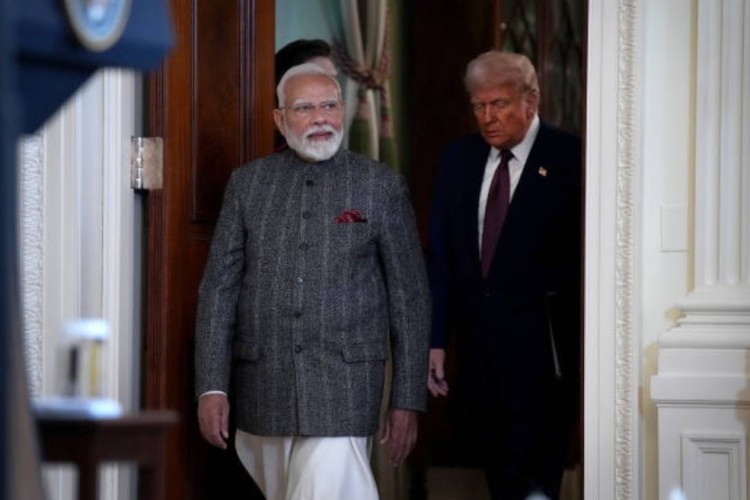
The February 2026 India-US trade framework announcement triggered an immediate relief rally. On February 3, the Nifty 50 rose 2.5% and the rupee gained more than 1% after Washington cut tariffs on Indian goods to 18% from 50%. Export-facing sectors such as textiles, leather, chemicals and home products led the move. The market reaction was rational. A large policy overhang had been lifted.
That optimism now needs a harder look. The US Supreme Court ruled on February 20 that the International Emergency Economic Powers Act does not authorise the President to impose tariffs. That matters because the broad reciprocal tariffs imposed in April 2025, and the additional 25% tariff linked to India’s Russian oil purchases, had rested on that legal foundation. The legal terrain has shifted after the framework was announced.
READ | US manufacturing: Why Trump tariffs and protectionism may misfire
US tariff legality and India’s leverage
This is where REPORT 1 needs updating. The framework deal was presented as a tactical de-escalation after months of punitive US tariff action. That description still holds. But it is no longer enough to treat the 18% tariff as a settled political fact. The legal instrument that enabled Trump’s earlier tariff pressure has now been narrowed by the court. India has more room than it did a month ago.
The joint statement itself leaves that door open. It says that if either side changes the agreed tariffs, the other may modify its commitments. That is no minor drafting detail. It gives New Delhi a formal basis to seek clarification, and if needed reworking, of the interim bargain now being negotiated.
Trump has tried to retain leverage by shifting to Section 122 of the Trade Act of 1974. But that route is weaker. Reuters reported on February 27 that Trump has moved to a temporary 10% duty and said he would raise it to 15%, the statutory maximum under the law now being used. Section 122 is temporary and less discretionary than the IEEPA route that underpinned the earlier tariff shock.
Russian oil clause remains a strategic risk
The deepest problem in the framework is not tariffs alone. It is the attempt to use trade concessions to shape India’s energy choices.
The White House fact sheet says Trump removed the extra 25% tariff in recognition of India’s “commitment to stop purchasing Russian Federation oil.” But the US-India joint statement does not say this. Nor did India’s official communication adopt that formulation. When asked directly on February 5, the Ministry of External Affairs said India’s energy sourcing decisions would continue to be guided by national interest. Secretary of State Marco Rubio then added another layer of ambiguity at Munich, saying the commitment was to stop buying additional Russian oil. That is not the same thing as ending purchases altogether.
This gap is not semantic. It goes to the core of strategic autonomy. If Washington’s version is allowed to stand unchallenged, trade negotiations will have spilled into energy security. That would set a bad precedent for a country that has long resisted external direction on critical imports.
READ | India’s solar module manufacturing boom meets US tariff wall
Agriculture and digital trade need clearer drafting
Agriculture is the second area where the rhetoric is ahead of the text. The White House joint statement says India will eliminate or reduce tariffs on all US industrial goods and a wide range of US agricultural products, including DDGs, red sorghum for animal feed, tree nuts, fruit, soybean oil, wine and spirits. That is a broader list than the comfort offered in Indian political messaging.
To be sure, the Indian side has publicly argued that core farm and dairy interests remain protected. Piyush Goyal said Indian agriculture and dairy are fully protected, while PIB and Union ministers have separately stressed that staples such as wheat, rice and maize are shielded and that Indian farm exports such as spices, tea, coffee and coconut oil gain from improved access.
But that only reinforces the need for precise drafting in the interim agreement. If the US version remains broader and the Indian version remains politically reassuring, the eventual friction will come in implementation.
The same problem appears in digital trade. The White House fact sheet says India committed to negotiate digital trade rules that address “discriminatory or burdensome practices and other barriers to digital trade.” India’s own framing is different. It speaks of supporting innovation while maintaining regulatory and national security safeguards. The difference is not cosmetic. One version reads like a market-access demand. The other preserves policy space. India should insist that the latter language prevail.
READ | Trade deal ratification: Why India will follow different paths for EU, US
Ignore headline numbers, focus on enforceable terms
The noise around India’s supposed $500 billion commitment to buy US goods over five years has distracted from the more important parts of the negotiation. Such numbers are politically useful and economically elastic. They are long-horizon intentions, not hard enforcement clauses. The stronger negotiating priority is elsewhere: tariff certainty, non-tariff barriers, rules of origin, and clean language on energy, agriculture and digital sovereignty. Mission 500 as a bilateral trade target predates this framework anyway.
This is also where market excitement should be kept in perspective. The trade deal did improve sentiment. Foreign investors turned net buyers on the day of the announcement, and Reuters has since reported early signs of renewed inflows. But the same reporting also shows that Indian markets remain vulnerable to high valuations, oil shocks and unresolved trade terms. A relief rally is not the same as durable repricing.
Wait-and-watch may be wiser
India has already delayed the next leg of negotiations after the Supreme Court ruling. That is sensible. New Delhi should now use the renegotiation clause in the joint statement to clear up the three obvious areas of dissonance: Russian oil, agricultural access and digital trade language.
There is also a larger reason not to hurry. This is an election year in the United States. If the mid-term elections weaken Trump politically, Congress could reassert itself more forcefully on tariff policy. That would reduce the value of personalised, executive-led bargaining and make any final trade deal more stable.
India-US trade framework useful, but not secure
The February framework did one useful thing. It removed a damaging tariff overhang and restored some confidence in India’s export story. That matters.
But the legal and political context has changed within weeks of the announcement. A framework negotiated under tariff duress now sits in a world where that duress has been partly invalidated by the US Supreme Court. India should not throw away that advantage by rushing into a final agreement on terms that remain unclear, unequal or strategically intrusive.
The right approach now is not triumphalism. It is discipline. Re-open the unclear clauses. Narrow the US claims. Protect regulatory space. And remember that a good interim trade agreement should reduce uncertainty, not import it.
Parul Oberoi and Susanthika S are Assistant Professors at CHRIST University, Delhi NCR Campus.