


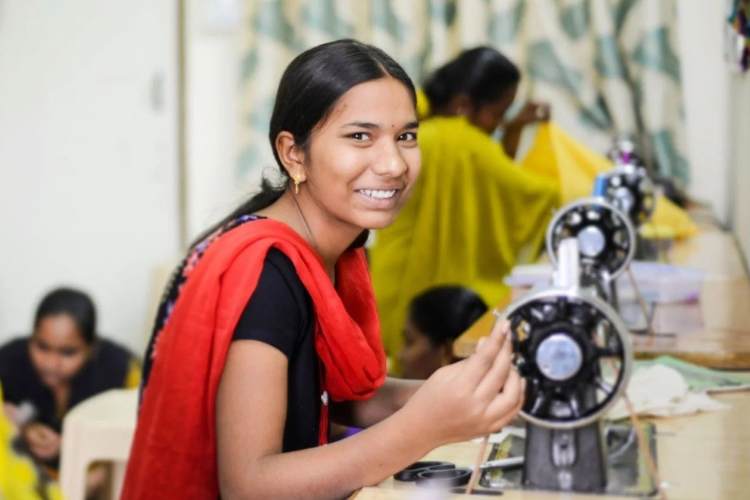
India cannot achieve its manufacturing ambitions without a robust micro, small and medium enterprises sector. MSMEs contribute roughly 30% of the country’s GDP and offer employment to around three crore people. But Indian MSMEs lag in productivity, exports, and technological depth, and the contrast with European peers is instructive.
European firms operate in a tightly regulated high-cost environments. Labour is expensive, compliance exacting, and competition intense. Yet MSMEs in Germany, Italy, France, and Austria contribute between 45 and 70 per cent of GDP and dominate manufacturing value addition. The difference is not firm size or labour cost. It is the ecosystem in which firms operate.
Europe’s experience shows that when MSMEs are embedded in coherent systems of finance, skills, innovation, clustering, and predictable regulation, they can compete globally from high-cost locations. India’s constraint is not entrepreneurial capacity. It is institutional design.
READ I Women-owned MSMEs remain stalled at micro scale
European models India can emulate
Germany’s Mittelstand consists largely of family owned, mid-size manufacturers specialising in narrow technological niches such as precision machinery, automotive components, industrial equipment. They are supported by patient finance through development banks, strong vocational and apprenticeship systems, export facilitation, and regulatory predictability. Policy does not seek to keep firms small.
Italy’s MSMEs are located in industrial districts specialising in textiles, leather, machinery, furniture, and food processing. Firms share infrastructure and specialise in tightly linked production systems. Collective efficiency compensates for limited firm size. Global competitiveness is built on local concentration.


France illustrates the value of institutional integration. French MSMEs access unified public platforms combining finance, innovation support, advisory services, and export promotion. The objective is explicit: scale, innovate, and internationalise.
Across Europe, a common pattern holds. MSMEs are not treated as marginal beneficiaries of social policy. They sit at the centre of industrial strategy, export planning, and innovation missions. Skills systems are aligned with local industry. Standards and certifications are treated as productive assets, not regulatory irritants. Digitalisation and sustainability are actively supported as sources of competitiveness.
READ I How India-Germany MSME ties could reshape European sourcing
India’s fragmented MSME environment
Indian MSMEs operate in a sharply different environment. Manufacturing productivity remains low and adoption of technology is uneven. They work in informal sector, and struggle for access to finance and markets. Credit is largely short-term, with little patient capital for technology upgrading or scale. Compliance is difficult with multiple regulatory agencies and portals, leading to high transaction costs.
MSMEs remain weakly integrated into domestic and global value chains. A large number of them operate as standalone units and are not part of coordinated production systems. European MSMEs thrive because they are part of supplier networks, clusters, and value chains.
READ I Indian Railways need accountability, not slogans
State capacity and regional institutions
One element that deserves explicit attention is state capacity. Europe’s MSME ecosystems do not function through national policy alone. They are anchored in strong regional and local institutions—German Länder governments, Italian regional authorities, chambers of commerce, technical institutes—that possess administrative continuity and the mandate to work with firms over long horizons.
The performance of Indian MSMEs vary across states due to this reason. Industrial clusters in Tamil Nadu, Maharashtra, or Gujarat are backed by local institutions that deliver skills, infrastructure, and credit. Similar firms in other states work in isolation. Without district- and state-level institutions, national schemes thin out into compliance exercises.
The implication is straightforward but often avoided: MSME competitiveness in India will be determined less by the design of central programmes than by which states can build credible regional systems to support firms, clusters, and value chains over time.
Fewer schemes, stronger systems
India’s policy response has been energetic but fragmented. Credit guarantees, subsidies, portals, and incentives have expanded coverage without consistently building capability. Europe’s lesson is straightforward: more schemes do not substitute for better systems.
First, MSMEs must sit at the core of industrial policy. In Europe, MSME development is inseparable from sectoral strategies—automobiles, machinery, textiles, food processing, green technologies. In India, MSME policy operates in silos. Manufacturing schemes, export promotion plans, and logistics reforms must integrate supplier development, standards upgrading, and cluster strengthening.
Second, institutional integration matters more than proliferation. European countries rely on a small number of integrated instruments delivered through development banks, regional agencies, or chambers. India needs one-stop delivery systems at district and regional levels, with clear accountability and shared data.
Third, clusters and value chains must become engines of productivity. Italian districts and German supplier networks show how shared infrastructure, common training facilities, and collective access to technology lift small firms. India has natural clusters—from textiles to auto components—but weak cluster governance limits gains.
Fourth, skills and standards must be treated as productive assets. Europe’s vocational and apprenticeship systems give MSMEs access to skilled labour without forcing each firm to train alone. India’s skilling schemes are not aligned with local industry requirements. Adaption of the dual apprenticeship model and targeted support for quality and sustainability standards would raise productivity.
Finally, digitalisation and green transition should function as competitiveness levers, not compliance burdens. European MSMEs receive advisory support, blended finance, and cluster-based assistance to adopt digital tools and cleaner technologies. In India, combining digital public infrastructure with focused capacity building and credit could boost productivity.
India need not replicate Europe mechanically. Scale, federal structure, and development priorities differ. But the institutional logic transfers. When MSMEs are embedded in strong ecosystems, they deliver growth, jobs, exports, and resilience.
If India is keen to achieve manufacturing leadership and inclusive growth, MSMEs must move to the centre of economic strategy. Europe’s experience suggests that when systems work, small firms produce large outcomes.
Mahesh MV is professor, operations management, MYRA School of Business.