


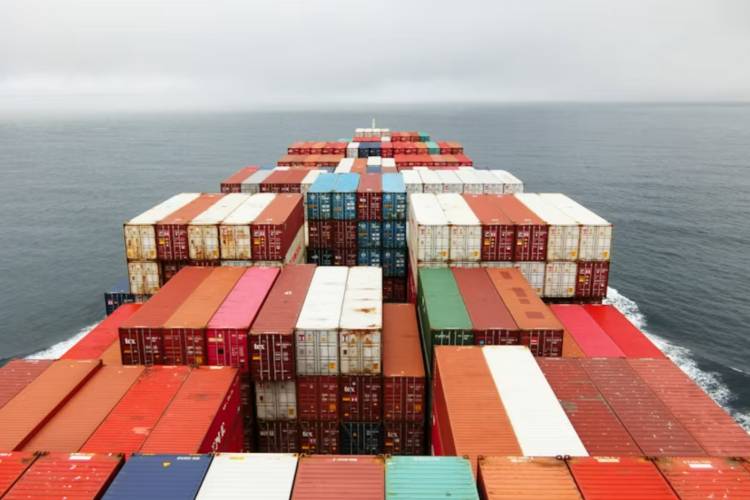
The foundations of export competitiveness are changing. For decades, countries competed through low wages, scale, logistics, and lower production costs. Carbon intensity is now entering the calculation.
The shift is no longer confined to climate negotiations. It is moving into trade rules, procurement, investment decisions, and global value chains. Firms that can produce with lower emissions will have an export advantage. Those that cannot will face higher costs, closer scrutiny, or exclusion from some markets.
READ | India-EU trade deal: CBAM compliance becomes competitiveness
This is India’s green competitiveness test. Will the transition to a low-emission energy system strengthen exports, or will it add another burden to industries already facing weak global demand and policy uncertainty?
CBAM and India’s export exposure
The European Union’s Carbon Border Adjustment Mechanism (CBAM) is an early warning. It shows how climate policy can become trade policy. Carbon-intensive exporters in steel, aluminium, cement, chemicals, and other sectors will be exposed first.
The risk is not theoretical. Indian merchandise exports to the European Union accounted for about 17% of total merchandise exports in 2024. A carbon-linked trade regime in that market will affect both large exporters and their domestic supply chains.
Studies such as Mehling et al. have warned that carbon border measures can hit developing economies with carbon-intensive production structures harder than advanced economies. The reason is simple. Rich countries industrialised first, using carbon-intensive growth. India is being asked to industrialise, create jobs, secure energy, and decarbonise at the same time.
This does not make the transition unfair by itself. But it makes policy design more demanding.
Renewable energy and export costs
India imports nearly 85% of its crude oil requirement. That makes the economy vulnerable to oil shocks, currency pressure, and geopolitical disruption. Renewable energy is therefore not only climate policy. It is also macroeconomic insurance.
The fall in renewable energy costs strengthens this case. Solar photovoltaic prices have declined sharply over the past decade. If India can supply reliable and affordable clean electricity to industry, renewable energy can become a source of competitiveness rather than a compliance cost.
READ | India-EU FTA and CBAM: The coming carbon tax shock
That is the central distinction. Installed capacity is not enough. Export competitiveness will depend on whether factories can access clean power at scale, at predictable prices, and without reliability penalties.
India has expanded renewable capacity to more than 220 GW. It has launched the National Green Hydrogen Mission, production-linked incentives for renewable manufacturing, and clean energy infrastructure programmes. These are significant moves. But they are still only the opening moves.
Green industrial policy, not climate slogans
The United States has used the Inflation Reduction Act to anchor clean-technology manufacturing. China dominates several clean-technology supply chains. The competition for green industrial leadership is already under way.
India cannot be a spectator. But nor can it rely on declarations. A green industrial strategy must connect energy policy, trade policy, industrial incentives, grid planning, finance, and technology adoption.
The first priority should be export-intensive sectors: steel, cement, chemicals, aluminium, and textiles. These industries face the strongest exposure to carbon-linked trade rules. They need sector-specific decarbonisation pathways, not generic climate targets.
That means concessional finance, credible carbon accounting, technology access, and support for process changes. It also means avoiding schemes that create paperwork without reducing emissions.
Grid, storage and implementation
India’s biggest obstacle is not ambition. It is execution.
Land acquisition, transmission bottlenecks, storage gaps, delayed approvals, and weak coordination between agencies can slow the clean-energy transition. Industrial users cannot base export contracts on intermittent supply or uncertain infrastructure.
The International Energy Agency has stressed the need for transmission and storage investment to connect renewable energy with industrial demand. That is especially important for India, where renewable-rich regions are not always close to manufacturing clusters.
Policy uncertainty compounds the problem. Investors in green hydrogen, batteries, solar manufacturing, or low-carbon industrial processes need long horizons. Frequent changes in rules, delayed payments, and administrative bottlenecks raise the cost of capital.
Technology is available. Institutional capacity will decide the pace.
READ | Decoding CBAM: EU’s push can redefine India’s green transition
SMEs and the missing middle
Large companies can hire consultants, buy technology, track emissions, and meet foreign buyers’ disclosure requirements. Small and medium enterprises cannot do this easily.
That matters because SMEs are embedded in export supply chains. A textile exporter, engineering goods manufacturer, or chemicals firm may be judged not only by its own emissions, but also by the emissions of its suppliers.
Without targeted support, green industrialisation will become a privilege of large firms. SMEs need shared testing facilities, carbon accounting platforms, cheaper finance, advisory support, and access to clean power. Otherwise, the transition will widen the gap between formal large industry and the rest.
India’s green competitiveness strategy
India must move from fragmented climate initiatives to a coordinated green industrial strategy.
First, it should prepare decarbonisation road maps for export-intensive sectors. These should identify technology needs, financing gaps, timelines, and trade exposure.
Second, it must accelerate investment in transmission, storage, and industrial clean-power supply. Renewable capacity without delivery infrastructure will not create export advantage.
Third, India should build domestic capabilities in solar equipment, batteries, green hydrogen, electrolysers, and critical mineral processing. These sectors will shape future global value chains.
Fourth, trade diplomacy must become more active. India should negotiate for fair transition timelines, technology partnerships, mutual recognition of standards, and access to sustainable supply chains.
The green transition is not an environmental add-on. It is now part of the competitiveness agenda. Future trade will favour countries that combine industrial capacity with lower emissions. India’s question is no longer whether to join this transition. It is whether it can execute fast enough to turn constraint into advantage.
Dr Ketki Kaushik is Assistant Professor at Amity College of Commerce and Finance, Amity University, Greater Noida, Uttar Pradesh.