


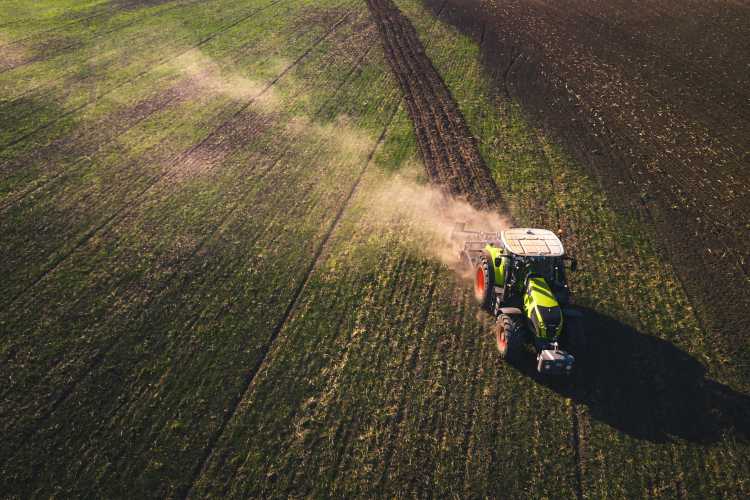
Review and regulation of farm chemicals: The Union government has invited comments on a proposal to ban paraquat dichloride, a non-selective herbicide in widespread use. Public health experts cite its acute toxicity, occupational exposure and the absence of an effective antidote in support of the ban. Crop protection companies say a ban would be difficult to enforce unless farmers have an affordable replacement for weed control.
The consultation offers an opportunity to further strengthen India’s regulatory system for agricultural inputs. The consultation exposes a weakness in India’s regulatory system for agricultural inputs. Registration tends to receive close attention when a product enters the market, while the case for continued use may receive less systematic examination as scientific evidence changes. A regulatory decision made years ago cannot be assumed to remain valid indefinitely. Products should be reviewed again when evidence on safety changes or better alternatives become available.
READ | India’s farm crisis is now showing up on the dinner plate
Weed control is an economic necessity for farmers. The ICAR Directorate of Weed Research puts annual crop losses caused by weeds at nearly ₹92,000 crore. The damage is often done early, when weeds compete with crops for moisture and nutrients. Any decision on herbicides therefore has to begin with the cost of leaving weeds uncontrolled and availability of alternative weed control measure, rather than with the assumption that chemical use can simply be dispensed with.
Manual weeding has also become more expensive in many parts of the country as agricultural wages have risen and workers have moved into non-farm employment. Timing adds to the problem. Farmers may have a short period after sowing in which weeds can be controlled without damaging yields, particularly in rainfed cultivation. Herbicides have become useful because they reduce labour requirements and allow farmers to complete the operation within that period.
These conditions explain why withdrawal decisions require care. They do not establish a permanent claim for any particular herbicide. Evidence can change after a pesticide has entered widespread use. Research may identify risks that were poorly understood when it was registered. New crop-protection products and application methods may come in to market that are safer and more effective, resulting in government intervention to replace older products with new alternatives.
Agricultural technology has repeatedly changed in this fashion. Farmers adopted high-yielding varieties when they offered better returns and moved towards improved irrigation systems where the economics justified the investment. Crop protection should allow similar replacement when a newer technology performs better or carries lower risks.
Farm chemicals: Regulatory system needs periodic review
India’s regulatory process often attracts the greatest public attention after a pesticide has become controversial. By then, the argument can narrow into a dispute over whether the product should be banned or retained. Periodic scientific review would reduce the dependence on such episodic interventions.
Registered agricultural inputs should be reassessed at predetermined intervals. The review would need to consider evidence relevant to the product concerned, including health effects, environmental behaviour, field performance, residues or resistance where these are material to the decision. The same process should examine whether substitutes have become available whether they work under Indian farming conditions and affordable for the farmers.
READ | India’s farm distress: Agri-tech is no panacea
Registration would then remain subject to later evidence rather than operate as an indefinite entitlement. Manufacturers would know when a product was due for review and what information regulators expected. Farmers would have more warning when restrictions were being considered. Government agencies could base withdrawal decisions on an established process instead of constructing one after a controversy has begun.
Post-registration monitoring would become more useful under such a system. Conditions in farmers’ fields may differ from those assumed when a product was first evaluated. Patterns of exposure can change as use expands, while resistance or residue problems may emerge only after years of commercial application. Evidence collected after registration should therefore inform decisions on continued use.
Regular review would also affect investment decisions by crop-protection companies. A manufacturer that cannot assume indefinite commercial life for an old molecule has a stronger reason to improve formulations or develop replacements. Competition would depend more heavily on whether a product continues to meet current standards.
India already has work under way on newer herbicide molecules, biological crop-protection products, nano-formulations, precision equipment, drone spraying and artificial intelligence-assisted weed detection. Some of these technologies could reduce chemical use, replace older molecules with safer molecules or improve the accuracy of application. Their usefulness, however, depends on performance outside the laboratory and on whether farmers can afford to adopt them.
The regulatory process should therefore give credible innovations a clear route from testing to commercial use. Scientific scrutiny cannot be relaxed for the sake of speed, but delays unrelated to safety or efficacy impose costs of their own. Public research institutions, agricultural universities, start-ups and private companies will need sufficient capacity for field validation if alternatives are to reach farms within a reasonable period.
Extension services determine whether those alternatives are used correctly. Farmers in many areas rely on local input dealers because public extension services are thinly staffed. Field demonstrations and digital advisory services can help farmers understand new products, while Farmer Producer Organisations and custom hiring centres can support technologies that require equipment or specialised application. Training should also cover dosage, handling and protective equipment.
Any decision to withdraw an established input has to take account of the conditions under which farmers will replace it. A substitute that works in trials may still fail as a practical option if it is too costly, unavailable at the required time or unfamiliar to users. Regulators should therefore link withdrawal schedules to evidence on the availability and field performance of replacements.
An abrupt ban can create problems that regulation itself then has to address. Farmers facing a narrow sowing or weeding window may turn to other products without adequate guidance. Production costs may rise if the available substitute is substantially more expensive. A transition period, supported by demonstrations and extension, can reduce those risks without making continued use of an older product open-ended.
READ | Crop insurance gaps expose India’s small farmers
Call for a wider regulatory review
The paraquat consultation gives the government an opportunity to establish a review process that can be used for other agricultural inputs. Periodic reassessment would allow regulators to respond to new evidence and this process should also give sufficient time for adjustments for all stakeholders like firms produce and market these products and their alternative products so that the transition from older products to new and improved products are smooth and farmers will get benefit. before a dispute reaches the point at which approval and prohibition appear to be the only choices.
The success of such regulation can be assessed in practical terms. Farmers should have access to effective weed-control products when they need them. Exposure to toxic farm inputs should decline when safer substitutes become available. New products that meet the required standards should not spend unnecessary years waiting for commercial approval.
A regulatory system capable of withdrawing ageing technologies without disrupting cultivation would serve both purposes. It would give public health evidence greater weight as it develops and give farmers a clearer path towards replacement products. The decision on paraquat is one case. India needs a process that can handle the next one without rebuilding the argument from the beginning.
A Amarender Reddy is Joint Director, Policy Support Research, ICAR-National Institute for Biotic Stress Management, Raipur. Arun Reddy Anugu is a student at Carnegie Mellon University, USA.