


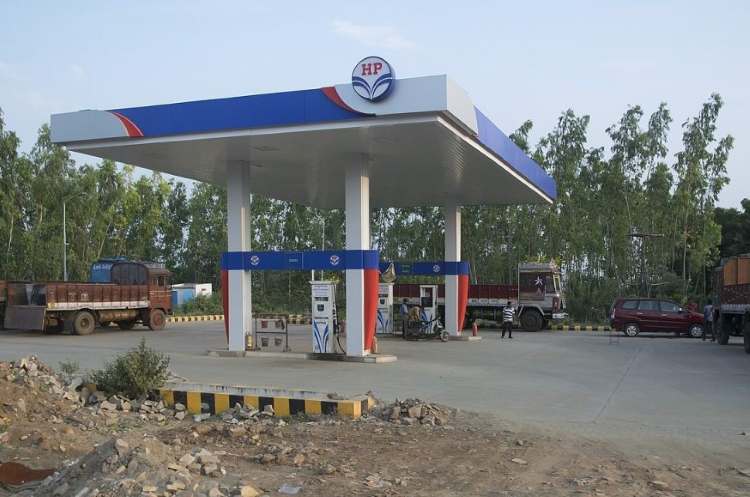
The controversy surrounding India’s E20 fuel programme has exposed a deeper tension than a disagreement over automotive technology. Recent proceedings in the Supreme Court and the subsequent clarification issued by the government brought renewed attention to a policy that has quietly transformed India’s fuel landscape.
Petrol blended with 20 percent ethanol is now available across the country, years ahead of the original schedule. Policymakers view the programme as a milestone in India’s energy transition. Many consumers view it with considerably more scepticism.
Complaints about declining mileage, uncertainty over vehicle compatibility and the absence of any visible reduction in fuel prices have fuelled a growing public debate. Much of that discussion has been framed as a simple choice between environmental responsibility and consumer convenience.
READ I Ethanol petrol needs trust before higher blends
E20 debate hots up
The reality is considerably more complex. Ethanol blending sits at the intersection of energy security, agricultural policy, climate commitments and household economics. Understanding its implications requires moving beyond the immediate concerns of motorists and examining the larger political economy behind the policy.
Globally, ethanol is neither experimental nor unusual. The United States has blended ethanol into petrol for decades, with E10 serving as the standard fuel across much of the country. Higher blends such as E15 and E85 are also available for compatible vehicles.

Brazil operates one of the world’s most extensive biofuel ecosystems, where E27 is the standard petrol blend and pure ethanol remains widely available. Several European countries have adopted E10 as a mainstream fuel. The underlying science is well established.
READ I India’s energy intensity falls, but oil risk remains
Ethanol mixing benefits
Ethanol offers genuine environmental advantages. Produced from agricultural feedstocks such as sugarcane, maize and other biomass, it reduces lifecycle greenhouse gas emissions compared to conventional petrol. Ethanol also improves octane ratings and promotes cleaner combustion.
According to estimates frequently cited by policymakers, ethanol derived from sugarcane can reduce greenhouse gas emissions by up to 90 percent relative to fossil fuels. At a time when governments across the world are attempting to decarbonise transport systems, biofuels have emerged as an important transitional technology.
The economic rationale is equally compelling.
India imports roughly 85 percent of the crude oil it consumes. Energy dependence has long represented one of the country’s most significant external vulnerabilities. Every increase in global oil prices widens the current account deficit, puts pressure on the rupee and contributes to domestic inflation. Policymakers have therefore searched for ways to reduce exposure to volatile energy markets without compromising growth.
READ I India’s ethanol blending strategy faces a flex-fuel roadblock
Ethanol blending as economic insurance
Viewed from this perspective, ethanol blending functions as a form of economic insurance.
The programme has enabled India to substitute a portion of imported crude oil with domestically produced fuel. Government estimates suggest that ethanol blending has already displaced millions of tonnes of crude oil imports and generated substantial foreign exchange savings.
These gains rarely feature in public discussions because they appear not at petrol pumps but in macroeconomic indicators. A lower import bill improves the balance of payments, reduces pressure on foreign exchange reserves and strengthens resilience against geopolitical disruptions in global energy markets.
The benefits extend beyond the external sector. Ethanol production has created an additional market for sugarcane and grain producers, directing significant revenue towards rural economies. For a government seeking to strengthen farm incomes while reducing oil dependence, ethanol blending offers an unusually attractive policy instrument. A litre of ethanol represents not only a reduction in fuel imports but also an expansion of domestic value creation.
Yet policies that generate national gains do not always distribute those gains evenly.
This is where much of the current discomfort originates.
Consumers encounter ethanol through mileage rather than macroeconomics. Ethanol contains less energy per litre than conventional petrol. Its energy density is roughly one-third lower than that of pure gasoline. Modern engines designed for higher ethanol blends can compensate for some of this difference through calibration and improved combustion. Older vehicles often cannot. Laboratory tests suggest relatively modest efficiency losses. Real-world driving conditions, particularly in congested urban environments, have produced more mixed experiences.
These concerns become sharper because India has pursued one of the fastest ethanol transitions among major economies. Brazil’s ethanol programme evolved gradually over several decades alongside substantial changes in vehicle technology, fuel infrastructure and consumer behaviour. Manufacturers, fuel retailers and consumers adapted together. The transition became an ecosystem rather than a mandate.
India’s trajectory has been more compressed. Ethanol blending rose from negligible levels a decade ago to 20 percent nationally within a relatively short period. Vehicle manufacturers have increasingly produced E20-compatible models, yet many of the older vehicles remain on Indian roads. The transition has therefore created a gap between national fuel standards and the technical characteristics of a significant share of the existing vehicle fleet.
The challenge extends beyond engineering.
The ethanol blending paradox
Public acceptance of large-scale transitions often depends on whether citizens perceive a tangible benefit from participating in them. The economics of ethanol blending present a paradox. Imported crude oil is being replaced with a domestically produced fuel. Foreign exchange savings are accumulating. Farmers receive an additional source of demand. Carbon emissions decline. Yet retail fuel prices remain broadly unchanged.
Part of the explanation lies in the economics of ethanol production itself. Ethanol procurement prices are designed to support agricultural producers and distilleries. Feedstock costs have risen. Lower energy content means more fuel is required to travel the same distance. These factors limit the scope for dramatic reductions in retail prices.
The result is a transition whose macroeconomic benefits are visible to the state but less visible to consumers.
This does not diminish the strategic logic of ethanol blending. India cannot indefinitely rely on imported oil to meet its energy needs. Nor can climate objectives be postponed indefinitely. The direction of policy is broadly consistent with global trends. Questions surrounding implementation, however, deserve the same attention as questions surrounding intent.
Brazil’s experience offers a useful lesson. The success of its ethanol programme emerged from patient institution-building rather than blending targets alone. Vehicle technology, fuel markets, pricing structures and consumer incentives evolved together. Policy credibility grew because the transition appeared predictable and manageable.
India’s ethanol programme now stands at a similar crossroads. Future debates are likely to focus less on the chemistry of fuel and more on the economics of adaptation. Consumers, manufacturers, farmers and policymakers are participating in the same transition but not necessarily experiencing it in the same way.
Energy transitions inevitably create winners, losers and trade-offs. The durability of such transitions often depends on how those trade-offs are managed. Public trust grows when benefits and burdens appear proportionate. It weakens when costs become concentrated while gains remain diffuse and difficult to observe.
The long-term success of ethanol blending will therefore be measured by more than import savings or blending ratios. Its broader legitimacy will rest on whether citizens come to view the programme as a shared national transition rather than a cost imposed upon them in pursuit of larger objectives.
Deepanshu Mohan is Dean and Professor of Economics at O.P. Jindal Global University, Sonipat, Haryana. He is currently a Visiting Research Fellow at the University of Oxford’s Department of International Development and a Visiting Professor at London School of Economics (LSE). Ankur Singh, a Research Analyst with the Centre for New Economics Studies (CNES), O.P. Jindal Global University, Sonipat, Haryana, contributed with research. Originally published under Creative Commons by 360info
