


Climate adaptation needs mandatory response rules: India can now forecast many climate hazards days in advance, yet government departments often have no binding rule that says when a warning should trigger action and which authority must act. Climate adaptation will remain largely a planning exercise until forecasts are tied to decisions that officials are required to take.
Mumbai had warning well before its reservoirs approached critical levels. IMD forecast southwest monsoon rainfall at 92% of the long-period average on April 13. By May 11, the seven reservoirs supplying the city were at about 23.5% of usable storage, and BMC announced a 10% water cut from May 15. IMD cut its monsoon forecast again, to 90%, on May 29. By mid-June, usable storage had fallen to around 10%. The deterioration was gradual, visible and measured throughout.
BMC acted before stocks reached that level, but the response rested on administrative discretion. There was no published rule linking rainfall forecasts and reservoir storage to progressively tighter conservation measures. Each stage required another decision.
READ I Can climate rankings tell us which country is a good performer?


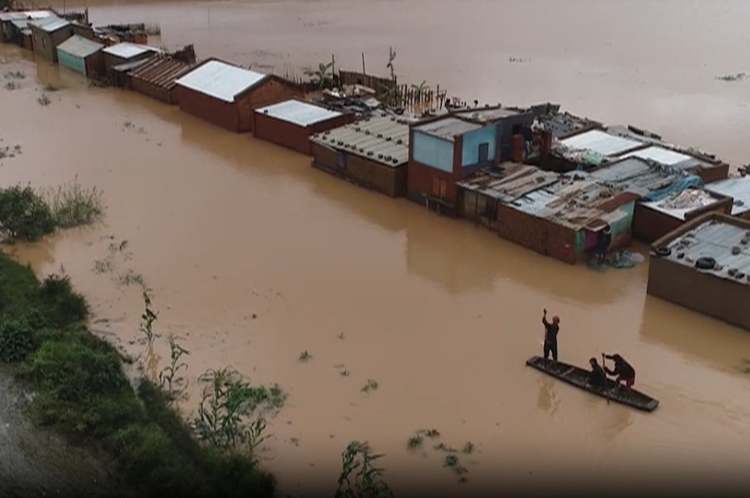
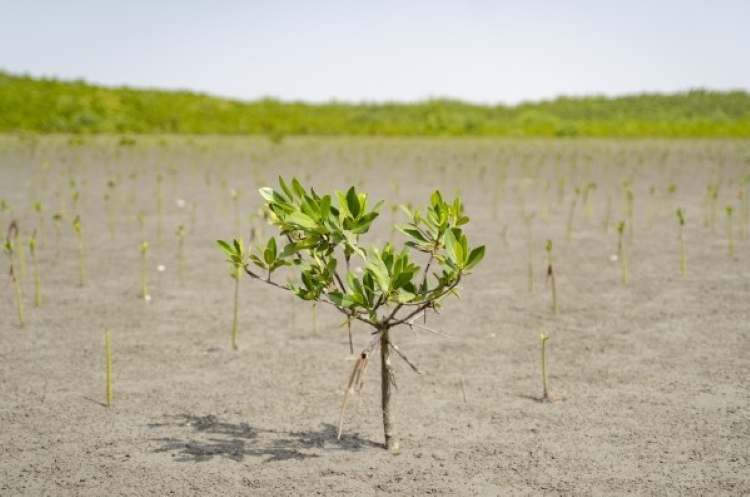
Assam was dealing with floods within weeks of Mumbai’s water shortage. By August 11, floods and heavy rainfall had killed 101 people and affected nearly 1.4 lakh across seven districts. Water had entered 456 villages and damaged almost 12,000 hectares of cropland. More than 49,000 people were in relief camps and distribution centres, while roads, embankments, bridges, and homes had also suffered damage. Loss of wetlands, forests and riverbank vegetation can add to such damage because less rainwater is absorbed before it reaches rivers and settlements.
In Mumbai and Assam, scientific information had to pass through an administrative system in which preventive action still depends heavily on departmental judgment. Better forecasts have therefore solved only part of the problem.
READ I Climate change is redefining home, and who counts as a refugee
Climate adaptation needs enforceable decisions
India already has weather information, climate assessments and disaster-management plans. IMD can send warnings rapidly, while climate risks increasingly appear in national and state plans. The harder task is converting information into action before losses mount.
Climate adaptation also receives less money and administrative attention than its economic case would suggest. A cooling centre opened before a heatwave or a reservoir managed conservatively before a drought produces an avoided loss rather than an easily measured return. Governments can count houses rebuilt after a flood. It is harder to count the houses that were never damaged because an embankment was repaired in time.
That bias favours relief and reconstruction over prevention.

A workable climate adaptation policy should connect long-term climate projections with public investment and use short-term forecasts to activate specified measures. The distinction is practical. Projections help governments decide what infrastructure to build; forecasts help them decide what to do when a hazard is approaching.
READ I India’s climate ambition is outrunning state capacity
Climate projections should change public investment
India’s average surface temperature rose by about 0.7°C between 1901 and 2018. Under a high-emissions scenario, summer heatwaves are projected to occur three to four times as often by the end of the century as they did during 1976-2005.
Infrastructure built today will operate under those conditions. Water systems designed around historical rainfall patterns may prove inadequate. Urban planning that ignores rising heat will raise electricity demand and expose outdoor workers to longer periods of unsafe temperatures. Agricultural investments made without accounting for changing rainfall patterns can lock farmers into greater risk.
Long-term climate projections should therefore influence the design of water systems, infrastructure standards and heat preparedness in cities. They should also inform agriculture and ecosystem restoration where future rainfall or temperature changes can alter the viability of present investments.
Short-term forecasts perform another function. A warning of extreme heat can lead schools to change timings and health departments to prepare for heat-related illness. Forecast heavy rainfall can justify moving rescue equipment or people out of exposed areas. A deficient-rainfall warning can prompt reservoir managers to conserve water earlier.
These measures are useful only if departments know in advance what level of warning requires a response.
Climate adaptation plan must assign responsibility
India’s first National Adaptation Plan, now under development, can connect these two levels of action. Its effectiveness will depend on whether it identifies the agency responsible for each measure and provides a route to finance implementation. State and district climate adaptation plans need the same discipline. A document listing desirable interventions has little administrative value unless departments know which measures they are expected to carry out.
The forecasting end of the system has already improved considerably. IMD issues district-wise warnings for heavy rainfall and cyclones up to seven days ahead and updates them four times a day. Since 2020, it has also provided district-level impact-based forecasts and risk-based warnings. SACHET distributes official location-specific alerts through multiple channels.
Climate-sensitive departments now need common response protocols that operate before conditions meet the formal definition of a disaster.
A rainfall deficit illustrates the problem. The same forecast can affect municipal water supply and agriculture while also changing electricity demand. Decisions taken by one department may alter the options available to another. Existing disaster-management arrangements assign responsibilities after risks have become serious, but anticipatory action requires decisions earlier in the sequence.
Early warnings need measurable triggers
States should prepare climate adaptation protocols for the major hazards they face. The rules should specify a measurable trigger and identify the authority that has to respond within a stated period. Funds required for the response should already have an approved route for release.
Water stress lends itself to such a system because governments routinely collect data on reservoir levels, rainfall and groundwater. A city could use these indicators, together with projected demand, to set graded thresholds. Falling storage combined with a weak rainfall forecast might first require conservation measures and repairs to major leaks. If conditions deteriorate further, restrictions on non-essential consumption and emergency supply arrangements could follow.
Heatwaves, floods, droughts, cyclones and crop diseases would require different indicators. The principle remains the same. Officials should not have to negotiate the response afresh each time a known risk reaches a known level.
Forecasts are probabilities, so some triggered actions will turn out to have been unnecessary. That is an argument for proportionate action at each threshold. Early measures can be inexpensive and reversible. Costlier restrictions can be reserved for conditions in which the probability of severe damage has risen substantially.
National rules for climate adaptation can specify minimum standards, while states and districts set thresholds suited to local conditions.
Accountability also becomes easier once triggers are written down. After an event, reviewers can compare the prescribed response with what the responsible department actually did and examine whether funds were released in time. They can also revise a threshold that proved too lax or too sensitive. A system that learns from false alarms is preferable to one that avoids them by acting late.
Early action can cut disaster losses
The economic evidence for anticipatory action is substantial. The World Meteorological Organisation estimates that 24 hours of advance warning of a storm or heatwave can reduce potential damage by 30%. It also estimates an average of about $9 in net economic benefits for every dollar invested in multi-hazard early-warning systems.
The Food and Agriculture Organisation has found that anticipatory action in agricultural systems can produce benefits of up to $7 for every dollar spent. The Government of India has estimated that an accurate cyclone forecast can save about Rs 1,100 crore by reducing evacuation and compensation costs and limiting disruption across major economic sectors.
Those savings come from decisions taken before choices disappear. Livestock can be moved before floodwaters cut roads. Reservoir releases can be altered before scarcity becomes acute. Governments can buy essential supplies before shortages push up prices.
Post-disaster compensation cannot cover every loss. It may replace part of a damaged asset, but it cannot recover a life lost to a heatwave or months of schooling disrupted by a flood.
India has already invested in much of the science required for anticipatory action. It can monitor climate trends, identify vulnerable areas and issue increasingly local warnings. The administrative system now needs rules that make departments act on that information.
A forecast that crosses an agreed threshold should create an obligation to respond and provide access to the money required for that response. Climate preparedness can then be judged partly by what did not happen because government acted in time.
Anuradha Barua is Manager, Natural and Climate Resilience; Dr Aakriti Wanchoo is Senior Vice President; and Swapan Mehra is Founder and CEO, Iora Ecological Solutions.