


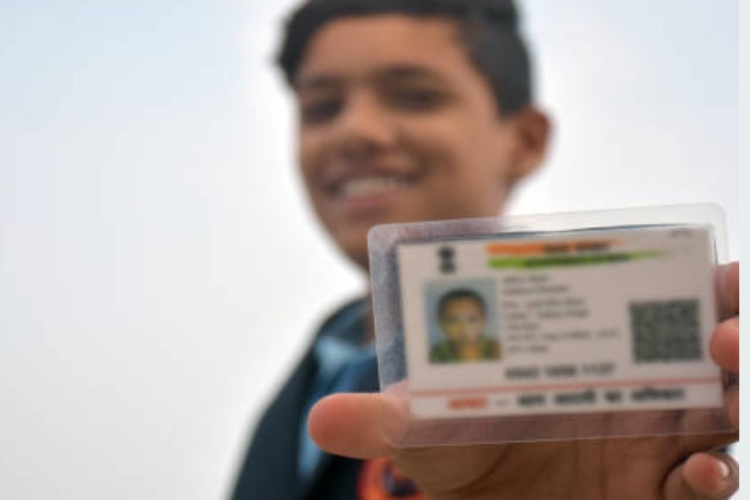
Aadhaar authentication failures: Every month, about 312 million Aadhaar-based biometric authentications are attempted to access welfare, banking, and public services. Around 20.3 million fail. That is a 6.5% failure rate-unchanged in over a decade, with success rates stuck between 93.5% and 95%. This is not a marginal error. Each month, authentication failures affect more people than the combined population of Delhi and Mumbai. Yet the system treats it as routine noise rather than systemic exclusion.
UIDAI’s own parliamentary responses show a gap between controlled test accuracy—98–99% for fingerprints and iris—and real-world performance, which falls short by 3–6.5 percentage points. That gap translates into millions denied access.
READ | Developed world can follow India’s lead in digital public infrastructure
Who gets excluded
The failures are not random. They cluster among manual labourers—agricultural workers, construction workers, domestic workers—whose fingerprints degrade with use. Cuts, wear, and ageing reduce biometric reliability. This creates a structural contradiction. Those most dependent on welfare systems are most likely to fail authentication. UIDAI data shows declining success rates within the same demographic groups over time, indicating cumulative degradation.
Official responses acknowledge issues like “wrong placing of fingerprints” and suggest exception mechanisms. But there is no published demographic breakdown of failure rates. The system does not measure exclusion where it is most likely to occur.
Face authentication has been introduced, reaching about 1.5 crore transactions in September 2025. But it remains marginal against roughly 9.6 crore daily biometric authentications. It also requires smartphones and connectivity—barriers for the same groups facing fingerprint failures.
Infrastructure and geography
The aggregate failure rate hides wide variation. Rural areas with weak connectivity, unreliable electricity, and ageing devices see higher failure rates than urban centres. UIDAI mandates “exception-handling mechanisms” and backup authentication. In practice, this shifts responsibility to banks, ration shops, and local offices that often lack capacity.
READ | G20 presidency may help India leverage its geopolitical moment
Outcomes depend on local capability. Better-resourced districts manage fallback processes. Others do not. Access becomes contingent on administrative capacity, not entitlement.
Authentication data exists at scale—2.5 billion transactions monthly, with device-level logs. But it is not used for policy feedback or integrated into welfare monitoring. The system records failure without learning from it.
Seeding failures and silent deletions
Beyond authentication lies Aadhaar seeding—linking identities across databases. Here, exclusion is often administrative. An estimated 30 million ration cards have been cancelled due to seeding failures. These are not authentication errors but mismatches in names, addresses, or legacy records. Spelling differences, translation errors, and inconsistent data formats lead to exclusions.
Responsibility is fragmented. UIDAI provides authentication but disclaims responsibility for seeding accuracy. Service departments manage databases but depend on Aadhaar linkage. When exclusion occurs, no single agency owns the outcome. Bulk deletions treat seeding failure as evidence of fraud rather than data error. The result is loss of entitlements without correction pathways.
Exception handling as a second tier
In theory, failed authentication should trigger alternative verification. In practice, it creates a two-tier system. Those who authenticate get immediate service. Those who fail must navigate manual processes—often slow, discretionary, and unevenly implemented.
Capacity varies sharply. Urban banks may manage exceptions. Rural offices often cannot. The same populations most likely to fail authentication are least likely to access effective fallback systems. There is no systematic tracking of exception use, success rates, or outcomes. Failures disappear from the system once they move outside biometric logs.
READ | India leads in digital public goods, but needs to bridge digital divide
Aadhaar authentication failures: Design, not deviation
The 6.5% failure rate is not a technical glitch. It is a design outcome.
First, authentication data is not used to detect exclusion. It should be integrated with welfare delivery systems to identify patterns and trigger interventions.
Second, exception handling is left to local discretion. It needs standardisation, training, and institutional backing.
Third, seeding lacks accountability. Responsibility must be clearly assigned, with mechanisms for correction and grievance redressal.
Fourth, the system assumes uniform authentication capability. It must instead be designed for variability—across devices, infrastructure, and human conditions.
India’s digital governance architecture has improved efficiency and reduced transaction costs. But it has also embedded exclusion that remains largely invisible. The 6.5% failure rate translates into tens of millions denied access each month. Those affected are the poorest, the most dependent, and the least able to navigate alternatives.
Treating authentication failure as an individual problem reproduces structural disadvantage. The system measures success rates. It does not measure exclusion. Until that changes, the gap between design and delivery will persist—quietly, and at scale.
Sagari Gupta is a public policy researcher and writer with more than eight years of experience. She had stints at NCAER and the Ministry of Consumer Affairs.