


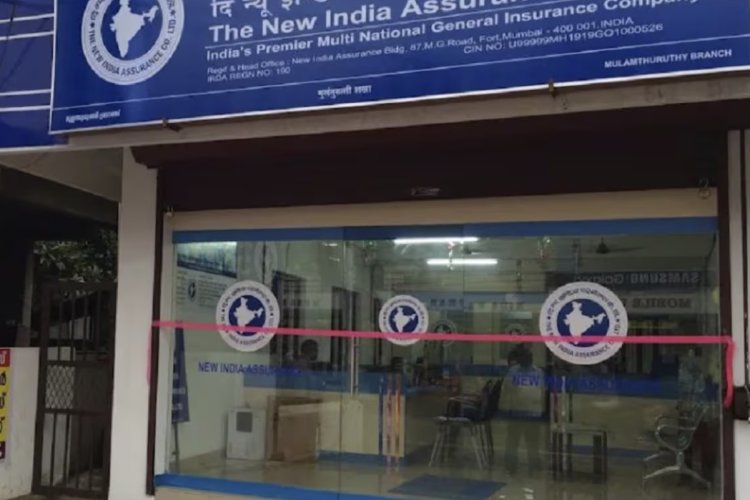
Public sector insurers: India has four government-owned general insurers: New India Assurance, United India Insurance, Oriental Insurance and National Insurance. Their continued role in the market is under scrutiny after their combined underwriting loss rose 58.3% to ₹29,070.57 crore in FY26. Three of them, United India, Oriental and National Insurance, have also remained below the regulatory solvency requirement of 150% for five consecutive quarters, making the question of further capital support more pressing.
The government is considering fresh capital for the three stressed insurers, but has attached conditions. They have been asked to improve underwriting, reduce incurred claim ratios, strengthen technology and adopt standardised performance indicators. They are also seeking to improve solvency through the sale of part of their holdings in the National Stock Exchange. The three insurers together hold 90 million NSE shares and have put 14.96 million shares on the block at ₹1,785 apiece. ICRA estimates that they could require about ₹39,000 crore by March 2027 to meet regulatory solvency requirements if current trends persist.
That raises a larger question: what should the state-owned insurers be expected to do, and at what cost?
READ | Crop insurance gaps expose India’s small farmers
Capital cannot substitute for underwriting
Insurance is a business of pricing risk. An insurer collects premiums today against claims that may arise months or years later. If claims consistently consume most or all of the premium, investment income or fresh capital may keep the company afloat, but neither addresses the underlying economics of the insurance portfolio.
That distinction is important in the current debate. Solvency capital can prevent an insurer from breaching regulatory requirements. It cannot make an incorrectly priced policy profitable. If an insurer charges ₹100 for a risk that ultimately costs ₹120 to insure, another ₹20 of capital does not repair the policy. It only gives the insurer more time to correct its pricing and underwriting.
The FY26 numbers show why this matters. United India’s underwriting loss more than doubled to ₹8,335.7 crore, Oriental Insurance’s rose 84% to ₹7,307.77 crore and New India’s increased 44% to ₹8,801.9 crore. National Insurance recorded an underwriting loss of ₹4,625.16 crore. At the same time, New India Assurance reported a net profit of ₹1,384 crore in FY26, which highlights the difference between underwriting performance and overall profitability.
The three stressed insurers recorded a combined net loss of ₹31,200.86 crore over the past five years, according to General Insurance Council data cited in the latest government review. Their net incurred claim ratios have also remained close to or above 100%, meaning claims can consume virtually the entire premium earned before operating expenses are considered.
READ | Jan Suraksha insurance cover needs a realistic reset
The public case for state-owned insurers
The case for retaining a public-sector presence in general insurance is not difficult to make. India still has substantial protection gaps in health, agriculture, property and small-business insurance. Private insurers have expanded rapidly, but commercial incentives will not always make every region, customer group or risk attractive.
The public insurers have a distribution network and institutional presence that would take years to replicate. New India Assurance accounted for 12.83% of India’s non-life insurance market in the first nine months of FY25, while Oriental Insurance and United India held 6.42% and 6.45% respectively.
Agriculture illustrates the point. Government-backed insurance schemes involve risks whose commercial attractiveness cannot always be assessed at the level of an individual policy. Crop and weather risks require large pools, reliable data, reinsurance and mechanisms for spreading losses across geographies and customer groups.
But a public mandate does not require poor underwriting. If the state wants insurance coverage in a segment where the actuarially appropriate premium is unaffordable, it has a choice: subsidise the customer transparently or require the insurer to absorb the cost. The latter simply transfers the subsidy to the insurer’s balance sheet and eventually to the exchequer.
That distinction should be central to the government’s capital decisions.
READ | LIC market share ambition faces the digital insurance test
Private insurers offer lessons, not a template
The stressed public insurers can learn from private competitors in areas such as risk segmentation, data analytics, claims management and technology. IRDAI itself notes that general insurance premiums can be based on factors including vehicle characteristics, age and previous claims experience, depending on the product.
Better analytics can help an insurer distinguish between risks rather than treating large customer groups as homogeneous pools. That becomes increasingly important as insurers accumulate claims histories and other customer data.
There is also a human-resource problem. Public-sector insurers compete with private companies for actuaries, data specialists, technology professionals and experienced managers. A prolonged period of weak financial performance can make recruitment and retention harder, particularly when compensation and career progression cannot match private-sector opportunities.
Technology investment will therefore have limited value if the institutions cannot attract the people capable of using the data and systems effectively.
The government also needs to distinguish between a solvency problem and a business-model problem. The RBI has identified the persistent sub-minimum solvency ratios of three public-sector general insurers as a financial stability concern. Capital is necessary in such circumstances. But capital should be accompanied by measurable improvements in underwriting, pricing, claims management and operating efficiency.
The question is what role the state wants them to play
The immediate choice need not be between unconditional capital support and privatisation. The more useful question is what role the government wants these companies to perform in India’s insurance market.
If public ownership is retained because the state wants insurers to serve markets that private companies may undersupply, that mandate should be explicit. The government should identify the segments and regions where a public presence is required and determine how much that obligation costs.
Commercial insurance business should then be judged by commercial standards. Where the state requires an insurer to sell cover below an economically sustainable price for a public-policy reason, the subsidy should be visible in the budget rather than hidden in the insurer’s accounts.
There is also no obvious reason to assume that four separate public-sector general insurers must remain indefinitely in their present form. The experience of public-sector bank consolidation shows that the government can use mergers to alter scale and operating structures. Whether consolidation would work for general insurers is a separate question, requiring assessment of their portfolios, liabilities, technology systems, capital requirements and regional roles.
What should be avoided is an open-ended cycle in which underwriting losses lead to capital injections, capital injections postpone restructuring, and weak pricing continues because the government ultimately stands behind the balance sheet. The present review provides an opportunity to break that cycle. Public ownership can coexist with financial discipline, but only if the public purpose is defined and the cost of pursuing it is made explicit.