


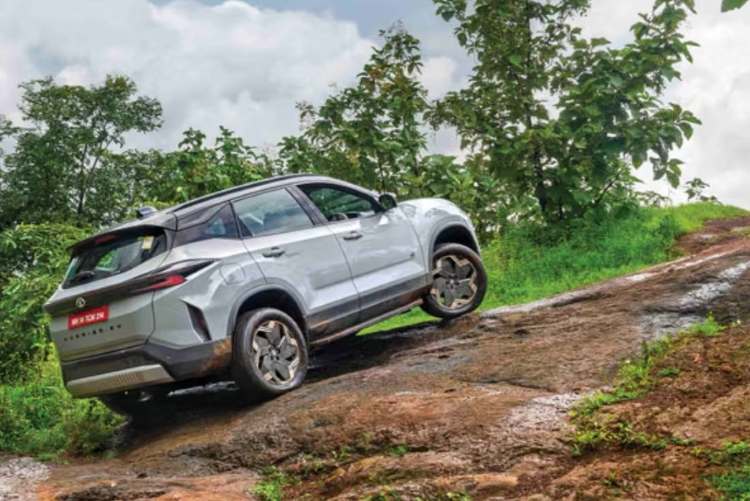
The EV transition is no longer optional. Yet India remains a laggard in electric car adoption despite years of policy support, demand incentives, and repeated official statements on clean mobility.
The gap is now visible in global data. Electric cars accounted for 25% of all new cars sold worldwide in 2025, with global sales crossing 20 million. India’s share was about 4% of new car sales, well below its 2030 ambition of 30% EV penetration.
READ I Southern states drive India’s electric vehicle adoption
India EV adoption trails emerging markets
India’s weak showing is more striking because several emerging markets have moved faster. Southeast Asia’s electric car sales share reached nearly 20% in 2025, led by Vietnam, Indonesia and Thailand. Latin America grew by 75%, with Brazil and Mexico driving the expansion. Nepal, helped by imports of cheaper Chinese electric cars, has become one of the most successful smaller EV markets.
This weakens the argument that India’s slow adoption is simply a matter of income. Affordability matters, but poorer or comparable markets have done better where policy support, lower duties, charging access and consumer incentives worked together.
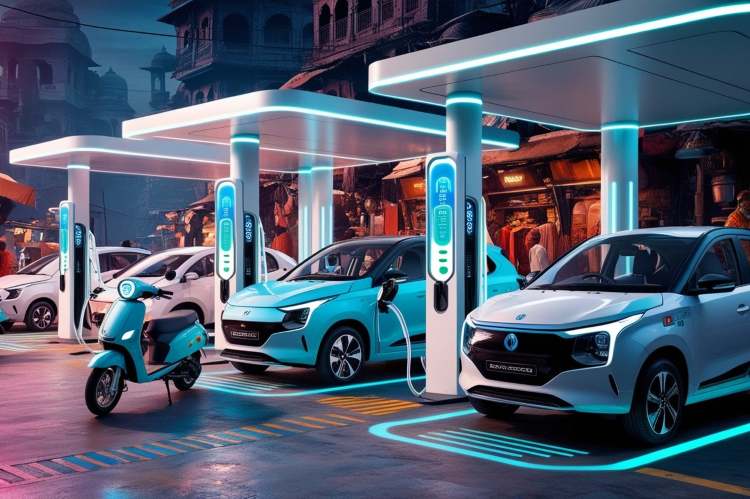

India’s passenger EV market also rests on a narrow base. Tata Motors and Mahindra & Mahindra accounted for a large share of the roughly 165,000 electric cars sold in 2025. Their early investment deserves credit. But limited participation by other automakers has restricted competition, choice, pricing pressure and after-sales depth.
READ I What Honda’s electric vehicles retreat means for the future of mobility
Pricing remains biggest barrier to EV adoption
India’s EV story is constrained by price. Electric cars still cost more than comparable petrol vehicles. Battery packs remain a major part of vehicle cost, while cells, components and critical minerals are import-dependent. Production-linked incentives have helped create intent, but not yet a deep domestic battery ecosystem.
For most consumers, the electric car remains a premium purchase rather than a practical substitute. That is why electric two-wheelers and three-wheelers have moved faster. They match India’s mobility pattern better: shorter daily trips, lower upfront cost, and easier charging. Policy has therefore focused more on two-wheelers, three-wheelers, buses and commercial vehicles than on passenger cars.
This is not a flaw in itself. India’s transport structure is different from Europe’s or China’s. But it does mean that electric car adoption will not accelerate automatically. It needs a separate policy and infrastructure push.
READ I India’s electric vehicles push gains global momentum
EV charging infrastructure is the weak link
The charging gap is severe. The IEA estimates that the world had more than 7 million public charging points in 2025. India had only a small fraction of that network, despite being one of the largest automobile markets. China alone accounts for the dominant share of global public charging infrastructure.
India’s bigger problem is not only the number of chargers. It is access. Many urban residents live in apartment complexes or dense neighbourhoods without dedicated parking. Home charging is difficult. Retrofitting residential buildings is slow. Public chargers remain unevenly distributed and often unreliable.
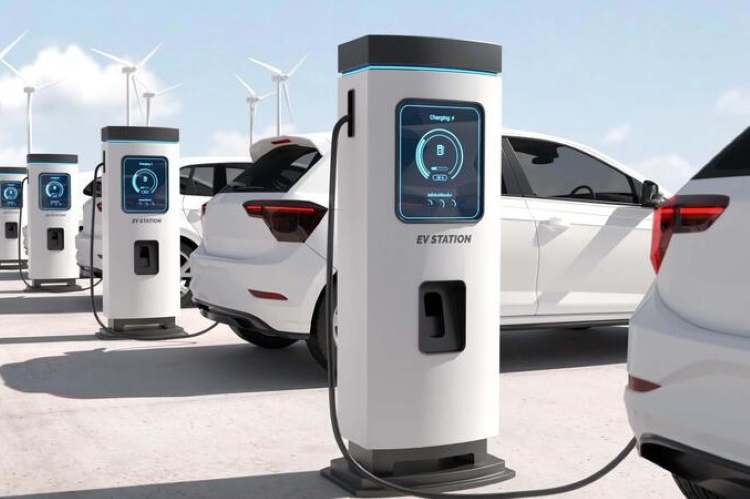
EV adoption is therefore also an urban planning issue. Without predictable charging at home, work, highways and public parking sites, range anxiety will continue to suppress demand.
The PM E-DRIVE scheme recognises this gap. It provides support for public charging stations and earmarks ₹2,000 crore for charging infrastructure, including fast chargers for four-wheelers, buses, two-wheelers and three-wheelers. But implementation speed will decide whether this becomes a network or another scheme on paper.
India must learn from China’s EV strategy
China’s dominance was not accidental. Beijing backed battery manufacturing, charging infrastructure, mineral supply chains and domestic champions for two decades. Chinese automakers supplied about 60% of global electric car sales in 2025, while China produced nearly three-fourths of the world’s electric cars.
The result is scale. Chinese firms can sell cheaper vehicles, absorb thinner margins and export aggressively. India entered the race late and remains dependent on imported lithium, cobalt, nickel and battery technologies.
India cannot copy China’s model in full. But it can learn the central lesson: EV adoption needs industrial policy, not just consumer subsidy. Charging infrastructure, battery manufacturing, component localisation, software capability and recycling must move together.
Policy certainty must replace subsidy churn
India’s EV policy has suffered from repeated changes. FAME-II ended in March 2024. PM E-DRIVE replaced it from October 2024 with a ₹10,900 crore outlay. The shift was necessary, but frequent revisions weaken confidence among consumers, dealers and manufacturers.
There is another gap in India’s EV policy architecture. PM E-DRIVE, the current central scheme, is tilted towards electric two-wheelers, three-wheelers, buses, ambulances, trucks and charging infrastructure rather than direct support for private electric cars. That may be defensible for public transport and mass mobility, but it leaves passenger cars dependent on state incentives, manufacturer discounts and private financing. A 30% electric car target by 2030 will be hard to meet if the main national scheme does not directly address the price gap faced by car buyers.
State policies also vary widely. Some offer road-tax waivers and registration benefits. Others move slowly on chargers, parking rules and electricity connections. Automakers cannot plan large investments when incentives and implementation differ sharply across states.
The first task is policy stability. The second is infrastructure. India needs faster investment in public chargers, battery swapping where suitable, residential charging norms, highway charging corridors and local battery production. It also needs competition in affordable electric cars, not only premium launches.
EVs are not only an environmental imperative. They are an energy security strategy. India imports most of its crude oil. A larger EV fleet, powered increasingly by domestic renewable energy, can reduce exposure to oil shocks and improve the trade balance over time.
India has advantages: a large domestic market, engineering talent, software capability, renewable energy capacity and a strong two-wheeler ecosystem. But these advantages will not convert themselves into EV leadership. The next phase needs fewer announcements and more execution. Success of India’s EV adoption will depend on policy certainty, charging access and industrial depth.