


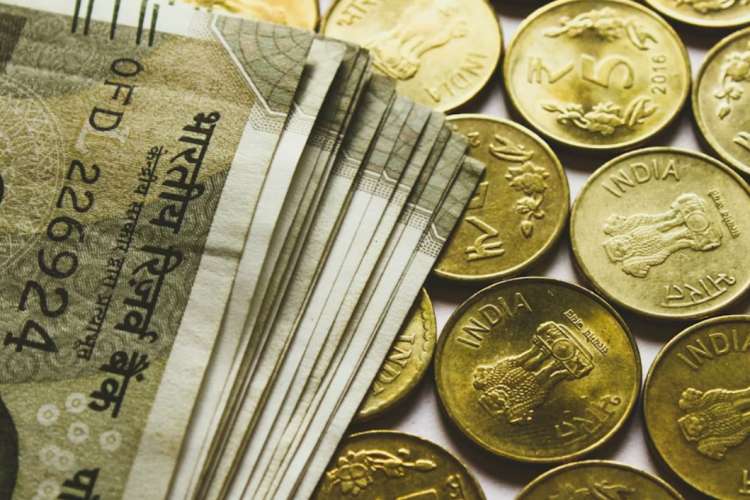
Rupee fall exposes India’s external account strain: India’s headline growth still inspires confidence. The economy is expanding at a pace few large economies can match. Corporate balance sheets are cleaner, banks are better capitalised and domestic demand has not collapsed. Yet the external account now carries the real warning.
The rupee closed at a record low of 96.5325 to the dollar on May 19, marking its eighth straight session of losses. The pressure has come from a familiar but dangerous combination- high crude oil prices, foreign equity outflows, elevated US yields, and a widening trade deficit.
READ | India’s current account deficit: A global challenge, domestic opportunity
The exchange rate is not the disease. It is the symptom.
Oil imports widen India trade deficit
India’s balance of payments has turned more vulnerable because the oil shock has arrived when global trade is already weak. Brent crude has been trading near $110 a barrel, after rising sharply since the Iran conflict began. For the world’s third-largest crude importer, this is a direct current account shock. The merchandise trade deficit reached $28.38 billion in April 2026. Oil imports were a major driver. Services exports and remittances remain strong cushions, but they are being asked to absorb a larger shock than before.
The cushion is not risk-free. A prolonged West Asian conflict can affect remittances from the Gulf even as it lifts India’s oil bill. It can also change private currency behaviour. Importers tend to rush for dollar cover when the rupee falls, while exporters delay conversion in the hope of a better rate. That flow mismatch can deepen pressure on the rupee even before the full oil shock appears in the trade data.
The earlier comfort from discounted Russian crude has also weakened. India can still diversify supplies, but it cannot insulate itself from a global oil price spike. A higher oil bill feeds into the trade deficit, inflation expectations, and currency demand.
READ | Current account deficit narrows on services boom; trade deficit worries linger
Foreign outflows add capital account pressure
The capital account is no longer providing reliable relief. Foreign investors have pulled more than $20 billion out of Indian equities in the first four months of 2026. Reuters reported that around $19 billion of this selling came after the Iran war began.
This matters because portfolio flows had helped finance India’s external gap during easier global conditions. That cushion is now unstable. IPO exits, private equity sell-downs and profit repatriation have added to the demand for dollars.
Foreign direct investment is a better source of external financing, but it has not been strong enough to offset the portfolio shock. Weak net FDI inflows are a concern because they affect the quality, not just the quantity, of external financing.
India is therefore facing pressure on both sides of the balance of payments. The current account is being hit by oil. The capital account is being hit by outflows.
RBI forex reserves are large, but not unlimited
India still has a substantial defence. Foreign exchange reserves have hovered around the $700 billion mark, with official data showing reserves above $703 billion for the week ended April 17 and close to $697 billion in early May.
That buffer is real. It is also not a licence to defend any particular exchange rate.
The Reserve Bank of India appears to be smoothing volatility rather than drawing a line in the sand. Traders saw dollar selling by large state-run and foreign banks on May 19 as possible RBI intervention. The central bank’s objective is likely to slow disorderly depreciation, not reverse the market trend.
This distinction matters. Defending a level can drain reserves and invite speculation. Managing volatility preserves credibility.
The forward book also matters. Intervention through forwards can reduce immediate pressure on spot reserves, but it shifts part of the adjustment into the future. Any assessment of reserve adequacy must therefore look beyond the headline reserve number.
READ | Rupee under siege: Can India prevent a slide towards 100 per dollar?
India is stronger than in 2013, but not immune
This is not 2013. During the taper tantrum, India was vulnerable because of a high current account deficit, high inflation and weak growth. Today, the macro position is stronger. Growth is resilient, banks are better placed, and corporate leverage is less alarming.
That does not make the external stress harmless.
The rupee has already fallen more than 6% in 2026, making it one of Asia’s weakest currencies this year. Analysts say lower crude prices and a return of foreign inflows are essential for a durable recovery.
The policy task is therefore narrow but difficult. The RBI should smooth volatility, not resist depreciation at any cost. The government should avoid measures that merely suppress imports or create new distortions. If financial conditions worsen, India can still use dollar swap windows, targeted incentives for non-resident deposits, and interest-rate differentials. These are buffers, not solutions.
The durable answer lies elsewhere: improving manufacturing competitiveness, reducing avoidable import dependence, and widening the export base. A weaker rupee can help only if firms can produce, price and ship competitively. Without that, depreciation becomes a cost shock rather than an export opportunity.
India’s growth story remains intact. Its external account is asking a harder question.