


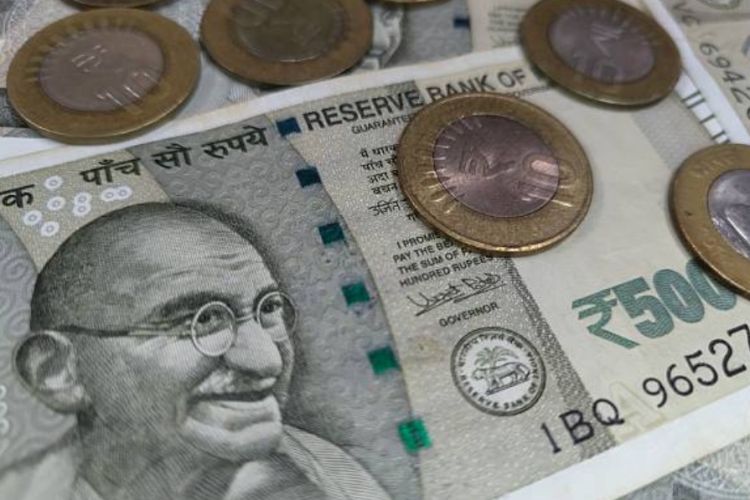
Rupee depreciation: The rupee’s latest fall is not, by itself, a crisis. It is a warning. The currency’s sharp one-day drop came as crude prices spiked on escalating conflict in West Asia, pushing investors toward the dollar and triggering renewed foreign selling in risk assets. The immediate outcome was familiar: a weaker rupee, slightly higher bond yields, and the Reserve Bank of India stepping in to smooth volatility.
India imports over 80% of its crude oil. When global oil prices rise abruptly, the rupee takes the first hit because the import bill has to be settled in dollars. The trade deficit widens before anything else adjusts.
READ | Iran conflict exposes India’s oil and trade vulnerabilities
That is not theory. India’s current account deficit has already been running higher: the RBI reported a CAD of $13.2 billion (1.3% of GDP) in the October–December quarter, versus $11.3 billion (1.1%) a year earlier. A sustained oil spike adds to an external gap that is not alarming, but not trivial either.
Strait of Hormuz risk, not just oil price risk
The draft treated this as a crude-price shock. That is incomplete.
A prolonged disruption in the Strait of Hormuz is a different class of problem. Reuters reported that roughly 40% of India’s crude imports typically pass through Hormuz, and that India’s on-hand crude and refined-fuel inventories are about 25 days by one estimate.
Even without a formal blockade, shipping risk, insurance costs, freight spikes, and delayed cargoes can tighten supply and push up landed prices. This matters because it shifts the question from “how high does Brent go?” to “how long is physical supply impaired?”
RBI intervention and market discipline
The RBI has been responding with caution. Market participants say intervention has been aimed at curbing volatility rather than defending a sacred number. That is the right distinction.
India’s reserves give the RBI room for calibrated action, but the central bank is not in the business of burning reserves to protect an arbitrary threshold. It can smooth disorderly moves. It cannot neutralise an oil shock.
READ | Iran conflict will accelerate the global shift away from oil
Rupee depreciation: Inflation risk and policy room
A sharply depreciating currency, alongside higher crude, raises the risk of imported inflation. Fuel and fertiliser costs transmit quickly, and second-round effects show up through logistics and input prices.
India’s inflation trajectory has improved from the post-pandemic surge, but that improvement is fragile at the margin. Persistent currency weakness combined with elevated energy prices narrows the RBI’s room for easing.
Bond yields and foreign flows
The bond market has reacted, but without panic. The benchmark 10-year yield has ticked up modestly, reflecting the combined effect of foreign selling, a weaker currency, and slightly higher inflation risk.
That response is consistent with an economy facing a global risk-off phase rather than a domestic policy accident. Yields staying well below 7% suggest investors do not yet see an inflation spiral.
Why FPIs matter more in this phase
Foreign portfolio flows can amplify currency moves in exactly this kind of environment. When geopolitical uncertainty rises, capital migrates toward the dollar and US Treasuries. For emerging-market currencies, episodic outflows come with the territory.
That does not mean the rupee is condemned to disorder. It means the currency becomes the clearing mechanism for external stress.
External fundamentals: stronger than 2013, not immune
The rupee has not entered a crisis narrative. India’s external position is sturdier than it was during 2013. Services exports still provide steady dollar inflows, and reserves provide an important buffer.
But “not 2013” is a low bar. The external sector can be resilient and still be vulnerable to a prolonged energy-and-shipping shock.
The missing channel: exports, remittances, and the Gulf linkage
The other omission in the draft is that West Asia is not only India’s oil supplier. It is also a major economic corridor.
Reuters reported that the region supplies roughly 55% of India’s crude, accounts for about 17% of India’s exports, and contributes about 38% of remittances. If the conflict persists, the risk is not limited to the import bill. A slowdown in trade, pressure on remittances, and stress on Indian firms with Gulf exposure can reduce dollar inflows at the same time as dollar demand rises.
LNG disruption has already moved into the real economy
Crude is only one part of the energy story.
Reuters reported that Qatar halted LNG production and India cut gas supplies to some industrial users, with companies notifying customers of reductions. That takes the issue beyond asset prices and into industrial costs and output decisions.
This is where macro discomfort becomes macro risk: when energy stress stops being a number on a screen and starts showing up as constrained supply.
READ | India, Russian oil and the risk of US trade coercion
Duration is the real variable
Brent in the high-$70s is uncomfortable but not yet destabilising. In earlier episodes, oil above $100 posed a much harsher macro challenge.
Everything hinges on duration. If tensions ease and shipping normalises, oil prices can retreat and the pressure on the rupee will ease. If physical disruption persists, India’s thin buffers and Gulf linkage will matter more than the RBI’s day-to-day smoothing operations.
Diversification helps, but dollars still price oil
India has diversified crude sourcing over the past few years, increasing purchases from Russia and other suppliers when discounts were available. That can reduce price pain at the margin.
But oil is still priced in dollars. Currency risk remains intrinsic. Efforts to expand non-dollar settlement are long-horizon projects, not near-term stabilisers.
Forecasts are only as good as geopolitics
Some market forecasts now assume a further weakening if the conflict persists, with higher yields as global investors gravitate to safety. These projections may prove right or wrong, but they are all hostage to one question: is this a price spike, or a supply-and-shipping shock that lasts?
The rupee’s weakness is largely a symptom of global risk aversion, compounded by India’s energy exposure. The country is caught in a storm it did not create. But the currency is still signalling where India remains most exposed.