


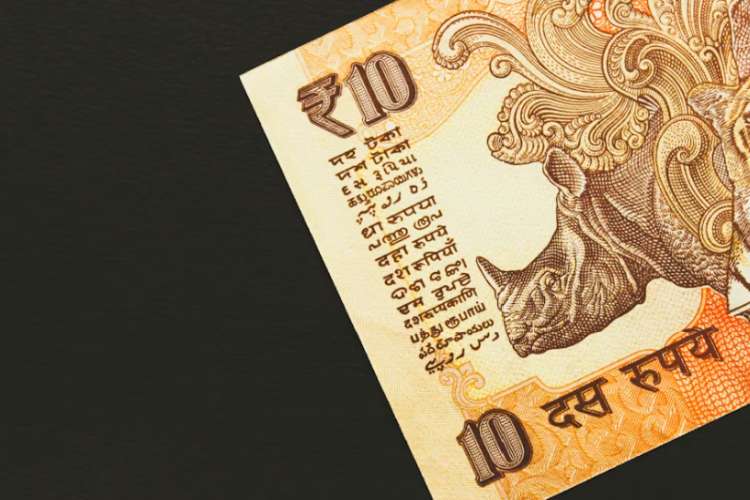
RBI plastic notes: India’s digital payments revolution has not ended the country’s dependence on cash. It has only changed the terms of the debate. UPI processed 24,162 crore transactions worth ₹314 lakh crore in FY26, according to official data. Yet the value of bank notes in circulation rose 11.9% to ₹41.23 trillion by the end of March 2026.
That is the setting in which the Reserve Bank of India is once again looking at plastic banknotes. The proposal has reportedly been discussed at recent RBI board meetings in Patna and Mumbai. A pilot project may follow. The case for such a move does not rest on sentiment for cash. It rests on the cost and complexity of managing it.
READ | India’s MSMEs face a cash-flow crisis as Iran war prolongs
Indian banknotes are printed on a cotton-based paper substrate. Polymer notes are made from a thin plastic film, usually polypropylene. They are smoother, more resistant to moisture and dirt, and can carry transparent windows and other security features. Their main advantage is durability. Their main test is cost.
Polymer banknotes and RBI costs
The argument for polymer notes should not be overstated. The RBI’s expenditure on printing currency notes fell to ₹4,875.2 crore in FY26 from ₹6,372.8 crore in FY25. The decline was mainly because the central bank reduced the indent for fresh banknotes.
That does not weaken the case for reform. It only changes its emphasis. The issue is not that printing costs rise every year. They do not. The issue is the total lifecycle cost of cash: printing, sorting, transport, storage, replacement, authentication and disposal.
India’s cash system is large, widely dispersed and heavily used. Notes pass through small shops, local markets, bus conductors, ATMs, bank branches and cash vans. Heat, dust, humidity and frequent handling reduce the life of paper currency. This is where polymer notes may have an advantage.
The ₹500 note now carries most of the cash economy. It accounts for 85.5% of the value of banknotes in circulation and a little over 41% of the volume. That makes its durability and security central to currency management.
The ₹500 note problem
The dominance of the ₹500 note has operational benefits. Fewer notes can carry more value. It also creates concentration risk. Counterfeiters have focused on the same denomination.
Counterfeit currency detected in the banking system rose 5.7% in FY26 to 2,29,746 pieces. Fake ₹500 notes rose 20.5% to 1,41,907 pieces. This is not evidence of a breakdown in currency integrity. It is a warning that the most important denomination needs stronger protection.
READ | Currency in circulation: What India’s ₹40 lakh crore cash stock means
Polymer notes can carry security features that are harder to copy. These include transparent windows, holographic elements, colour-shifting inks and fine micro-printing. The security case should not be exaggerated. Counterfeiting adapts. But a better substrate can raise the cost of forgery.
RBI plastic notes plan: India has tested this idea before
This is not a new proposal. In 2012, the government announced a field trial involving one billion ₹10 polymer notes across five cities. The objective was durability, not only counterfeiting. The project did not move to full rollout.
The reasons were practical. India did not then have enough processing capacity for polymer currency at scale. ATMs, note-sorting machines, authentication systems and cash-handling networks had to be calibrated. A currency note is not merely printed and issued. It has to be counted, checked, moved, accepted, returned, withdrawn and destroyed.
Some of these constraints have eased over the last decade. ATM calibration and note-recognition systems have improved. Banks and cash logistics firms also use better processing infrastructure. That makes a limited pilot more credible now than it was in 2012.
Lower notes and coin reluctance
A pilot need not begin with the ₹500 note. There is a strong case for testing polymer currency in lower denominations first.
The ₹10 and ₹20 notes do not matter much in value terms. But they matter in use. They change hands often and wear out quickly. Coins should have taken over some of this burden because they last longer. But public acceptance remains uneven. Many consumers find coins inconvenient. Some traders still resist certain denominations, including ₹10 coins, despite their legal tender status.
That keeps low-value paper notes in circulation longer than the RBI would like. It also adds to the replacement burden. A polymer pilot in lower denominations would test durability and public response without disturbing the high-value currency system.
Global experience offers a guide, not a template
Polymer banknotes are now used in many countries. Australia moved early. Canada introduced polymer banknotes in 2011. Britain began issuing polymer notes in 2016. Singapore, Malaysia, Thailand, Vietnam and Indonesia have also used them in some form.
The common argument is clear. Polymer notes cost more to produce. But they can last longer, stay cleaner, resist moisture better and reduce replacement frequency. That equation may work well in hot and humid countries. India cannot assume the same result. Its cash network is larger and more complex than most.
The RBI should therefore avoid treating global adoption as proof. It is only a guide. The Indian test must be based on Indian usage patterns.
READ | Rs 1.78 trillion tax devolution to shore up cash-strapped states
Digital payments do not make cash obsolete
The larger policy question is whether India should invest in better physical currency when digital payments are expanding so fast. The answer is yes, but only with discipline.
UPI has become the main platform for retail digital payments. Its scale is now global. But cash continues to serve households, small traders, informal workers, elderly users and areas where connectivity or trust is uneven. A country can digitise payments rapidly and still need a reliable cash system.
Nor is the central bank digital currency ready to replace cash. The RBI is expanding e-rupee pilots into welfare payments and cross-border use cases. Yet retail e-rupee circulation fell to ₹7.71 billion at the end of March 2026 from ₹10.16 billion a year earlier.
That makes the lesson clear. India is not moving from cash to digital in a straight line. It is building a hybrid payments system.
RBI must test lifecycle cost
The risks in polymer currency are real. Production costs will be higher. Banks, ATMs, note-sorting machines, cash vans and vending systems will need adjustment. Public education will matter. So will disposal and recycling. India cannot afford a hurried transition.
The RBI’s pilot should therefore answer a narrow set of questions. Do polymer notes last significantly longer in Indian conditions? Do ATMs and sorting machines handle them smoothly? Do users accept them? Are they cleaner in circulation? Do they reduce counterfeit risk? Does their total lifecycle cost beat paper currency?
That last question is the most important. The RBI should not compare only printing cost. It must compare full currency-management cost.
Cash is not leaving India. The sensible policy response is not to deny this fact. It is to manage cash better while digital payments continue to grow. Polymer notes may help. But they must first prove their worth in India’s own currency system.