


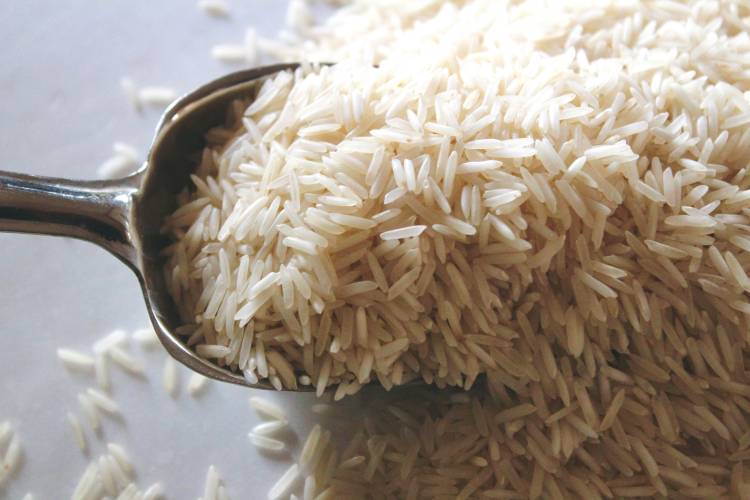
India’s basmati exports: India’s basmati rice is an unusual agricultural success. It is one of the few farm exports that has acquired both scale and a premium reputation abroad. India exported 6.52 million tonnes in 2025-26, up from 6.07 million tonnes the previous year. Yet export earnings slipped from $5.94 billion to $5.67 billion. That matters. Basmati has prospered because buyers pay for its aroma, grain quality and geographical identity. If volumes rise while earnings fall, the industry may be gaining market share at the cost of the premium that made it successful.
A more immediate threat comes from Iran. The Trump administration launched Operation Economic Outcast on August 24, widening the risk of secondary sanctions for companies and financial institutions dealing with Tehran. India’s basmati trade is exposed because Iran bought 13.9% of its exports in 2025-26, making it the second-largest market after Saudi Arabia.
READ | MSME exports: Open markets, closed credit taps
Iran sanctions reach the basmati trade
Rice itself need not be the target of sanctions for trade to suffer. An exporter needs a bank to process payment, a shipping line to carry the cargo and an insurer willing to cover it. If any of them regards an Iran transaction as too risky, a willing buyer is of limited use.
That risk has become more immediate after the UAE suspended trade and financial dealings with Iran. Dubai has been an important commercial route for Indian exports to the country. Reuters reported this week that Indian shipments of rice, tea and pharmaceuticals are likely to fall further as exporters face payment and shipping problems. Some exporters are examining alternative routes, including Turkey.
Food and medicines may still receive exemptions or special treatment. That offers some protection, but exemptions do not automatically restore banking, insurance or freight links. Earlier this year, the government told Parliament that disruptions in West Asian shipping and port operations were already affecting cargo movement to Iran. At the beginning of March, rice, tea and pharmaceutical consignments worth about Rs 346 crore were lying at Kandla and Mundra ports.
West Asia concentration raises the risk
Iran matters because it forms part of a much larger concentration. Saudi Arabia accounted for 16.6% of Indian basmati exports in 2025-26, followed by Iran at 13.9%, Iraq at 11.2%, the UAE at 8.2% and Yemen at 5.7%. The US accounted for another 5%. Five of India’s six largest markets are therefore in West Asia.
There are good reasons for this pattern. Basmati has a large and established consumer base across the Gulf and neighbouring countries. Culinary habits built over decades cannot easily be recreated in new markets. That gives Indian exporters considerable strength when West Asia is stable. It also leaves them exposed when politics, shipping or finance disrupts the region.
The answer cannot be to abandon markets in which India enjoys a strong position. It is to reduce the consequences of trouble in any one of them. The US already provides a useful foothold. Europe offers affluent consumers willing to pay for premium food products. Other Asian markets can be developed, although building demand there will require sustained investment rather than a search for replacement buyers whenever West Asia runs into trouble.
READ | India’s exports resilience masks narrow, fragile gains
Diversification will test price and quality
A broader market base brings another problem into view: price.
The government removed the minimum export price of $950 a tonne for basmati in September 2024. The floor had originally been set at $1,200 in August 2023 before being reduced to $950 two months later. Its removal gave exporters greater freedom to compete for business.
Volumes have since risen, from 6.07 million tonnes in 2024-25 to 6.52 million tonnes last year. Dollar earnings, however, declined. That is the trade-off facing the industry. Exporters want volumes, farmers want remunerative paddy prices and India has an interest in preserving basmati’s premium positioning. Chasing tonnage at progressively lower realisations would weaken one of the qualities that makes this export business attractive in the first place.
Pakistan adds competitive pressure. APEDA’s market intelligence data show how quickly the price gap between Indian and Pakistani basmati can change. Indian Pusa basmati recovered sharply to about $1,150 a tonne in January 2026, while the comparable Pakistani price was around $990. Such movements reflect inventories, crop conditions and demand as well as competition. India’s larger scale does not guarantee a permanent price advantage.
Premium markets also impose tougher quality standards. Europe has long required close monitoring of pesticide residues in basmati. APEDA’s 2024-25 annual report recorded increased EU compliance checks and a European Commission assessment of India’s system for controlling pesticide residues in food exports. As exporters seek richer markets, traceability, testing and farm-level compliance become commercial requirements rather than regulatory details.
READ | India’s textile exports need more than tariff relief
Basmati needs higher value, not only higher volume
There is also a constraint at home. The geographical indication for Indian basmati covers Punjab, Haryana, Himachal Pradesh, Uttarakhand, Delhi, parts of western Uttar Pradesh and Jammu and Kashmir. Two of its main producing states, Punjab and Haryana, face severe groundwater stress. Official assessments classify large numbers of groundwater blocks in both states as over-exploited.
That makes indefinite expansion of production a poor substitute for better export economics. Newer varieties and agronomic practices can improve water efficiency, but the larger commercial objective should be to earn more from the crop already produced.
India has an advantage that many commodity exporters would envy. Basmati has a recognised geographical identity, a distinctive product and consumers prepared to pay a premium for it. The export strategy should exploit those attributes through stronger branding, reliable quality, better traceability and more direct access to premium retail markets.
The Iran disruption has exposed the vulnerability of an export business tied heavily to a few markets and the financial routes that serve them. India’s next basmati milestone should therefore be measured less by another record in tonnes than by whether each tonne earns more and whether the business can withstand the loss of a major market without throwing the entire export chain off balance.