


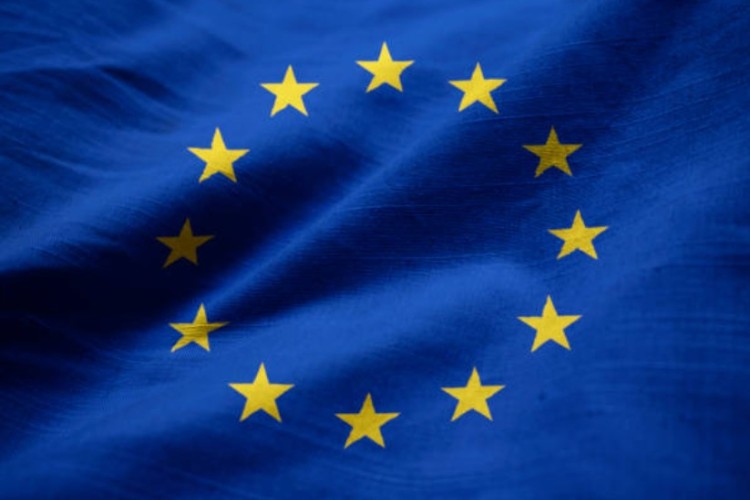
After decades of drift, the India-EU FTA may finally be declared ready, even as 2025–26 unfolds amid exceptional trade volatility. The two sides are expected to announce the conclusion of negotiations on January 27 during the visit of the European Union’s leadership to New Delhi. Formal signing, however, is likely to come later.
What has pushed both sides towards closure is less tariff arithmetic than a shared reading of a fragmenting global economy. Large markets are now searching for dependable partners. For New Delhi, last year’s tariff shocks, supply-chain disruptions and stalled talks with Washington sharpened the need to secure other trade anchors. For Brussels, facing weak growth and strategic uncertainty, India offers scale, political continuity and demand.
READ | Stalled FTAs expose unresolved choices in India’s growth model
Indian officials have indicated that while negotiations are complete, the agreement is not yet ready for signature. If the deal is presented as “ready” during the visit led by Ursula von der Leyen and António Costa, it will reflect pragmatic compromise rather than grand ambition.
Agriculture red lines keep the deal alive
That pragmatism is clearest in agriculture. Both sides have drawn red lines around farm trade. Exclusions and carve-outs acknowledge political reality: neither India nor the EU can expose farmers to external competition amid inflation pressures and electoral churn. This restraint has likely kept the agreement alive.
The real gains lie elsewhere. For India, improved access to the EU market for labour-intensive manufacturing and services matters more. Europe remains India’s largest trading partner. Even after preferential access under the Generalised Scheme of Preferences lapsed, Indian exports have held up.
An FTA would ease pressure on sectors such as textiles, apparel, leather goods, engineering products and pharmaceuticals. Lower tariffs, clearer standards recognition and more predictable regulation could help Indian firms integrate more deeply into European value chains instead of remaining marginal suppliers.
READ | India-New Zealand FTA matters beyond trade volumes
Rules of origin will decide preference utilisation
What will determine whether these gains materialise is not the tariff schedule but rules of origin and preference utilisation. Indian exporters have struggled in past FTAs to claim benefits because of complex origin thresholds, certification costs and documentation burdens. EU agreements are among the most demanding in this regard, particularly for products with imported inputs.
Unless domestic customs procedures, testing capacity and exporter support systems improve, a significant share of firms—especially MSMEs—may find it easier to export under MFN terms than to navigate FTA compliance. The risk is that preferences exist on paper but are underused in practice.
Services trade could deliver returns
Services, though less visible, are equally important. Indian IT and professional services firms have long flagged opaque visa regimes, data localisation rules and uneven regulation across member states. The agreement will not eliminate these frictions. But even modest movement on short-term business visas, mutual recognition of qualifications and digital trade rules would be material. With global goods trade slowing and cross-border services expanding, the most durable returns may come from this front.
From the EU’s perspective, benefits will accrue gradually. European firms view India as one of the few large markets where demand growth remains intact. Reduced tariffs on automobiles, wines and spirits, and select industrial goods will expand market access for European manufacturers and consumer brands. India’s young demographic underpins that appeal.
READ | India-EU FTA and CBAM: The coming carbon tax shock
Cuts to India’s high duties on wines and spirits carry limited immediate volume impact but considerable symbolic weight. European firms are also focused on regulatory cooperation and investment protection. The termination of several bilateral investment treaties left scars. An FTA offering greater certainty on dispute resolution, intellectual property and public procurement could revive European investment in Indian manufacturing, renewable energy and infrastructure. For Germany and France, this is as much about anchoring their firms in India as about reducing over-dependence on China.
CBAM and non-tariff barriers
Climate-trade frictions remain unresolved. India continues to object to the EU’s carbon border adjustment mechanism, which it sees as a trade barrier cloaked in climate policy, with implications for steel, aluminium and cement exports. While the FTA cannot override EU law, India has sought longer transition periods and recognition of development constraints. Whether such assurances hold will become clearer once CBAM shifts from reporting to levies.
Europe’s steel safeguard measures and import quotas also sit uneasily with free-trade rhetoric. Indian exporters worry that tariff concessions could be offset by non-tariff barriers. The agreement’s success will therefore depend less on signatures than on implementation, interpretation and litigation over time.
The politics of timing are instructive. New Delhi is keen to project India as an indispensable economic partner as global trade rules fray. For Brussels, concluding a deal with India signals that large, rules-based agreements remain possible despite protectionist pressures within Europe. It also aligns with the EU’s effort to recalibrate external relations after the Ukraine war and amid a more transactional United States.
India-EU FTA offers incremental payoffs
Some European capitals also see deeper economic ties with India as a way to dilute New Delhi’s reliance on Russia in defence and energy. Trade agreements do not realign foreign policy, but they widen options. In that sense, the FTA is as much about shaping future choices as current trade flows.
No one expects a silver bullet. Agriculture stays excluded, labour mobility remains cautious and climate-trade tensions persist. Gains will accrue incrementally, shaped by domestic reforms in India and regulatory coherence within the EU. Firms on both sides will have to invest effort to actually use the preferences on offer.
Handled with realism, the FTA could still become a pillar of India’s external economic strategy and Europe’s outreach to the Global South. The risk lies not in ambition, but in letting the promise dissolve into fine print and future protectionist reflexes.