


IIP growth: India’s factory output data for March presents a mixed signal. The Index of Industrial Production rose to a record 173.2 under the 2011-12 base year. Yet year-on-year growth slowed to a five-month low of 4.1%. Elevated output levels coexist with a loss of pace. Industrial recovery now needs closer scrutiny as global risks intensify.
Month-on-month activity remains firm. But the deceleration from 5.1% in February to 4.1% in March shows that expansion is slowing. This aligns with weakening external demand and emerging domestic constraints.
READ | Index of Service Production looks to close data gap
IIP growth: Manufacturing slowdown undercuts strength
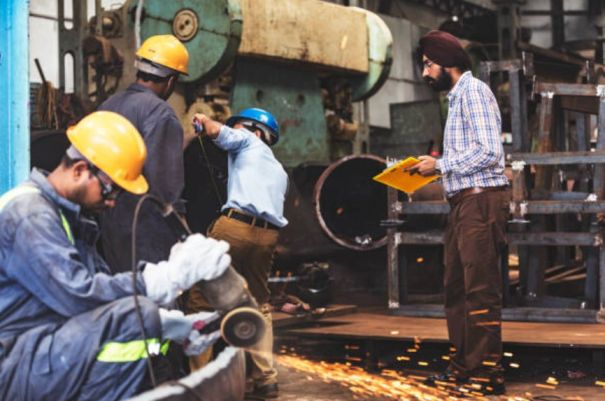
Manufacturing, with a 78% weight in the index, explains the shift. Growth slowed to 4.3% in March from 5.9% in February. Absolute output is higher but momentum has weakened. For 2025-26, manufacturing growth stands at 5%, up from 4.1% in FY25. The March data raises questions about durability.
CRISIL’s Dipti Deshpande notes that the data may only reflect early effects of the West Asia shock. Producer sentiment, input costs, and supply-chain adjustments typically transmit with a lag. The first quarter may show a clearer slowdown.
Electricity output, a proxy for economic activity, reinforces the signal. Growth slowed sharply to 0.8% year-on-year in March from 2.3% in February, despite an eight-month high in absolute output. Full-year growth fell to 1% from 5.2% in FY25. Industrial and commercial demand is not keeping pace.
READ | India’s new IIP series to reflect a changing economy
Mining spike looks transient
Mining is the outlier. Output hit a record level with 5.5% year-on-year growth. Sequential growth was strong at 14% over February. But full-year growth slowed to 1.4% from 3% in FY25. The March spike likely reflects inventory adjustments or front-loading rather than a sustained trend.
Three of six use-based segments weakened in March. Intermediate goods growth fell from 7.2% to 3.3%. As inputs to further production, this points to weaker activity ahead. Infrastructure and construction goods growth moderated from 11.1% to 6.7%, suggesting possible tapering or delays in project execution.
Cost pressures and margin squeeze
An important layer behind these trends is the transmission of input cost pressures. The West Asia conflict has already introduced volatility in crude oil and freight costs, which feed into a wide range of industrial inputs, including petrochemicals, metals, and logistics. For many firms, especially in sectors such as chemicals, textiles, and consumer goods, the ability to pass on higher costs remains limited due to uneven demand conditions.
READ | Indirect tax windfall brings cheer amid bad news on inflation, IIP fronts
This creates a margin squeeze. Producers often maintain output levels in the short term to protect market share, even as profitability weakens. Over time, however, sustained cost pressures typically lead to production cuts, delayed investments, or price increases. The recent slowdown in intermediate goods and electricity demand is consistent with this pattern. It suggests that firms may be adjusting operations cautiously rather than expanding capacity aggressively. This lagged transmission from input costs to output is critical to understanding why industrial growth appears stable in levels but weak in momentum.
Industrial growth hinges on demand, which remains soft. Consumer durables growth slowed to 5.3% from 7.1%, indicating fatigue in urban discretionary spending. Consumer non-durables returned to modest growth of 1.1% after contraction. Analysts point to inflation pressures and subdued IT hiring weighing on urban demand, while rural demand faces weather risks. Concerns over a potential El Niño-driven weak monsoon add to uncertainty.
Sectoral divergence persists
Of 23 manufacturing industry groups, 14 recorded growth. Food products, pharmaceuticals, and basic metals contributed positively. Capital-intensive segments such as machinery and equipment and motor vehicles posted double-digit growth, indicating ongoing investment activity.
Nine sectors contracted. Wearing apparel output fell sharply by 14.6%. Chemicals, beverages, and tobacco also declined. Demand conditions remain uneven across industries.
External shocks add downside risks
The West Asia conflict has introduced volatility in energy markets and trade routes. For India, higher energy prices risk stoking inflation and widening the current account deficit. Supply chain disruptions could raise input costs and affect availability, weighing on production.
Full-year IIP growth appears improved but remains modest. Industrial expansion is only marginally stronger than last year, with risks rising. Policy measures to support manufacturing and infrastructure investment warrant closer review.
March marks the final release under the 2011-12 base year. A new series is expected. Base revisions are necessary but complicate comparisons. Policymakers should interpret the data with caution.