


The global economy enters 2026 on paper in better shape than many feared two years ago. Growth forecasts from institutions and market economists remain positive. Inflation has eased across advanced economies. Central banks are preparing to cut interest rates. Stock markets, buoyed by artificial intelligence investment, signal confidence rather than distress. Yet this surface-level resilience conceals a more fragile reality. The sources of growth are narrow. Policy uncertainty is rising. Structural imbalances have worsened.
The risk for 2026 is not an abrupt collapse, but a slow erosion of economic stability that policymakers appear unprepared to address. This matters now because the choices made in the coming year will determine whether resilience hardens into durable growth or dissipates into repeated shocks.
READ | Indian economy: Growth brings prestige — and expectations
Global economy: Trade fragmentation is becoming structural
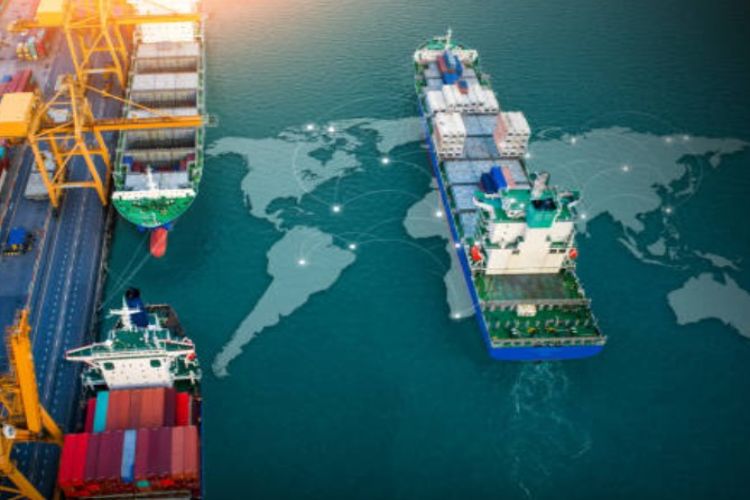
Global trade volumes remain intact, but the system that governs them no longer behaves as firms expect. The era of predictable, rules-based expansion is over. The United States’ repeated use of tariffs as a negotiating tool has introduced permanent uncertainty into supply chains. Tariffs are imposed, suspended, and threatened again, often without legislative clarity. Several measures remain subject to judicial review, adding legal risk to commercial planning.
China has adapted faster than expected. Its manufacturing exports remain competitive despite higher barriers, pushing surplus capacity into Europe, Southeast Asia, and Latin America. According to data cited by the International Monetary Fund, China’s current account surplus is projected to rise toward one percent of global GDP over the medium term—an unprecedented concentration. This export surge is amplifying trade tensions in regions already struggling with weak domestic demand.
For firms, the cost is not only tariffs. Compliance requirements, rules-of-origin documentation, and bilateral carve-outs raise transaction costs. As Maurice Obstfeld of the Peterson Institute has argued, the global trade system is becoming creakier, not smaller. The economic damage lies in inefficiency, not volume.
READ | Indian economy: Growth brings prestige — and expectations
Growth without jobs is becoming a persistent pattern
One of the most striking features of the current cycle is the disconnect between GDP growth and labour markets. Goldman Sachs projects global GDP growth of about 2.8 percent in 2026, with the United States expanding faster than peers. Yet job creation across advanced economies remains below pre-pandemic trends.
In the US, labour-force growth has slowed sharply due to reduced immigration. Nominal wage growth is moderating, easing inflation but dampening household confidence. Europe faces a different constraint: demographic decline combined with rigid labour markets. Even where fiscal stimulus is present, as in Germany, employment multipliers are weak.
Artificial intelligence is often cited as the solution. For now, its impact on productivity remains concentrated in a narrow set of technology-intensive sectors. Broad-based gains are still several years away, according to multiple estimates. The result is an economy that grows but does not absorb anxiety. This mismatch feeds political resentment, even as headline indicators continue to look stable.
China’s Rebalancing Problem Is Now a Global Problem
China’s current slowdown is not a passing cycle tied to global conditions. The property-sector collapse has already removed its main engine of domestic demand. Property sales are down roughly 60 percent from their peak, and new starts have fallen even more sharply. While Beijing is increasing spending on advanced manufacturing, infrastructure, and frontier technologies, household consumption remains constrained by weak income expectations.
The result is a sharper dependence on external demand, visible in China’s expanding trade surplus and rising export penetration into Europe and Southeast Asia. China’s ability to produce high-quality goods at lower prices remains unmatched. That efficiency benefits global consumers and accelerates energy transitions, particularly in renewables and electric mobility. But it also exports deflationary pressure to trading partners.
Europe is especially exposed. Its manufacturers face competition from Chinese firms while contending with high energy costs and tighter climate regulations. The adjustment burden is asymmetric, and policy responses remain fragmented. Without stronger domestic demand in China, trade frictions are likely to intensify rather than fade.
Fiscal Space Is Shrinking as Geopolitical Spending Rises
Public finances are under renewed strain. In the United States, federal debt has crossed 120 percent of GDP, driven by tax cuts, higher defence spending, and rising interest costs. Europe faces similar pressures, compounded by security commitments linked to the war in Ukraine and broader rearmament across NATO.
Germany’s fiscal pivot offers short-term support to euro-area growth, but several large economies, including France, are moving toward consolidation. This divergence complicates monetary-policy transmission. Central banks may cut rates, but fiscal policy is pulling in multiple directions.
Emerging economies face a different dilemma. Many are less exposed to tariffs but remain vulnerable to capital-flow volatility. A depreciating US dollar in 2026 may provide some relief, but uneven rate cuts and geopolitical risk premiums will keep financing conditions fragile. The margin for policy error is narrow.
READ | US tariffs windfall masks looming crisis for world economy
Political Risk Is Re-Entering the Economic Core
Economic policymaking is becoming more volatile because politics is more fragmented. Elections in major economies are amplifying short-term fiscal impulses. In the US, the approach of mid-term elections is already influencing spending decisions. In Europe, far-right parties are shaping trade and industrial-policy debates. In Latin America, tariff threats are increasingly used to exert political pressure.
Daron Acemoglu has warned that weakening institutions, not just poor economics, drive long-term stagnation. The erosion of trust in governments and multilateral bodies reduces the effectiveness of policy even when resources exist. A recent advisory report to the World Bank and IMF, invoking Antonio Gramsci’s description of an interregnum, captured this institutional unease with unusual bluntness.
The central risk in 2026 is mistaking short-term resilience for structural strength. The global economy is not on the brink of recession. But it is vulnerable to cumulative shocks from trade fragmentation, weak job creation, fiscal stress, and political volatility. Growth forecasts alone cannot carry the burden.
What is required is policy discipline. Clear trade rules, credible fiscal paths, and targeted labour-market reforms matter more than headline stimulus. Artificial-intelligence investment must be paired with skills policy and competition oversight. China’s rebalancing cannot rely indefinitely on external absorption. Advanced economies must confront debt sustainability honestly.
History suggests that prolonged drift—whether in trade rules, fiscal discipline, or institutions—rarely corrects itself without disruption.