


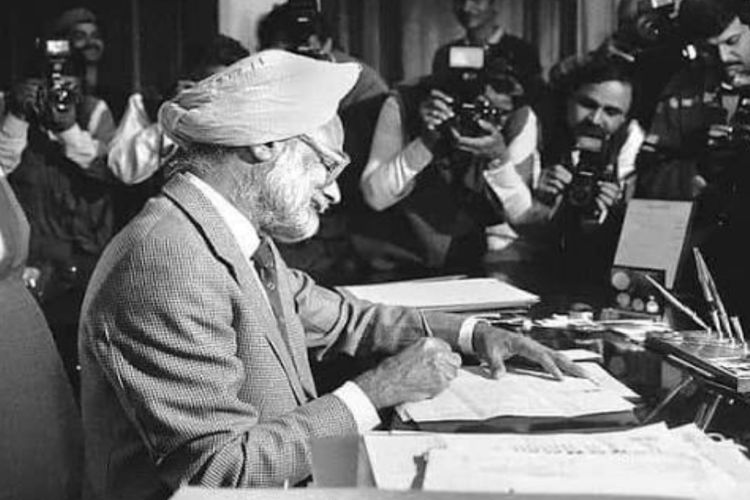
How family businesses thrived the 1991 reforms: On November 10, 1993, eight prominent industrialists met finance minister Manmohan Singh to voice their concerns about the reforms begun two years earlier. The group, soon known as the Bombay Club, included Rahul Bajaj, Lala Bharat Ram, Lalit Mohan Thapar, Hari Shankar Singhania, M V Arunachalam, BK Modi, C K Birla and Jamshyd Godrej. They feared that Indian companies, after decades of protection, would be exposed too quickly to multinational firms with better technology and greater access to capital. They, therefore, demanded from the government a level playing field vis-à-vis the foreigners.
Indian business families survived the opening far better than they expected. Business Standard’s analysis of listed companies, excluding banks, insurance and finance, shows that family owned firms accounted for 72% of combined revenues in FY26, up from 50% in FY01. Their share of corporate assets rose from 66% to 78%, while their share of net profits increased from 43.7% to 73.4%. Operating margins rose from 16.2% in FY01 to 20.9% in FY26.
READ | Ease of doing business boils down to states capacity
The experience of the past three decades points to a feature of Indian liberalisation that received less attention in 1991. Reform increased competition and opened new areas to private investment, while established business houses entered the new economy with accumulated capital, established distribution networks and experience in dealing with India’s institutions. Diversified family groups could also shift money and management across businesses. Those advantages often became more useful as controls were removed. The government took the Bombay Club very seriously. So, in the mid-1990s, a few years into the new economic order, the government allowed Indian companies to raise preference shares of up to 25 per cent of their issued capital.
Liberalisation changed the opportunity set
The reforms dismantled much of the Licence Raj, reduced industrial licensing, loosened import controls and gradually opened the economy to foreign capital. Yet the transition was neither instantaneous nor uniform. Indian companies had time to adjust, while established groups entered businesses that had previously been closed or heavily restricted.
Oil refining, telecom, power, insurance, ports, airports and other infrastructure businesses became major private-sector opportunities. Reliance expanded aggressively into refining and later telecom. Groups such as Adani built large positions in ports, power, logistics and airports. Mahindra, Bajaj and others found new sources of growth outside businesses with which they had traditionally been identified.
The advantage of the established groups went beyond size. They already possessed access to capital, distribution networks, managerial experience and relationships with suppliers and lenders. More important, diversified groups could move money, expertise and managerial resources between companies.
Research helps explain why this mattered. A study of 1,796 firms belonging to 80 Indian family business groups found that family-based governance helped diversified groups adapt during economic reforms and enter newly deregulated sectors. Internal relationships reduced some of the costs of coordinating capital and knowledge across businesses. Diversification, often regarded as a corporate weakness in mature markets, could therefore be useful where external markets and institutions were still developing.
This is one reason the Indian conglomerate proved more durable than economic theory once suggested.
READ | Ease of doing business needs state-level reform
Why family control endured
Family ownership brings its own economic logic. Capital controlled by a family can have a longer horizon than capital whose performance is assessed quarter by quarter. Owners may tolerate years of low returns while building a new business because the objective is to increase the value of the enterprise over generations.
Concentrated ownership can also shorten decision-making. A promoter-controlled group can commit large amounts of capital to an acquisition or a new industry without first building consensus among a dispersed shareholder base. In sectors such as infrastructure, where projects are large and returns can take years to materialise, this can be a significant advantage.
There is a second advantage in economies where formal institutions do not always work efficiently. Reputation and long-standing relationships can substitute, to some extent, for weak contracting, uneven enforcement or information gaps. Family groups can use internal capital markets when external finance is costly or unavailable.
These advantages should not be romanticised. Patient capital can become indulgent capital. The ability to move money between group companies can support expansion, but it can also keep poor businesses alive. Concentrated control can produce fast decisions, but it also gives controlling shareholders considerable power over minority investors.
The organisational strengths that helped family groups flourish can therefore become governance problems once those groups reach sufficient scale.
Adaptation separated the winners from the rest
The Bombay Club itself provides the clearest evidence that family ownership was never enough.
Some old groups adapted. Reliance moved into sectors created by liberalisation and subsequently built entirely new growth engines. Mahindra used its strength in tractors to expand into automobiles, technology and financial services. Bajaj developed financial services alongside its manufacturing businesses.
Others lost ground. The Thapar group, one of India’s largest industrial houses in 1991, declined sharply. Ballarpur Industries lost its leadership in paper, while other Thapar businesses were sold or restructured. B K Modi’s companies failed to sustain their earlier position. DCM fragmented. Escorts lost its leadership in motorcycles to Hero Honda and in tractors to Mahindra & Mahindra.
Liberalisation therefore did impose discipline, though often through competition from other Indian firms rather than the multinational invasion the Bombay Club feared.
The survivors were generally those capable of reallocating capital when an old business stopped delivering. Family control helped when it allowed such movement. It became a handicap when attachment to legacy businesses prevented it.
That distinction matters. The success of family capitalism after 1991 cannot be reduced either to protection or to superior entrepreneurship. India’s institutional structure gave large groups certain advantages, but those advantages produced widely different outcomes depending on how they were used.
READ | Compliance cost: Burden on business still hidden in plain sight
From family advantage to market power
The scale of the resulting businesses is now considerable. The 2026 Barclays Private Clients Hurun India Most Valuable Family Businesses List values the country’s 300 most valuable family businesses at about ₹138 lakh crore. The Ambani family alone accounts for roughly ₹25.8 lakh crore. The top 10 families represent about half the value of the list.
At this scale, the policy question changes. The issue is no longer whether Indian family businesses can withstand global competition. It is whether concentrated economic power leaves enough room for new competitors.
Recent research published in the World Bank Economic Review provides reason to take that question seriously. It found that the top 25 family business groups remained highly diversified and that their combined revenues exceeded 15% of GDP in 2020. It also found a significant association between industry concentration and the mark-ups earned by leading family groups during 2013-20. The authors argue for stronger competition and easier market entry rather than policies that reinforce incumbent groups.
Governance presents the other challenge. Family ownership can reduce the familiar conflict between professional managers and shareholders because owners have a large financial stake in the outcome. It can simultaneously create a different conflict when the interests of controlling families diverge from those of minority shareholders.
Succession makes that problem harder. PwC’s 2026 survey of Indian family businesses found that 52% of respondents regarded resistance from the senior generation as the biggest obstacle to preparing the next generation for leadership. Another 21% had delayed leadership transition because of uncertainty.
The Bombay Club wanted protection for Indian businesses until they became strong enough to compete. Thirty-three years after its meeting with Manmohan Singh, that argument has largely run its course. India has produced business families with the capital, managerial capacity and ambition to compete almost anywhere.
Their next test is institutional rather than existential. Family control helped many of these companies survive liberalisation and build scale. Whether that control remains an advantage will depend increasingly on professional governance, protection of outside shareholders and an economic regime in which even the largest incumbents have to keep earning their place.