


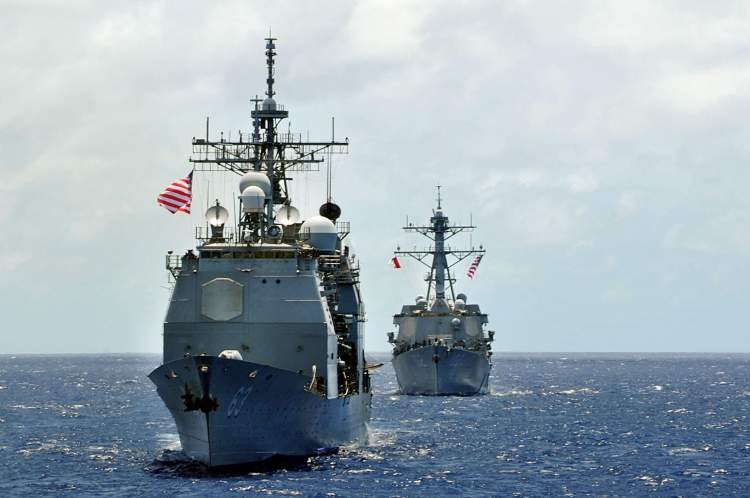
The United States has returned to coercive statecraft in Venezuela, but with fewer guardrails and higher risks. Under President Donald Trump, Washington has fused sanctions, naval power, targeted strikes, and extraterritorial seizures into a pressure campaign aimed at forcing regime change in Caracas. What distinguishes this phase is not just its militarisation, but its unilateralism. By sidelining multilateral institutions and stretching international law, the policy invites counter-moves by China and Russia in the Western Hemisphere.
The danger is not Venezuela alone, rather it is the precedent. If great powers normalise gunboat diplomacy in contested energy theatres, the result will be reciprocal escalation across regions — from the Caribbean to the South China Sea and the Black Sea—with systemic consequences for global trade, energy security, and international law.
READ I US power without trust will lead to isolation
A strategy without a legal anchor
Washington’s current Venezuela policy rests on a fragile legal foundation. The quasi-blockade of oil tankers, maritime strikes justified under counter-narcotics authorities, and the expansion of sanctions beyond UN mandates stretch the bounds of accepted practice. The designation of Venezuela’s leadership as a “narco-terrorist” entity has been used to blur the line between law enforcement and armed conflict.

This matters because it weakens the normative constraints that have limited great-power coercion since the end of the Cold War. When naval force is used absent multilateral authorisation, it erodes the credibility of international maritime law. Smaller states take note. So do rival powers with the capacity to respond in kind.
READ I US naval supremacy depends on factories, not aircraft carriers
Oil, sanctions, and the China factor
Energy is the axis around which this confrontation turns. Venezuela holds the world’s largest proven oil reserves, but sanctions have crippled production and exports. China has stepped into this vacuum. It is Venezuela’s largest crude buyer, absorbing roughly 4% of China’s oil imports, often at steep discounts. When US forces intercept or threaten tankers bound for Asia, the dispute ceases to be bilateral. Beijing has publicly characterised such seizures as violations of international law and unilateral sanctions.
The economic logic is straightforward. If US pressure forces American firms like Chevron to exit, Chinese state-linked firms consolidate control. The strategic logic is sharper. Beijing gains leverage over a sanctioned energy supplier in America’s near abroad, while Washington bears the reputational cost of supply disruption.
READ I America’s H-1B visa reform rewards scale, not talent
Russia’s return to the Caribbean
Russia’s interest in Venezuela is geopolitical rather than commercial. Caracas offers Moscow a platform to signal parity with Washington in its own hemisphere. Russian naval visits, security cooperation, and diplomatic backing of President Nicolás Maduro are low-cost ways to complicate US strategy. The Kremlin has framed American actions as a threat to international shipping and regional stability.
That language mirrors Moscow’s own arguments in the Black Sea, where it contests Western interpretations of freedom of navigation. This symmetry is not accidental. By endorsing US coercion in the Caribbean, Washington weakens its objections elsewhere. The result is strategic blowback: norms become transactional, and geography ceases to restrain power projection.
Data undercuts the policy case
The economic record of “maximum pressure” is sobering. Venezuela’s GDP contracted by more than 70% between 2013 and 2021, according to the International Monetary Fund, one of the deepest peacetime collapses on record. Oil production fell from over 2.3 million barrels per day in 2013 to below 800,000 bpd at its nadir. Migration surged.
The World Bank estimates that over seven million Venezuelans have left the country, straining neighbours and fuelling regional instability. Yet the political objective—regime change—remains unmet. Evidence suggests sanctions have redistributed rents within the ruling elite while external actors absorb the economic slack. Militarisation adds risk without altering this equilibrium.
How escalation globalises risk
The most dangerous consequence of the Venezuela strategy is precedent. If the United States normalises tanker seizures and maritime strikes outside declared wars, China can cite the same logic in the South China Sea. Russia can extend it in the Arctic or the Black Sea. Insurance premia rise. Shipping routes fragment. Energy markets price in political risk.
For import-dependent economies, including India, the spillovers are material. The International Energy Agency has repeatedly warned that geopolitical disruptions amplify volatility in already tight oil markets. A Caribbean flashpoint that draws in major powers would do precisely that. The costs would be global, while the gains—if any—would be uncertain.
A narrower, law-bound alternative
A credible policy requires discipline. Targeted financial enforcement against demonstrably illicit networks, coordinated through allies and maritime institutions, would impose costs without eroding norms. Multilateral engagement through the UN and the International Maritime Organisation would restore legal ballast.
Clear off-ramps tied to verifiable political steps would test incentives rather than rely on force. Above all, Washington must recognise that coercion in a multipolar world invites countermoves. The Western Hemisphere is no longer insulated from great-power rivalry.
Venezuela is becoming a test case for how great powers behave under stress. By leaning on unilateral force, the United States risks legitimising the very conduct it condemns elsewhere. China and Russia do not need to match American power to exploit this opening. They need only mirror its methods. The lesson is not restraint for its own sake, but strategy grounded in law, coalition, and realism. Absent that, a crisis meant to discipline Caracas could end up accelerating global disorder.