


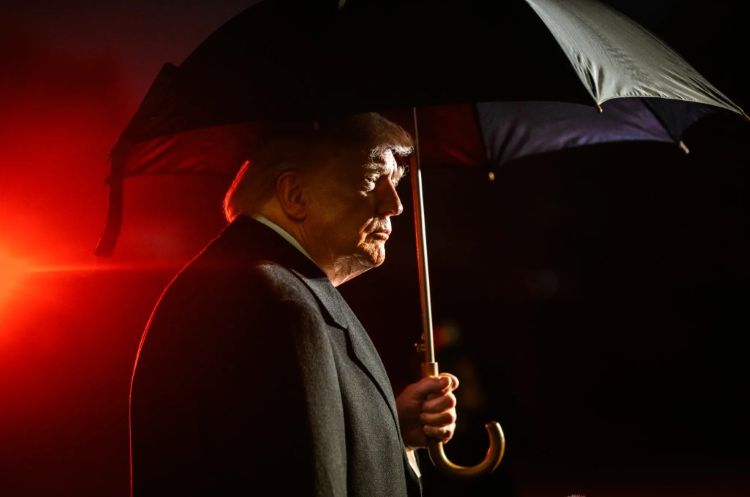
Donald Trump’s proposed Board of Peace was sold to the world as a narrow, time-bound mechanism to lock a fragile Gaza ceasefire into something durable. What has emerged instead is a body that bears little resemblance to what the UN Security Council believed it was endorsing in November. The gap between mandate and design is not incidental. It explains why the board will struggle to command legitimacy and trust.
The Security Council resolution 2803 that gave the initiative political cover was debated and passed in the shadow of Gaza. The text, the negotiations, and the diplomatic assurances revolved around post-conflict stabilisation and a pathway towards Palestinian self-governance. The draft charter circulated to capitals makes no mention of Gaza at all. Instead, it recasts the board as a permanent, global body, nimble and results-oriented, implicitly contrasted with unnamed but clearly recognisable failed institutions.
That shift alone undermines credibility. Multilateral consent rests on clarity of mandate. When states vote for one purpose and are subsequently enrolled in another, trust evaporates. It is difficult to imagine any serious international institution surviving a bait-and-switch of this scale without reputational damage.
READ I Europe’s Greenland dilemma as Trump threatens force
Board of Peace as imperial court
The design of the Board of Peace compounds the problem. The charter concentrates authority in the hands of a Donald Trump, named repeatedly and vested with powers that exceed even the most criticised features of the UN system. Trump selects all members, determines the agenda, convenes meetings at will, and can issue resolutions unilaterally. Decisions taken by majority are still subject to the chairman’s approval. The promise of reforming veto-ridden multilateralism is replaced by something far more arbitrary: an absolute veto exercised by one man.

The much-publicised membership rules deepen this legitimacy deficit. Permanent status is effectively available for a price, $1 billion in cash contributions, while others serve renewable three-year terms at the chairman’s discretion. For decades, the inequities of the UN Security Council have been criticised for entrenching post-war power hierarchies. The Board of Peace does not correct that distortion; it monetises it. Access is not earned through representativeness or contribution to global peace, but through fiscal capacity and political proximity to the chair.
Donald Trump’s own rhetoric makes matters worse. He has openly suggested that the board could supplant an ineffective United Nations, even as UN officials stress that the Security Council authorised the body only for Gaza-related work. This divergence is not semantic. It signals a deliberate attempt to hollow out existing institutions rather than reform them. For many countries—particularly in the Global South, long wary of ad-hoc coalitions dominated by great powers—the board looks less like innovation and more like institutional bypass.
READ I Trump-Xi meeting likely in April, but India’s worries remain
End of multilateral diplomacy
The composition of the Board of Peace reinforces these anxieties. Invitations have gone out widely, but acceptances so far are telling. Viktor Orbán, one of Trump’s most vocal European allies, has accepted. Vietnam has followed. Others, including France, have declined, and been met with tariff threats. Coercion is not an incidental feature, but part of the operating logic. Participation is framed as voluntary, but refusal carries economic penalties.
A body that claims to promote peace has invited leaders of countries engaged in full-scale wars. This sends a confused signal to say the least. It suggests that the board’s primary function is not norm-setting but deal-making, unconstrained by consistency or principle.
READ I US intervention in Venezuela and the Monroe Doctrine
Gaza plan may not find takers
Nowhere are these contradictions clearer than in Gaza itself. On paper, the board would oversee an executive structure, a Palestinian national committee, and an international stabilisation force led by a US general. In practice, the Israeli government has shown little appetite for moving beyond the first phase of the ceasefire.
It has resisted any arrangement that restores Palestinian governance or gives other regional actors—such as Turkey or Qatar—a substantive role. The resulting limbo suits Israel: hostages returned, UN agencies squeezed, and freedom of military action preserved without the costs of occupation.
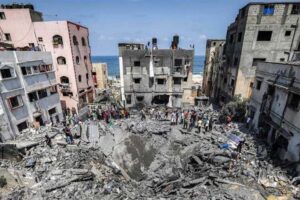

The architecture of the Board of Peace appears ill-suited to break that stalemate. By sidelining UN agencies and leaning towards profit-driven reconstruction models championed by crony financiers, the board risks substituting humanitarian coordination with commercial bargaining. Even respected figures such as Nickolay Mladenov, reportedly earmarked for a senior Gaza role, would find themselves constrained by a governance model designed elsewhere and answerable upwards.
Credibility in peace-building does not come from speed or photo ops. It comes from predictability, consent, and adherence to shared rules. The Board of Peace fails to offer any of these. It rests on personalised authority, transactional membership, and an implied threat against those who decline to participate. That may produce headlines, but it is a weak foundation for conflict resolution rooted in sovereignty and international law.
The likely outcome of the move is not transformation but irrelevance. Countries will hedge, join cautiously, or stay away. The United Nations will be weakened but not replaced. And the world will be left with yet another forum that promises much, delivers little, and erodes the very norms it claims to fix.