


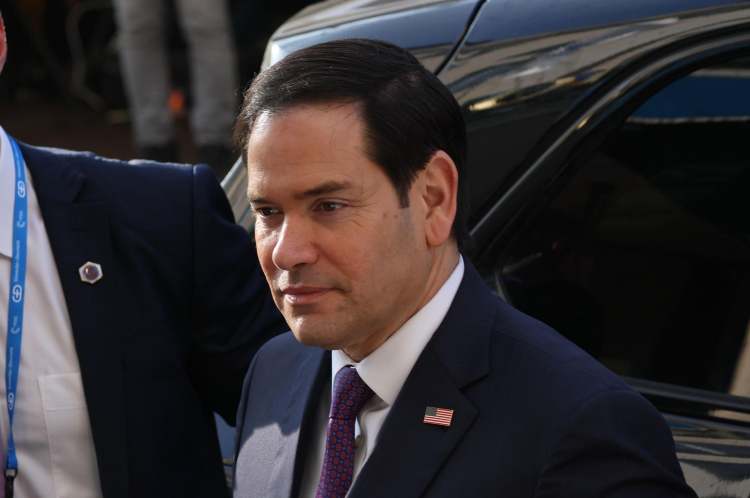
Marco Rubio’s Munich Security Conference speech on February 14, 2026 was received in Europe as reassurance: “we belong together,” the alliance is “we,” not “them,” and Washington is not walking away. But the architecture of the address was not reassurance. It was conditionality, delivered through a civilizational idiom designed to make a hard economic and supply chain agenda sound like moral repair.
Rubio framed the post–Cold War settlement as a dangerous delusion built around borderless globalisation, free and unfettered trade, and an overused rules-based order that displaced national interest. His policy diagnosis, however, was material, not metaphysical: deindustrialisation, jobs moved offshore, and control of our critical supply chains ceded to adversaries and rivals. The vocabulary comprising culture, heritage, and civilization was just the wrapper, not the content.
That is the point that matters. The speech was culture war language deployed as industrial policy: a narrative of heritage mobilised to justify reindustrialisation, border control, higher defence effort, and a more confrontational trade posture toward China and other systematically protectionist competitors.
READ I Trump’s world order breakdown echoes the 1930s
Heritage as a mandate for reindustrialisation
Marco Rubio’s economic core was explicit. He blamed the West’s dogmatic vision of open trade for shuttered plants, the export of millions of middle class jobs, and the hollowing out of domestic production capacity. Deindustrialisation was described not as a by-product of technology or comparative advantage but as a policy choice, an avoidable strategic error that undermined sovereignty.
The remedy implied by that diagnosis is not subtle: industrial policy, friend-shoring, and selective decoupling. Rubio’s formulation, “handing control of our critical supply chains” to rivals, translates quickly into procurement rules, screening of inbound investment, controls on sensitive technologies, subsidies for domestic capacity, and allied coordination on minerals, chips, batteries, and defence-industrial inputs.
In Munich, the language of “renewal and restoration” was presented as a civilizational project. But operationally, it is the policy toolkit of reindustrialisation: rebuild capacity at home; reduce dependence on hostile jurisdictions; treat supply chains as strategic infrastructure, not private logistics.
European officials heard reassurance. The United States was, again, speaking the language of the alliance. Yet the economic agenda embedded in the speech points to a more transactional relationship: Europe is welcome in the “renewal” only if it aligns with Washington’s preferred industrial and trade architecture.
READ I Trump tariffs overturned: What it means for the world economy
Border control as supply-chain politics
Marco Rubio’s most politically charged passages were on migration, cast as a consequence of the “pursuit of a world without borders.” He argued that mass migration “threatens the cohesion of our societies, the continuity of our culture, and the future of our people.” The phrasing is cultural; the function is political economy.
Border politics has become labour-market politics by other means. For many Western governments, the distributional stresses of weak wage growth, high housing costs, and strained public services are now narrated through migration—because that is the simplest mobilising frame in domestic politics. Rubio’s Munich speech takes that domestic frame and elevates it into alliance doctrine: border control becomes a “fundamental act of sovereignty” in the same conceptual family as industrial sovereignty.
This is not a defence of Europe from Russia. It is a redefinition of what “security” is for the alliance: borders, factories, energy, and culture—presented as one continuum. That is why the speech reads, to some analysts, as a calibrated continuation of the Trump administration’s pressure campaign on allies, even when delivered in a softer register than JD Vance’s address the previous year.
READ I Data, chips and sovereignty: Towards a new world order
Defence spending framed as a civilizational obligation
Rubio’s defence message was delivered indirectly but clearly. He criticised European welfare states built “at the cost of maintaining the ability to defend themselves,” while “other countries” carried out rapid military build-ups and used hard power for national interest. In other words: Europe must pay more, and it must do so not merely because Washington demands burden-sharing, but because “Western civilization” requires it.
This is a political manoeuvre. Burden-sharing debates usually sound like accounting disputes inside NATO. Marco Rubio tried to reframe them as moral duty: an inheritance to be defended, not a budget line to be negotiated.
That reframing also masks a strategic reallocation. The Trump administration’s central external focus is China; Europe is being asked to carry a larger share of conventional deterrence so Washington can rebalance resources. Analysts at Munich heard precisely this tension: softer rhetoric, harder expectations.
China-facing trade barriers, dressed as renewal
Rubio did not deliver a technical trade speech. He did not need to. He created a legitimising story for trade barriers by presenting open trade as the original sin of Western decline. “Free and unfettered trade” is depicted as naïveté exploited by states that subsidise and protect their firms to “systematically undercut” Western industry.
In that frame, China is not only a competitor; it is the proof case. Marco Rubio’s Q&A underlined that “whatever happens” on US-China trade has “global implication,” that there are “fundamental challenges” between “the West and China,” and that irritants will persist “for the foreseeable future.” The diplomatic tone—talk to Beijing, avoid unnecessary friction—sits atop a structural premise: trade policy is now national-security policy.
Think-tank commentary reading the speech as a programme—rather than a mood—lands at the same place: Western identity is defined as “heritage to be proud of” and a “civilization to be defended,” with “reindustrialisation… military force, and strict borders as the principal tools.” The toolkit is industrial and coercive; the language is cultural and restorative.
Europe’s risk is not merely rhetorical contamination. It is strategic subordination: accepting an American story of “renewal” that translates into US-designed trade walls, US-chosen supply-chain corridors, and US-approved definitions of which dependencies are acceptable.
The alliance debate Munich tried to avoid
A revealing counterpoint came from Elbridge Colby, the Pentagon’s under secretary of defence for policy, who argued in Munich for alliances grounded in “nuts and bolts” interests rather than “hosannas or shibboleths” about values. That posture is easier for Europe to negotiate with, because interests can be priced and traded.
Rubio’s approach is harder. Civilizational framing turns bargaining into loyalty tests. If borders, factories, and defence budgets are recast as the defence of “one civilization,” then dissent becomes moral failure, not policy disagreement. European leaders who welcomed the reassurance may discover that the reassurance was the bait, and the civilizational pact the hook—particularly when Washington pairs soft words in Munich with political outreach to Europe’s nationalist right elsewhere.
The speech, then, should be read less as a return to familiar Atlanticism and more as a repackaging of a supply-chain state: industrial policy, border politics, defence mobilisation, and China-facing trade coercion—stitched together by “heritage” as the legitimising doctrine.