


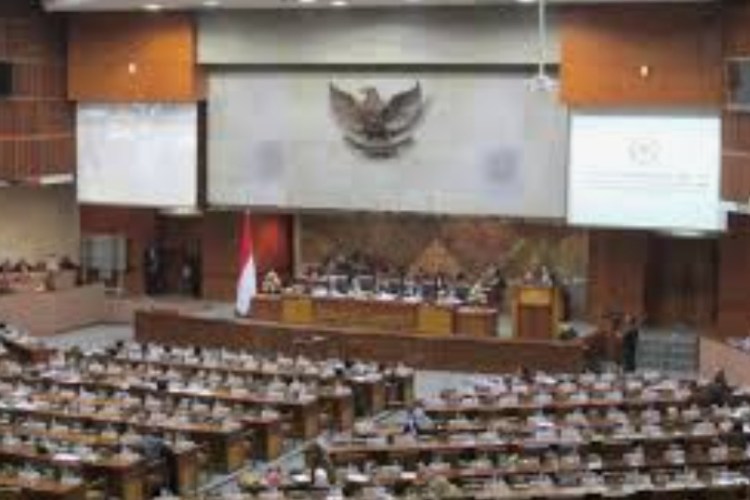
Indonesia is heading toward a period of electoral uncertainty as lawmakers delay discussions on a crucial Election Bill that will determine how the country conducts its 2029 national and local elections. The selection of new commissioners for the General Elections Commission (KPU) and the Elections Supervisory Agency (Bawaslu) must begin in October 2026, as mandated by the current five‑year term cycle
The Election Bill is included in the 2026 Priority National Legislation but progress has stalled. Without timely deliberation, lawmakers may be forced into fast‑track legislation or a government regulation in lieu of law (Perppu/President Constitutional Decree), both of which compress public consultation and technical preparation.
READ | Responding to the US-Iran War: Indonesia’s Board of Peace dilemma intensifies
Why timing matters
Passing the bill by early 2026 would give the KPU and Bawaslu enough time to run simulations, draft technical regulations and prepare administrative systems. Indonesia administers one of the world’s largest elections, with more than 200 million eligible voters and over 800,000 polling stations nationwide.
Delays in legal certainty increase the risk of administrative errors, logistical bottlenecks and legal disputes — issues that have surfaced in previous election cycles
The need for transparency
Indonesia’s law requires meaningful public participation in every stages of lawmaking. Opening the Election Bill to public scrutiny, publishing deliberation updates and disclosing points of disagreement are essential to ensure legitimacy and reduce the likelihood of judicial review. According to the provisions of Article 96 of Indonesia Law Number 13 of 2022 concerning the Establishment of Legislative Regulations, it states that. The public has the right to provide input verbally and/or in writing at every stage of Legislation Making. The Legislation Maker informs the public about Legislation Making, conducts public consultation activities, The results of public consultation activities are taken into consideration in the planning, preparation, and discussion of a Draft Legislation.
Election laws are among the most frequently challenged regulations before Indonesia’s Constitutional Court.
READ | Indonesia-US Agreement: A reciprocal trade deal that isn’t
A legislature waiting for executive signals
Although the parliament initiated the Election Bill, deliberations have not begun. They appear to be waiting for direction from the president, despite the Constitution stating that the parliament holds the power to form laws.
Coalition dynamics have contributed to the delay. Parties aligned with President Prabowo Subianto have expressed support for proposals such as allowing him to run again in 2029 and shifting regional elections from direct public voting to selection by local legislatures.
These political considerations have slowed momentum on the Election Bill, even though the bill is essential for ensuring legal certainty ahead of the 2029 polls.
Two clusters of reform
To avoid political deadlock, the revision of the Election Law can be divided into two clusters:
- Provisions required by Constitutional Court Decision
This ruling mandates separating national elections (president, parliament, and senate) from local elections (regional heads and local legislatures). According to Indonesia Constitutional Court decision, the constitutional simultaneous holding of elections in the future is by separating the holding of elections for members of the Indonesia’s House of Representative, members of the Regional of Representative Council , and president/vice president from the holding of elections for members of the provincial/district/city House of Representative and governor/deputy governor, regent/deputy regent, mayor/deputy mayor.
Implementing this decision is essential to comply with constitutional requirements and reduce administrative burdens.
- Broader reforms to improve election quality
These include:
- revising the electoral system
- strengthening political party regulations
- updating candidacy requirements
- improving campaign rules
- ensuring transparent budgeting
- regulating the use of technology and artificial intelligence
- enhancing law enforcement mechanisms
These issues require broad public debate and cannot be resolved through last‑minute negotiations.
READ | Sumatra floods expose the limits of Indonesia’s growth model
Strengthening the presidential system
A key challenge is ensuring that electoral reforms support — rather than weaken — Indonesia’s presidential system. Indonesia currently uses a 4 percent parliamentary threshold for parties to gain seats in the DPR. In the 2024 legislative elections, more than 17 million votes went to parties that failed to meet this threshold
Proposals to raise the threshold further risk reducing political diversity in parliament and weakening checks and balances, especially given the parliament’s limited oversight capacity.
A smaller number of parties may make it easier for the executive to dominate the
legislature. An alternative approach is to replace the parliamentary threshold with a faction threshold — a mechanism that regulates the formation of parliamentary groups without discarding millions of votes.
A more diverse parliament can strengthen the presidential system by ensuring that no single coalition can easily co‑opt the legislature.
What is at stake
Indonesia’s 2024 election cycle exposed gaps in electoral management, legal clarity and institutional independence. Without timely reform, these problems may worsen in 2029.
The Election Bill is not merely a technical document; it is the foundation for ensuring that Indonesia’s next elections are credible, transparent and well‑administered. With time running short, lawmakers face a critical choice: act now to strengthen the system, or risk entering the 2029 elections with unresolved legal and institutional vulnerabilities.
M Nurul Fajri is a lecturer in the Constitutional Law Department and Researcher at the Center for Constitutional Studies (PUSaKO), Faculty of Law, Andalas University Indonesia.
Originally published under Creative Commons by 360info
