


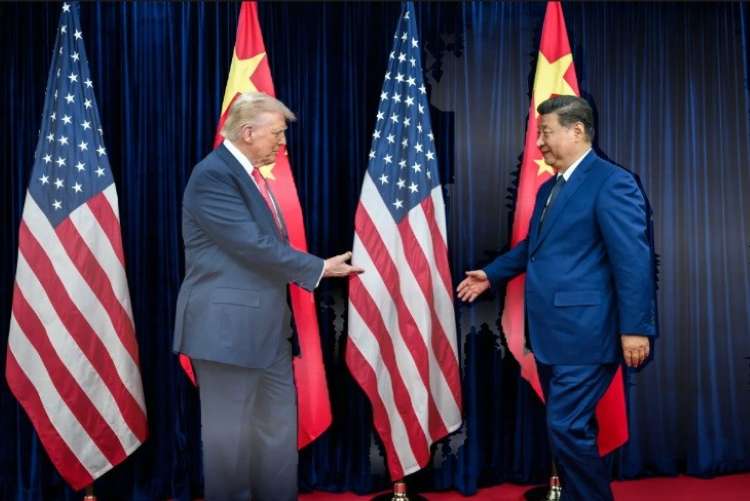
No miracle expected from Trump-Xi Summit: Donald Trump and Xi Jinping have little reason to allow the US-China relationship to slide back into the tariff confrontation of 2025. They have even less reason to expect a settlement of the disputes that have produced that confrontation. Their summit in Washington on September 24 is likely to extend the present pause in hostilities while leaving the central strategic disagreements intact.
That is a more useful way to assess the Trump-Xi summit than by counting the number of agreements announced at the White House. Trade can be managed through concessions and purchases. Supply chains can be given temporary protection. Governments can establish communication channels for new risks such as artificial intelligence. Taiwan is different. So is the contest for technological advantage. Neither can be settled through a commercial bargain.
Xi’s state visit has received unusual ceremonial treatment. Trump welcomed him at Joint Base Andrews, ahead of a formal state ceremony and dinner at the White House. Xi’s visit is the first by a Chinese leader to Washington in more than a decade. The optics signal the value the governments place on keeping the relationship under control.
READ I Trump’s UN speech tests America’s claim to global leadership
Trade gives both presidents room for a deal
The immediate economic objective is to preserve the trade truce. Washington and Beijing have extended the existing arrangement to January 10, 2027, giving negotiators additional time to work on tariffs and other economic issues. The two sides are also discussing a basket of roughly $30 billion in non-sensitive goods for possible tariff reductions.
China can offer purchases of American agricultural products and aircraft. Trump can offer tariff relief. Neither concession requires either government to abandon its broader economic strategy.
The record of previous commitments explains why expectations should remain modest. China had pledged large purchases of US agricultural products after the May meeting, but imports were running below the levels promised. The aircraft commitments discussed at that meeting have also faced uncertainty. Fresh purchase announcements could provide political benefits to both presidents without resolving the trade imbalance that has become a persistent source of friction.
China’s export strength gives Xi another reason to prefer a stable truce. Chinese exports have continued to grow despite American tariffs and restrictions, and the country is on course for another very large trade surplus. Trump, meanwhile, has domestic incentives to demonstrate that negotiations with Beijing are producing lower trade barriers and more purchases of American goods. Reuters reported before the summit that both leaders were seeking stability while facing different economic and political pressures.
The probable bargain is limited. An extension of the truce, some tariff reductions and new purchase commitments would reduce uncertainty for businesses. They would leave the harder disputes over industrial policy, technology controls and market access for later negotiations.
READ I Borrowers’ platform faces a test from creditors in the room
Rare earths will remain a source of leverage
Critical minerals are harder to deal with because the dependence is physical and takes years to reduce.
China dominates the refining of rare earths and several other minerals used in advanced manufacturing, electronics and defence equipment. Beijing has already demonstrated that export controls can put pressure on American manufacturers. Washington is trying to develop alternative supplies, but new mines and processing facilities cannot be built at the speed of a presidential negotiation.
That gives China leverage today. It also gives Washington an incentive to accelerate diversification rather than accept permanent dependence on Chinese processing.
The negotiations are consequently likely to focus on predictable access to Chinese supplies and the conditions under which Beijing can impose new restrictions. The United States will want reliable licences and shipments. China will seek limits on the use of American export controls against Chinese technology companies. Neither side has an interest in giving up the instrument altogether. The World Economic Forum’s assessment before the summit similarly identified rare-earth licences, export-control safeguards and supply-chain arrangements as key issues to watch.
A minerals agreement could stabilise bilateral trade without resolving the dispute over supply chains. The US wants to become less dependent on China; China wants to retain the economic leverage created by that dependence. Those objectives will lead to temporary accommodation rather than a settlement.
READ I India’s China+1 opportunity is not a low-wage contest
AI creates a narrow opening for cooperation
Artificial intelligence offers one area where Washington and Beijing have a practical reason to establish a communication channel.
US Treasury Secretary Scott Bessent proposed an AI safety notification mechanism during talks with Chinese Vice Premier He Lifeng in New York on September 20. The proposal would allow the two governments to communicate about AI incidents that rise to the level of national security. The two sides also agreed to establish an AI dialogue.
Such a mechanism could help prevent an AI-related incident from becoming a wider confrontation. It would not resolve the technology competition.
Washington is concerned about Chinese access to advanced American AI capabilities and about the use of AI in cyber operations and other security-sensitive activities. Beijing sees US export controls as an attempt to restrict its technological development. The two governments also approach AI safety from different political and security perspectives. The overlap is narrow, but it is sufficient to justify communication between officials.
The most that can reasonably be expected from the Trump-Xi summit is progress towards an operational channel. Agreement on common rules for advanced AI is much further away. The World Economic Forum notes that the two countries remain divided over export controls and the scope of AI cooperation even as both recognise the need to manage security risks.
No agreement likely on Taiwan
Taiwan presents a different problem because concessions carry strategic consequences that cannot be measured in tariffs or purchase orders.
Xi is expected to put pressure on Trump over US arms sales to Taiwan. Beijing regards Taiwan as Chinese territory and opposes US military support for the island. Washington has continued to supply Taiwan with weapons while maintaining a policy designed to deter conflict without recognising Taiwan as an independent state.
Trump has already indicated that Taiwan could form part of his negotiations with Xi. That approach gives Beijing an incentive to seek further restrictions on US arms sales. It also creates concern in Washington and Taipei that economic agreements could become linked to security decisions.
Neither president is likely to resolve the underlying dispute at this summit. A statement supporting continued dialogue or reaffirming existing positions would be easier to achieve than an agreement on arms sales. The importance of the meeting lie in what each side believes it has learned about the other’s willingness to accept risk.
Trump-Xi Summit may contain rivalry
The key achievement of the summit may be prevention of the US-China relationship from deteriorating while both sides pursue their strategic objectives.
That is a limited achievement, but not insignificant. A fresh tariff rivalry would raise costs for businesses and consumers. Disruption of critical mineral supplies would affect manufacturers far beyond the two countries. An AI incident involving national security could escalate before diplomats had time to establish the facts. A crisis over Taiwan would carry consequences far beyond trade.
The two governments have acquired an interest in keeping communication open even as they compete. The latest analysis from the Institute for Defence Studies and Analyses describes the summit as a test of whether transactional diplomacy can contain a rivalry that is becoming increasingly structural.
That is probably the limit of what Washington can deliver this week. Trump can obtain economic concessions without changing China’s strategic objectives. Xi can secure greater predictability without persuading Washington to abandon its effort to reduce dependence on Chinese technology and supply chains.
The relationship is moving towards a form of managed competition. Trade negotiations can prevent commercial disputes from becoming crises. Direct communication can reduce the risk of miscalculation. But this will not remove the strategic contest over technology, supply chains and Taiwan.
The success of the Trump-Xi summit will depend less on the ceremony or the size of the announcements than on whether the agreements survive the next disagreement. If they do, Washington and Beijing will have bought themselves more time. The rivalry will continue, but the costs of managing it may remain within limits both governments can tolerate.