


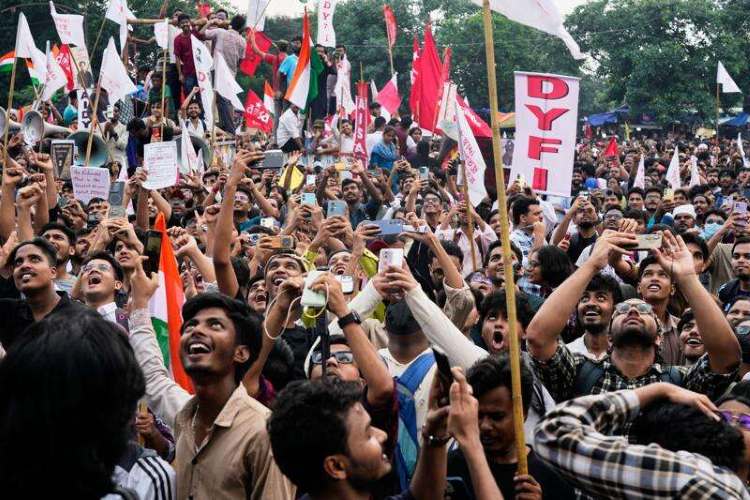
Dharmendra Pradhan’s resignation as Union education minister is unusual for a reason that has little to do with his personal record. Ministers have seldom paid a political price for administrative failure in recent times. Responsibility has usually travelled downwards- to an official, an agency or an inquiry committee. On July 25, it stopped at the minister’s door.
The resignation followed more than a month of student protests over examination paper leaks and irregularities led by the Cockroach Janta Party an online initiative that became a nationwide youth mobilisation. A leaked medical entrance examination had affected more than two million candidates. Protesters demanded Pradhan’s removal, compensation for the families of students who died by suicide, withdrawal of cases against demonstrators and changes in the examination system. The government eventually conceded these demands, and the movement called off its agitation after the resignation.
The student protesters have therefore secured more than a change of minister. They have revived a principle that had nearly disappeared from Union government practice: ministers carry responsibility for what their ministries do.
READ I Iron ore production needs to match steel expansion pace
Student protest forced accountability
Pradhan’s departure does not establish culpability for every leaked paper. Examination fraud involves criminal networks, coaching centres, contractors and compromised officials across several states. But the education ministry cannot claim ownership of national examinations when they succeed and plead institutional distance when they fail.
The National Testing Agency administers examinations that determine access to medical colleges, universities and other institutions. For candidates, an examination is not an administrative event. It represents years of preparation, substantial family expenditure and, in many cases, the prospect of social mobility. A leak transfers the reward from effort to access. A badly handled retest compounds the injury.
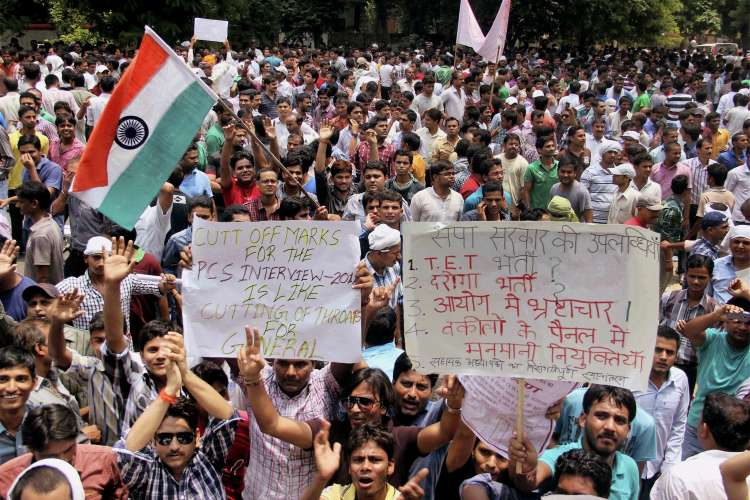
The government had already enacted the Public Examinations (Prevention of Unfair Means) Act, 2024. It provides prison terms of up to 10 years and fines of at least Rs 1 crore for organised examination fraud. The recurrence of leaks showed that criminal penalties had not repaired weak custody arrangements, contractor oversight or accountability within testing bodies. Parliament had supplied a law. The ministry had not supplied confidence.
The student protesters understood this distinction. Their demand was not confined to the prosecution of those who obtained or sold a paper. They held the political authority responsible for a system that had repeatedly failed candidates. That made the protest harder to settle through arrests and assurances of another investigation.
Pradhan’s resignation letter did not offer an apology. He said he was stepping down to prevent the anger of students from being exploited by “anti-national forces”. The phrasing retained the government’s habit of treating organised dissent as a possible security problem. Yet resignation defeated that argument. A government does not concede a minister to a student protest it considers wholly illegitimate.
READ I India’s GDP growth data still face a trust deficit
Why the CJP protest succeeded
The Cockroach Janta Party was formed as a satirical civic initiative, not as a registered political party. Its name turned an expression of contempt into a badge of association. Humour allowed young people to reject the language in which power described them. It also denied the government an easy ideological target.
The student protest retained a narrow and intelligible grievance. Students had taken examinations; papers had leaked; careers had been disrupted; the minister remained in office. Each element could be understood without allegiance to a political party. Parents who might disagree over religion, caste or electoral preference could recognise the unfairness of a compromised examination.
That clarity protected the movement when attempts were made to question its motives. The government could dispute the politics of the organisers. It could not explain why candidates should bear the cost of an examination authority’s failure.
The student protesters also combined physical occupation with digital reach. Jantar Mantar gave the movement a visible centre. Demonstrations in other cities prevented it from being dismissed as a Delhi quarrel. Social media carried speeches, police action and satire past television channels that gave the agitation limited or hostile coverage.
Social media by itself does not produce political concessions. Most online campaigns dissipate because attention carries little cost for the government. The Cockroach movement converted attention into repeated assembly, a hunger strike and marches despite police restrictions. The street supplied the pressure that the screen could only publicise.
Its independence from the established Opposition was equally useful. Opposition leaders supported the agitation, but they did not own it. Young demonstrators were not required to defend the record, leadership or alliances of an existing party. The government’s familiar charge of partisan orchestration consequently had less purchase.
The student protest also knew when to stop. After the government accepted its demands, its leaders asked demonstrators to return home “in good faith”. Continuing merely to preserve momentum could have blurred the original grievance and invited a confrontation over unrelated demands. Ending the agitation converted a concession into a recognisable victory.
READ I EPFO needs investment skills to match its financial weight
India’s examination crisis is not over
A ministerial resignation can punish failure. It cannot, by itself, prevent the next leak.
The government must now disclose the changes promised in the examination system. The testing chain runs through question setting, printing, digital systems, transport, examination centres and service providers. A breach at any point can invalidate the work of millions of candidates. General assurances about technology or vigilance will not establish who is responsible at each stage.
The National Testing Agency requires an accountability structure that does not wait for a national agitation. Its performance should be audited against published standards covering security breaches, grievance disposal, result corrections and the time taken to investigate irregularities. Contracts with examination vendors should be open to scrutiny. Officials who approve defective arrangements cannot remain invisible while candidates are ordered to sit another test.
Compensation also requires a settled rule. At present, candidates carry nearly the entire cost of cancellation: new travel, accommodation, coaching and lost time. The agency that fails usually bears no comparable financial liability. A statutory compensation mechanism would change the incentives of testing bodies and contractors. It would also spare students the indignity of having to mount a protest for relief.
The Public Examinations Act concentrates on punishment after fraud. Its severe sentences have political appeal, but certainty of detection is more useful than the nominal length of a prison term. The government should publish data on cases registered under the Act, prosecutions, convictions and action against examination service providers. Otherwise, the law may become another stern text with a thin administrative life.
Youth politics after the student protest
Examination failures supplied the immediate cause of the agitation. Their political force came from a larger anxiety. Competitive examinations sit at the narrow entrance to a scarce number of university places and secure jobs. When that entrance is corrupted, anger travels beyond the candidates directly affected.
This does not mean that every participant has joined a permanent anti-government constituency. Issue-based coalitions are powerful partly because they postpone disagreements that political parties must eventually confront. A movement united by examination reform may divide over reservations, recruitment policy, university governance or economic policy.
Nor does a successful student protest automatically become an electoral organisation. The attributes that helped the Cockroach Janta Party mobilise students, including satire, decentralised participation and the absence of a conventional hierarchy, may make durable political organisation difficult. Forming a party would require candidates, money, local structures and positions on matters far removed from education.
The more immediate consequence will be felt elsewhere. Students have learnt that sustained collective action can extract a concession from a government that first ignored and then resisted them. The Union government has learnt that ridicule and allegations of hidden political motives do not always break a student protest. Opposition parties have learnt that support is sometimes more useful than capture.
Television news organisations face a sharper warning. Their editorial neglect did not deprive the agitation of an audience. Young Indians used social platforms to distribute evidence, arguments and humour in forms that broadcasters could neither control nor easily discredit. Legacy media still carry authority and national reach, but they no longer possess an effective veto over which public grievance becomes visible.
Pradhan’s resignation will acquire lasting value only if it restores a normal expectation of government: when a department repeatedly fails citizens, someone with authority must answer for it. India’s students have recovered that expectation. The next government failure will show whether the political system has absorbed it.