


The road transport ministry plans to make vehicle-to-vehicle communication mandatory in every new two-wheeler, three-wheeler, car, bus and goods vehicle manufactured from October 1, 2028. The system will warn drivers when another vehicle brakes suddenly, changes course or approaches from beyond their line of sight. The ministry has moved towards compulsion without publishing evidence from Indian roads on the accuracy of the warnings or the response of drivers.
Under the draft amendment to the Central Motor Vehicles Rules, vehicles will exchange information on speed, position, direction and braking. The Department of Telecommunications has exempted the 5.875–5.925 GHz frequency band from licensing. AIS-230 prescribes the requirements for the onboard units. Compliance with these provisions will establish that two vehicles can exchange data. It will say little about whether the warning generated from those data will prevent a collision.
READ I India’s road safety data stops at the point of injury
Vehicle-to-vehicle communication mandate
India has reason to examine the technology. The road transport ministry recorded 480,583 accidents and 172,890 deaths in 2023. Two-wheeler riders accounted for the largest share of those killed. A V2V signal can reach where a camera or radar cannot. In fog, a car could receive a braking signal from a truck before its driver sees the truck. At an obstructed junction, each vehicle could detect the approach of the other. These uses merit trials. They do not, by themselves, justify a nationwide deadline.

The first systems will issue alerts and leave the response to the driver. The promised reduction in accidents therefore depends on the driver hearing the warning, understanding it and reacting in the few seconds available. MoRTH’s draft gives considerable attention to the equipment. It provides no evidence about the behaviour of the person expected to use it.
READ I Road safety demands a rethink of highway speed limits
V2V communication on Indian roads
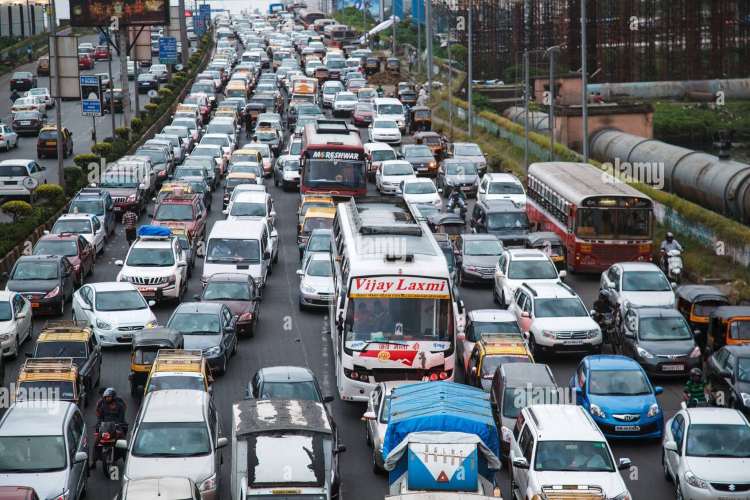
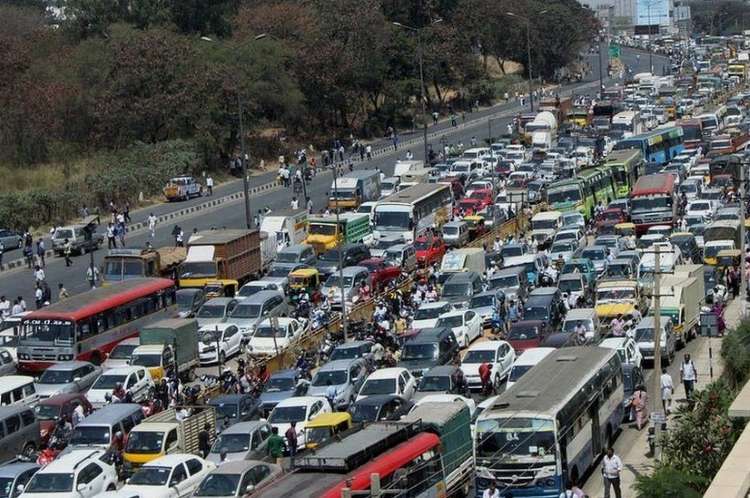
Much of the research on connected vehicles comes from countries with lane-based traffic and a narrower mix of vehicles. Indian roads carry cars, motorcycles, autorickshaws, buses, tractors, bicycles and pedestrians within the same carriageway. Motorcycles pass through small gaps, autorickshaws change course frequently and lane markings often have little influence on movement.
These are difficult conditions for a system that must decide whether the relative speed and direction of two vehicles indicate an impending collision. A manoeuvre treated as exceptional in a European or American model may occur hundreds of times during an urban journey in India. Unless the software has been trained and tested under such conditions, it may warn the driver too often.
Repeated false warnings will reduce the value of a genuine one. Drivers may lower the volume, switch off the alert where that option exists or cease responding promptly. An alert designed to secure attention can itself become a distraction in dense traffic. The ministry has not published the false-warning rates recorded on Indian highways, at city junctions or in markets where pedestrians and vehicles compete for space.
Indian research on mixed traffic has found that the following behaviour of two-wheeler riders changes with the size and type of the vehicle ahead. Their lateral position also shifts more often than that of cars moving within marked lanes. Vehicle-to-vehicle communication software will have to interpret those movements before it can calculate collision risk. A technical standard for the radio unit cannot resolve an error in that calculation.
READ I Road safety crisis: Why accident deaths keep rising
Limits of new-vehicle mandate
The Vehicle-to-vehicle communication mandate will apply only to vehicles manufactured from October 2028. India’s existing fleet will remain outside the network. For several years, an equipped vehicle may receive signals from only a small proportion of the traffic around it. Pedestrians, bicycles, animals and most roadside obstructions will send no signal.
This patchy coverage creates uncertainty for the driver. The system may detect a connected car beyond a bend while missing an older truck stopped in the same lane. Drivers will have no simple way to know which objects the system can see. Some may place more confidence in the display than the network warrants, especially after using it without incident.
The Vehicle-to-vehicle communication system also depends on the accuracy of the messages it receives. A faulty unit that broadcasts an incorrect location or braking status can prompt unnecessary reactions from nearby drivers. Deliberately falsified messages pose a larger problem. The United States built its Vehicle-to-vehicle communication proposals around security credentials, detection of malfunctioning devices and procedures for excluding them from the network. The Indian draft should identify the authority responsible for these functions and set rules for software updates, recalls and liability.
Cost has received equally little attention. Buyers will pay for the onboard unit and its maintenance. The increase may be modest for an expensive car and significant for an entry-level motorcycle or a small commercial vehicle. MoRTH has not published a regulatory impact assessment estimating the cost per vehicle, the expected reduction in crashes or the fleet penetration at which the safety gains become substantial.
Test V2V communication before rollout
The ministry should begin with large trials involving buses, trucks, ambulances and commercial fleets. Fog-prone expressways, accident-heavy corridors and congested urban junctions would provide different tests of the system. The trials should measure false warnings, driver response times and equipment failures. Crash and near-collision data should be published before the government settles the date of the Vehicle-to-vehicle communication mandate.
Warnings must also be consistent across manufacturers. A driver moving between a car and a commercial vehicle should not encounter different sounds or symbols for the same hazard. Driving schools and licensing tests will have to teach motorists how to interpret each alert, including the limits of what the equipment can detect.
Vehicle-to-vehicle communication could prevent some collisions that cameras, radar and human sight miss. It cannot repair a badly designed junction, enforce speed limits or bring an ambulance sooner. India should adopt it after the technology has proved that it can read Indian traffic and that Indian drivers can use its warnings. The October 2028 deadline is suitable for completing that work. The evidence available today does not support making the equipment compulsory by then.