


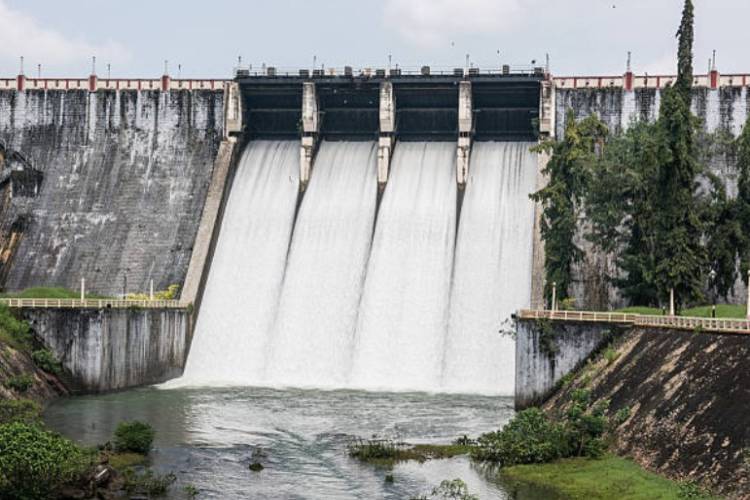
The Union Cabinet has approved a ₹2,584.6 crore scheme for small hydro power projects to add 1,500 MW over the next five years. The government hopes this will unlock another ₹15,000 crore of investment, especially in difficult geographies such as the Northeast. The scheme focuses on plants below 25 MW. In a country where hydropower is usually discussed through the lens of mega dams and environmental conflict, that shift matters. It turns attention to a part of the renewable energy mix that is easier to overlook and harder to dismiss.
Small hydro power (SHP) removes some of the constraints associated with large hydroelectric projects. It does not require the scale of dams, reservoirs and civil works that define large projects. In many cases, it can use the natural flow and gradient of rivers without substantially altering their course. That reduces the risk of displacement and lowers the social cost of construction. Large hydro projects, from the Western Ghats to the Northeast, have repeatedly run into opposition over ecological damage and social disruption. Small hydro can avoid some of that baggage while still drawing on India’s river systems.
READ | Battery storage is holding back India’s renewable transition
Small hydro power suits remote regions
It is also better matched to India’s uneven geography of development. The assessed small hydro potential is about 21,133 MW spread across 7,133 sites, much of it in hilly and remote regions. These are also areas where grid connectivity is weak and diesel-based generation is expensive. Terrain and weather can weaken the case for other renewable options as dependable local supply.
Small hydro plants have a relatively low footprint and long operating lives. They can supply stable, decentralised power close to demand. In regions such as the Northeast, Jammu and Kashmir, and parts of Himachal Pradesh, that can make a practical difference.
There is also a broader energy-system argument. India’s clean energy transition has leaned heavily on solar and wind. Hydropower offers firmer power and can help stabilise the grid as renewable penetration rises. The scheme itself highlights grid reliability and annual emissions reduction.
There is an industrial policy angle as well. The scheme mandates domestic plant and machinery. Unlike solar, where India still depends on imports for important components, small hydro has a stronger domestic manufacturing base. At a time of geopolitical and trade disruption, that matters.
READ | India’s renewable energy sector crosses a cost turning point
Hydro power is not impact-free
The familiar policy error is to treat all hydro as inherently green. Hydropower is renewable. It is not impact-free. Small hydro power may not produce the scale of damage associated with large dams, but it still alters river systems. Sediment flow can change. Aquatic biodiversity can be affected. Downstream water availability can be disrupted.
This is especially relevant in fragile mountain ecosystems. The cumulative effect of multiple small projects along a river basin can begin to resemble the effect of a larger intervention. That risk is well known, and it is one reason project-by-project clearance is often an inadequate way to judge ecological cost.
Small hydel units face viability problem
The economics are less attractive than the policy language suggests. Small hydro projects carry high upfront costs, long gestation periods and site-specific risks. That has kept private investors wary. The Cabinet’s decision to provide capital support of up to ₹30 crore per project in difficult regions may improve viability. It does not resolve the underlying weakness.
The bigger commercial problem is offtake. Small hydro tariffs are often higher than solar and wind because project costs are around ₹10-12 crore per MW, which pushes levelised tariffs to roughly ₹5-6 per unit. That makes DISCOMs reluctant to sign power purchase agreements with new projects. Without assured buyers and tariff visibility, subsidy support alone will not produce a strong pipeline. This is not a financing side issue. It is the core viability constraint.
READ | India’s renewable energy push calls for smarter state budgets
Local resistance also persists in some regions. Small hydro projects may be less contentious than large dams, but they are not exempt from the trade-offs that come with infrastructure development.
Small projects need basin-level planning
To use the resource better, India needs basin-level planning instead of relying on project-level approvals. That is the only way to avoid ecological overreach. Community participation must begin early, not after decisions are effectively taken. Small hydro must also be placed within a wider framework of water management that balances power generation with ecological sustainability.
The current scheme is, in part, a revival. The small hydro programme lost momentum after 2017 as solar and wind surged ahead on stronger policy support and falling tariffs. This is an acknowledgement that India’s renewable transition has become too dependent on a few technologies. That makes the policy shift necessary.
But the government should resist the temptation to market small hydro as a low-conflict alternative to large dams. It is lower impact, not no impact. Small hydro occupies an unusual space in India’s energy debate. It is neither as glamorous as solar nor as contentious as large dams. That in-between character is precisely what makes it useful.