


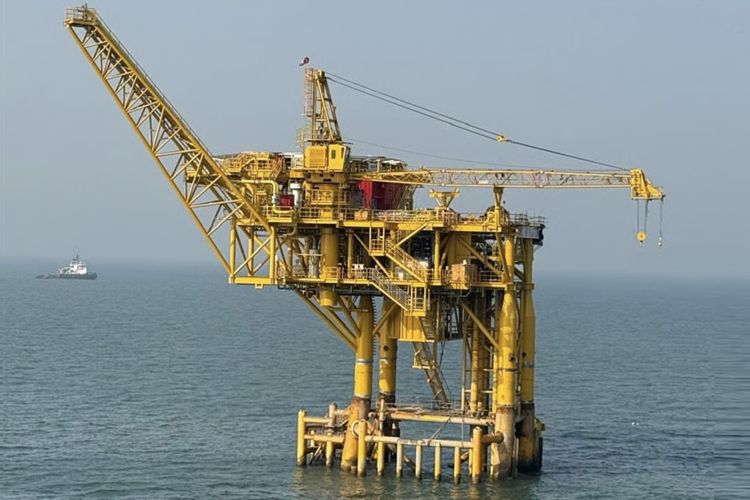
Samudra Manthan: India meets nearly 90% of its crude oil requirement through imports. Domestic production has declined over the past decade while consumption has continued to rise. Natural gas has followed a similar course. India therefore enters every disruption in the international oil market with limited room to insulate itself from higher prices or interrupted supplies.
The ₹84,084-crore Samudra Manthan programme is intended to improve this position by encouraging offshore exploration. The government plans to support seismic surveys, stratigraphic wells, common offshore infrastructure and some domestic manufacturing of exploration equipment. The case for such spending rests on the unusual economics of exploration. Companies incur large costs before they know whether a field contains recoverable oil or gas. Better geological information can reduce that uncertainty before private capital is committed.
READ | Energy security: Can Samudra Manthan revive oil exploration?
Samudra Manthan addresses exploration problem
India has spent years trying to attract investment in upstream projects. The Hydrocarbon Exploration and Licensing Policy (2016) introduced a uniform licence, open acreage and revenue sharing. Amendments to the Oilfields (Regulation and Development) Act and subsequent changes to petroleum rules reduced regulatory obstacles. OALP-X offered 25 blocks and OALP-XI another 21.
These changes have improved the terms on which companies can explore. They did not remove the main source of risk. An operator who spend heavily on seismic work, drilling and appraisal can still find no commercially recoverable hydrocarbons. Deepwater exploration raises the cost further because specialised rigs and supporting infrastructure are expensive. A dry well can destroy a substantial amount of capital.
Samudra Manthan is useful where it lowers this initial cost of finding out what lies beneath the seabed. Publicly funded geological information has value beyond the company drilling a particular well. Common infrastructure can also improve the economics of fields that would otherwise be too costly to develop.
That logic does not extend indefinitely through the life of a project. Once exploration has established a commercially promising field, investors have enough information to decide whether further spending is justified. Development capital at that stage should come mainly from companies prepared to take the commercial risk.
READ | India-Japan energy security pact gives New Delhi time, not insulation
BP interest gives an early indication
BP’s response provides one indication of how international companies view the changes. The company has expressed interest in investing $3-4 billion in India by 2030, with about two-thirds intended for upstream activities. It already holds a 33.33% stake in Reliance Industries’ KG-D6 block, works with ONGC and has shown interest in acreage offered under OALP-X.
That interest is useful evidence, though investment intentions should be judged by capital actually deployed and wells eventually drilled. India’s offshore basins have not become easier to explore because the policy framework has improved. Better seismic information can narrow uncertainty. It cannot change the geology.
Tax treatment also affects investment decisions. Crude oil and natural gas remain outside GST. Exploration companies consequently cannot obtain full credit for taxes paid on several inputs, raising project costs. For capital-intensive offshore projects, such costs enter directly into decisions on whether a prospect is worth developing.
READ | Energy security: India must be prepared for oil supply disruptions
Public support needs a boundary
The government therefore has to decide where its financial role ends. Regional seismic work, geological databases, stratigraphic drilling and common offshore facilities create information or infrastructure that can be used by more than one operator. Public expenditure in these areas can lower entry costs for companies considering Indian acreage.
Commercial field development is different. Once sufficient geological evidence exists, companies can estimate likely production, development costs and expected returns. Private investors seeking the upside should bear most of that risk.
Without this boundary, Samudra Manthan could evolve into continuing fiscal support for projects that cannot attract capital on commercial terms. Exploration will always produce failures. That is inherent in the business. The government should therefore judge its spending by the quality of geological information created and the private investment that follows, rather than by the number of projects receiving support.
Recent disruption around the Strait of Hormuz has again exposed India’s vulnerability to events outside its control. Supplier diversification, refining capacity and commercial inventories offer some protection. They do not alter the gap between domestic production and consumption.
Nor can new offshore discoveries change that position quickly. A successful discovery requires appraisal, development and connection to production. Existing fields continue to decline during that period, while demand for transport fuels, aviation fuel and petrochemical feedstock is likely to increase with economic growth.
India will therefore continue importing large quantities of crude oil. Domestic exploration can moderate the degree of dependence and provide some protection against external shocks. It cannot substitute for electric mobility, renewable power, storage and greater energy efficiency.
Samudra Manthan will justify its cost if government spending on data and shared infrastructure persuades companies to commit more of their own capital to Indian exploration. The private investment that follows will be a better measure of the programme than the size of its public outlay.