


The Centre’s FY27 disinvestment number has the look of an old budget habit returning under fiscal pressure. The government has set a ₹80,000 crore target from disinvestment and asset monetisation, against ₹33,837 crore in the revised estimate for FY26 and ₹17,202 crore collected in the previous fiscal. The arithmetic is attractive. Share sales raise money without an immediate tax increase or extra borrowing. The problem is that they do not create a recurring revenue stream.
PSU disinvestment target and fiscal pressure
The Finance Ministry is trying to lower the fiscal deficit while sustaining capital expenditure and welfare spending. That task has become harder. The West Asia crisis has kept fuel-price risk alive, and weak monsoon conditions have already forced contingency planning for vulnerable farm districts. RBI has flagged fuel-price pressures, while Reuters reported that rainfall was sharply below average in late June and that the government had drawn up plans for more than 300 districts.
READ | Disinvestment: Capital recycling is an untapped fiscal lever
This is the setting in which PSU stake sales have returned to the front of fiscal management. Food, fertiliser and fuel subsidies are politically difficult to compress. Tax receipts can weaken if growth slows or commodity prices move against India. A minority stake sale in a listed public sector company looks easier. It can be timed, priced and executed through the market. It also allows the government to claim compliance with public shareholding rules.
That ease is also the weakness. Disinvestment receipts depend on market appetite, not budget need. When the market is favourable, the government can raise money at a respectable valuation. When sentiment turns, the sale is postponed, cut in size or priced poorly. The Budget can record a target. The market decides whether it is collectible.
LIC stake sale and SEBI deadline
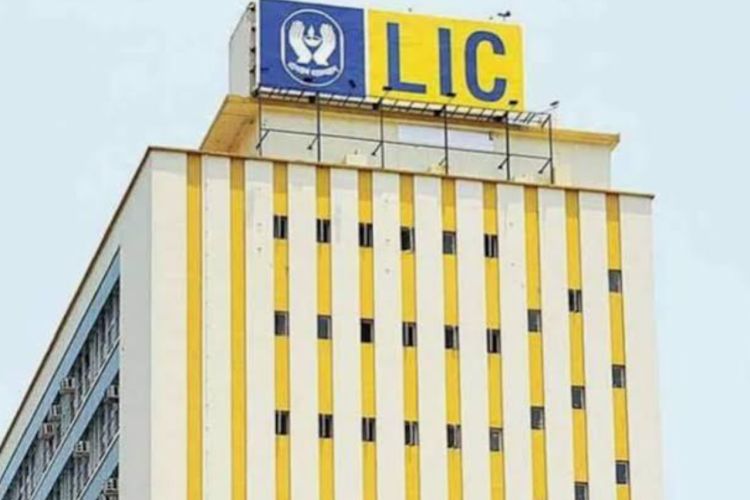
LIC will be the most closely watched transaction. The government still owns 96.5% of India’s largest insurer after the 2022 listing. SEBI has given LIC time until May 16, 2027 to reach 10% public shareholding. A further dilution is therefore both a fiscal option and a regulatory obligation.
READ | BPCL disinvestment: PSU fuel retailer yet to hear from govt
Even a small LIC dilution can raise a large sum. A one percentage point sale would bring several thousand crore rupees, depending on the market price. That explains why LIC appears central to the FY27 target. It also explains the caution. The 2022 IPO raised less than earlier expectations after volatile markets and valuation concerns. Retail investors have watched LIC’s post-listing performance closely. A large offer for sale can depress the share price if the market reads it as supply pressure rather than a broadening of ownership.
The government has to reduce its stake. It also has to avoid turning LIC into a fiscal cash box. The insurer is a financial institution with policyholders, minority shareholders and a large investment book. Treating each dilution mainly as a revenue event would weaken the case for listing itself.
PSU banks and stalled selloffs
LIC is not the only candidate. The Centre is expected to dilute holdings in public sector banks such as Punjab & Sind Bank, Indian Overseas Bank and UCO Bank, where government ownership remains well above the 75% ceiling implied by minimum public shareholding norms. Reuters reported last year that the government was seeking advisers for minority stake sales in state-run banks and financial firms to meet SEBI rules.
READ | Modi government clears disinvestment in BHEL, MMTC, NMDC
This is a different exercise from privatisation. A minority stake sale leaves management control with the government. It widens the float and raises cash. It does not change incentives in the bank, alter board control or make credit decisions less political. That is why the shift from strategic sales to minority dilution matters.
India’s record on strategic disinvestment is thin. Air India was sold. BPCL did not go through. Shipping Corporation of India and Concor have faced delays and reversals. Reuters reported in March 2026 that weak investor appetite had derailed or threatened several privatisation efforts, including IDBI Bank and Shipping Corporation of India.
The obstacles are familiar: valuation, land, employee concerns, regulatory approvals and political consent. A strategic sale transfers control. That is why it is harder. Minority dilution avoids those issues, but also avoids the reform that privatisation was meant to deliver.
Fiscal deficit needs more than asset sales
The danger is fiscal habit. Once disinvestment becomes a gap-filling device, the reform case weakens. Budgets set targets. Revised estimates cut them. Receipts arrive late or not at all. The government then carries the same pipeline into the next year with a larger number attached to it.
Minority stake sales have a place. They can improve public float, impose some market discipline and reduce excessive government ownership in listed firms. They can also help meet SEBI rules. But they cannot substitute for better expenditure control, subsidy budgeting and tax buoyancy.
The FY27 target will be judged first by execution. LIC, PSU banks and asset monetisation will decide whether the ₹80,000 crore number is credible. The larger issue is whether the Finance Ministry treats the receipts as a bonus from asset recycling or as a routine source of fiscal support. The first is defensible. The second leaves fiscal consolidation hostage to the stock market.