


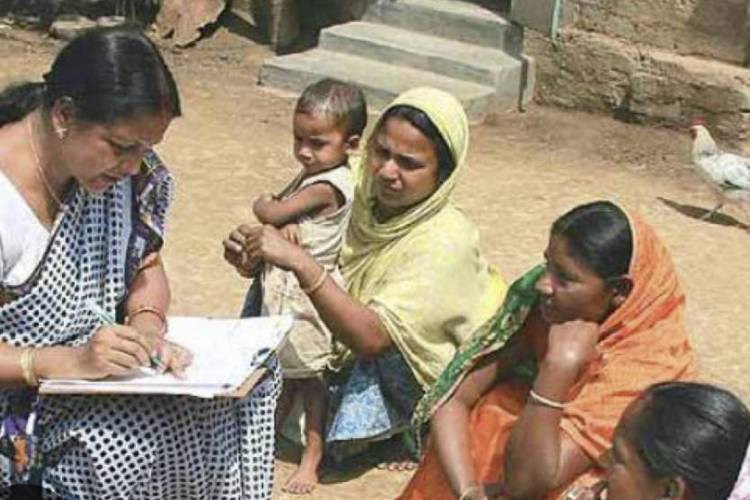
Poor data quality can undermine welfare schemes: India’s ambition to become a developed economy by 2047 depends partly on whether the government can measure the problems it seeks to solve. At the 20th Statistics Day celebrations on June 29, 2026, Principal Secretary to the Prime Minister P.K. Mishra said the country’s statistical system must keep pace with its development ambitions. The challenge is to ensure that official data accurately reflects economic activity and people’s needs.
Governments may increase spending on healthcare, infrastructure or employment programmes without achieving the intended results if the information used to design these interventions is unreliable. Poor implementation, inadequate funding and bureaucratic delays often explain weak welfare delivery. In some cases, however, the underlying problem begins earlier: the government may not know who needs assistance, where the need is greatest or how conditions are changing.
The test of a statistical system is therefore not simply how much data it collects. It is whether the information is accurate, comparable, timely and useful for policy decisions.
READ | Income inequality: What India’s tax data conceals
When beneficiary records fail
The National Food Security Act, 2013, illustrates how unreliable administrative records can undermine a welfare entitlement before its implementation has been properly assessed.
In its 2015 performance audit of preparedness for implementing the Act, the Comptroller and Auditor General (CAG) found that several states had not identified eligible beneficiaries under the new categories. Instead, they relied on existing records. In Himachal Pradesh, 6.9 lakh old ration cards were stamped and reissued as compliant with the new categories. In Karnataka, the state identified 8.90 lakh bogus or ineligible ration cards but continued issuing foodgrains against them.
These findings exposed a gap between the entitlement established by law and the records used to administer it. If an ineligible household remains on a beneficiary list, public resources may be misdirected. If an eligible household is omitted, the entitlement may fail to reach someone who needs it. Both errors weaken the effectiveness of a food-security programme.
The audit findings also show why digitising existing records is insufficient when the underlying information is wrong. A database can make records easier to process without making the beneficiary list more accurate.
India’s changing economy needs better measurement
Data quality problems can begin at the collection stage. Surveys may miss migrant workers, small enterprises may underreport their activity, and households may struggle to recall expenditure accurately. Administrative databases can contain duplicate entries, outdated information and inconsistent classifications. Differences in definitions across departments can also make apparently similar indicators difficult to compare.
These weaknesses become harder to manage as the economy changes. Digital payments, platform-based work and shifting consumption patterns alter how people earn and spend. Statistical methods must capture activity in both formal and informal markets, including businesses that are not registered with the government.
India’s statistical system is already adapting in some areas. The Ministry of Statistics and Programme Implementation’s Annual Survey of Unincorporated Sector Enterprises, for instance, is designed to measure the economic activity of businesses outside the incorporated sector. Such surveys are important because administrative records alone cannot provide a complete picture of an economy in which many enterprises operate beyond conventional registration systems.
The priority should be to keep survey methods, classifications and administrative databases responsive to these changes. When different agencies measure the same phenomenon using incompatible definitions, policymakers cannot easily determine whether differences between states or changes over time reflect real economic conditions or differences in measurement.
READ | India’s GDP growth data still face a trust deficit
Accountability must extend beyond statistical offices
Responsibility for unreliable data cannot rest solely with the enumerator who fills out a form or the officer who compiles a report. It extends to the institutions that design surveys, set definitions, allocate resources, maintain databases, verify results and publish statistics. Political executives also have a responsibility to protect statistical work from pressure to produce politically convenient findings.
State governments have a particularly important role. India’s development outcomes vary across regions, and state agencies are often closest to problems involving health, education, employment, agriculture and urban infrastructure. National averages can conceal substantial differences between districts. State-level estimates can also become difficult to compare when methods and source data differ.
Local bodies therefore need the capacity to collect and verify information about the communities they serve. This requires trained personnel, adequate funding and procedures for updating records. Without these, national statistics may fail to capture local needs, while state governments may lack the evidence required to allocate resources effectively.
READ | e-Shram data shows women workers were never absent
The CAG’s audit of Karnataka’s implementation of the Mahatma Gandhi National Rural Employment Guarantee Scheme (MGNREGS), covering 2019-20 to 2023-24, provides a recent example. The audit identified deficiencies in planning and records, including failures to conduct required baseline surveys that should inform local employment planning. It also found discrepancies between employment plans and official records. These shortcomings weaken the basis on which gram panchayats estimate demand for work and plan scheme implementation.
The findings point to a practical requirement: local administrations must verify employment demand and maintain credible records before plans are drawn up. Better digital systems cannot substitute for missing surveys or inadequate scrutiny of the information entered into them.
Statistical offices need sufficient funding and professional independence. Departments must be answerable for the accuracy of the records they generate, and governments should explain significant revisions to published estimates. When audits identify discrepancies, the relevant authorities should disclose what corrective action they have taken.
India’s development ambitions require public institutions to measure progress honestly. If ration-card records fail to identify eligible households or local employment plans rest on incomplete estimates of demand, the consequences fall on citizens who depend on public services. The test of a reliable statistical system is whether it helps governments identify those gaps and correct them, even when the resulting numbers are less flattering than expected.