


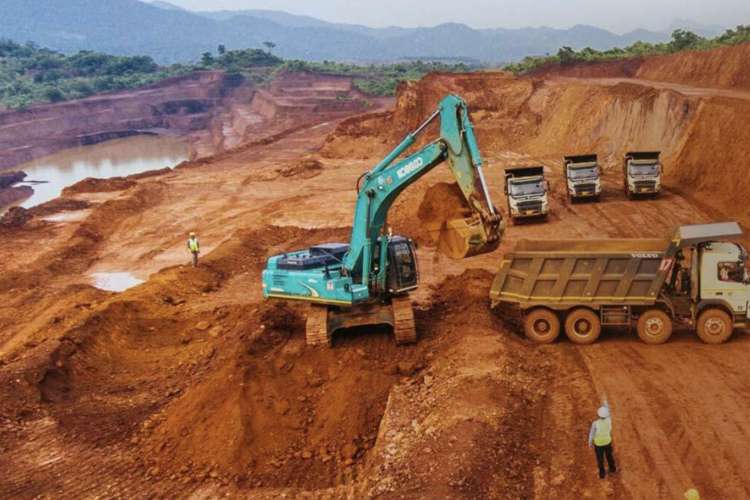
MMDR Amendment: The Mines and Minerals (Development and Regulation) Amendment Bill, 2026 moved through Parliament in three days. It was introduced in the Lok Sabha on August 10, passed there on August 12 without debate, and cleared by the Rajya Sabha on August 13. Its immediate consequence is to strip much of the financial value from a Supreme Court judgment delivered barely two years ago. Odisha has the most at stake.
Supreme Court ruling on mineral taxes
In July 2024, a nine-judge Constitution Bench in Mineral Area Development Authority vs Steel Authority of India settled a dispute that had run for four decades. Royalty, it held, is not a tax. States have the power to tax mineral rights and mineral-bearing land. Parliament cannot take away their power to tax land under Entry 49 of the State List.
READ | MMDR Amendment Bill revives mineral tax federalism row
A subsequent order allowed states to recover mineral-tax arrears from April 1, 2005, without interest or penalty and with payments spread over 12 years.
The sums involved are large. Estimates put arrears across the country at Rs 1.5-2 lakh crore. Odisha’s potential claim exceeds Rs 1 lakh crore, much of it linked to the Odisha Rural Infrastructure and Socio-Economic Development Act, or ORISED Act, which was struck down in 2005 and has been litigated since.
MMDR Amendment extinguishes unpaid dues
Section 9D changes that position. States will be barred from imposing taxes or levies on mineral rights or mineral-bearing land on the basis of quantity, value or royalty, except under conditions prescribed by the Centre.
More consequentially, unpaid or unrecovered dues arising from earlier state levies will be deemed invalid. Money already collected will not be refunded.
That produces an unusual result. The Supreme Court judgment survives, but a substantial part of the revenue flowing from it disappears.
The Centre says its purpose is to prevent large differences in the cost of major minerals such as coal, iron ore, bauxite, manganese and copper. Mines Minister G Kishan Reddy argues that higher mineral costs feed into steel, cement, infrastructure costs and imports, while differences between states could influence investment decisions.
READ | India to boost critical minerals mining for clean energy security
The amendment does not cover minor minerals such as sand, gravel and ordinary clay.
Ministry officials also say existing environmental, pollution and other mineral-sector levies will continue. Their combined incidence, however, may be capped at a level to be prescribed after consultation with states. That leaves an important part of the new regime to subordinate legislation.
Constitutional questions remain
PRS Legislative Research identifies several possible constitutional problems.
The first is legislative competence. Parliament’s powers over mineral rights under Entry 50 are subject to a separate constitutional allocation of taxation powers. Tax on land falls under Entry 49 of the State List. The Supreme Court’s 2024 judgment rested heavily on that distinction.
The second concerns retrospectivity. Parliament can change the legal basis on which a court has ruled. It cannot simply declare a judicial decision ineffective without curing the legal defect identified by the court. Whether Section 9D does enough to meet that test is likely to be contested.
There is also an Article 14 question. Companies that paid state levies before the amendment lose that money, while companies with unpaid demands have their liabilities extinguished.
Finally, the Bill leaves the Centre to prescribe the conditions under which states may impose such levies, without setting out clear criteria in the statute. That delegation could itself come under scrutiny.
Odisha carries the largest exposure
The political argument is sharpest in Odisha.
The Biju Janata Dal estimates that the state could lose more than Rs 1 lakh crore in arrears and around Rs 12,000 crore annually. These are party estimates and have not been independently reconciled with government accounts. But Odisha’s exposure is plainly substantial. It accounts for 34 of India’s 101 auctioned mineral blocks, the largest number for any state.
The Union government’s answer is that states are not being deprived of mineral revenues. Reddy says their receipts from the mineral sector rose from Rs 13,258 crore in 2014-15 to Rs 71,035 crore in 2024-25, while their share of mineral-sector revenue increased from 65% to 88%.
READ | Will direct licensing unlock India’s mineral wealth?
That does not answer the narrower question raised by Odisha. A state can receive rising royalties and mining revenues while still losing a separate tax claim worth tens of thousands of crores. The amendment extinguishes dues that the Supreme Court had specifically allowed states to recover.
There is a political puzzle too. Odisha sends 20 BJP MPs to the Lok Sabha. None is reported to have spoken against a measure with such large fiscal consequences for the state.
For a state governed by the same party as the Centre, that deserves an explanation.
Odisha’s next legal battle
Odisha’s ORISED appeal remains before the Supreme Court. Even a favourable judgment, however, would now run into Section 9D and its retrospective cancellation of unrecovered liabilities.
The more consequential litigation may therefore concern the 2026 amendment itself: whether Parliament has validly changed the law following the Constitution Bench judgment, or crossed the line into neutralising a judicial ruling in an area where the Constitution gives states their own taxing power.
For Odisha, that question could be worth more than Rs 1 lakh crore.
Nihar Nalini Sarangi is a Cuttack-based commentator on political economy and public policy.