


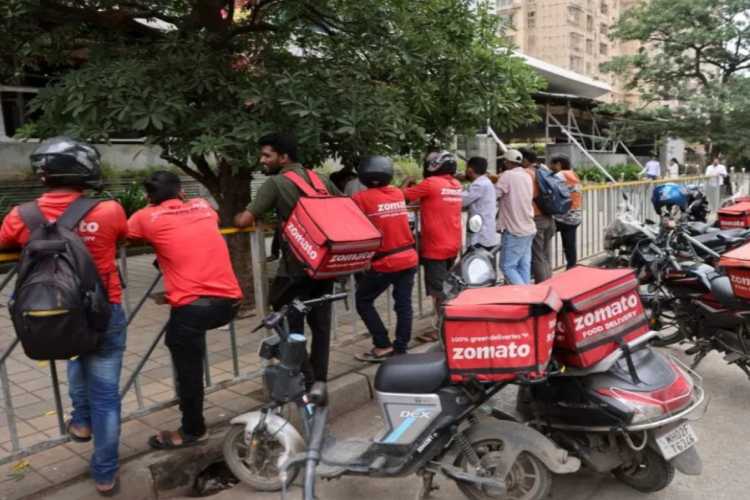
India’s gig workers need a pension system that works: The expansion of platforms such as Zomato, Blinkit, Swiggy and Zepto has created new employment opportunities, but the workers who keep these businesses running face an uncertain financial future. A delivery worker may earn enough to meet today’s expenses without knowing how much work will be available next week. A ride-hailing driver may spend years earning a livelihood without accumulating the retirement savings available to salaried employees through provident fund contributions. As India’s gig workforce expands, providing these workers with an income in old age has become an increasingly difficult policy question.
The government has begun addressing this problem through the Code on Social Security, 2020, which came into force on November 21, 2025. The legislation provides for social security schemes covering gig and platform workers, including old-age protection. Yet the arrangements for financing retirement benefits and determining individual entitlements remain to be settled. A pension system built around regular contributions from employers and employees cannot easily accommodate workers whose earnings fluctuate and who may work for several platforms simultaneously.
READ | India’s gig platforms weaponise information asymmetry
According to NITI Aayog’s 2022 report, India’s Booming Gig and Platform Economy, the country had an estimated 7.7 million gig workers in 2020-21. The number is projected to reach 23.5 million by 2029-30. Government estimates put the workforce at around 10 million in 2024-25, although this figure is an estimate rather than a comprehensive enumeration. India still lacks a regularly updated national survey that adequately captures the size of the sector, workers’ earnings and their employment conditions.
Why conventional pensions exclude gig workers
In formal employment, retirement savings accumulate through regular contributions linked to wages. Under the Employees’ Provident Fund, employers and employees share the cost. Gig workers often have no single employer, fixed salary or continuous employment history. They may switch between delivery and driving, work through several apps or supplement platform earnings with other informal occupations.
Existing contributory pension arrangements offer limited protection to workers who cannot save consistently. Voluntary schemes may allow flexible contributions, but irregular earnings can lead to long interruptions. Even workers who remain enrolled may accumulate too little to provide a meaningful pension. The problem, therefore, extends beyond bringing gig workers into a retirement savings scheme. It involves ensuring that contributions continue and that the eventual benefits are adequate.
Who should finance gig workers’ pensions?
Section 114 of the Code on Social Security, 2020 empowers the central government to frame schemes covering life and disability insurance, accident insurance, health and maternity benefits, old-age protection and other forms of assistance. The legislation also provides for aggregator contributions of between 1% and 2% of annual turnover, subject to a ceiling of 5% of the amount paid or payable to gig and platform workers. Schemes may draw on government funds, aggregator contributions and contributions from beneficiaries.
These provisions establish possible sources of funding without determining how much should be allocated to retirement benefits, how individual pension entitlements should accrue or what level of pension a worker can expect. Those decisions will determine whether the legal framework delivers meaningful old-age protection.
READ | Urban women and gig work: Why India’s platform economy is not yet a real jobs pathway
Turnover-based contributions present difficulties of their own. Platforms differ considerably in their business models, operating costs and the share of revenue spent on workers. A levy calculated on turnover could affect companies differently from one linked to worker payments. Platforms might also attempt to recover part of the cost through lower incentives, reduced payments per task or changes in work allocation, leaving workers to bear some of the burden.
Requiring workers to finance most of their retirement savings would be equally problematic. Many already face uncertain incomes and unavoidable expenses such as fuel and vehicle maintenance. A financing arrangement must account for their limited ability to contribute while ensuring that platforms cannot evade their obligations by changing contractual arrangements or shifting work outside the reporting system.
Making pension contributions portable
Portability is another essential requirement. A worker should not lose accumulated retirement benefits or have to open a new pension account each time they change platforms. Contributions should follow the individual across apps and occupations, accumulating in an account that the worker can access and monitor.
This would require platforms to report earnings and contributions consistently, with a mechanism for reconciling records when workers use multiple apps. The administrative challenge is considerable, particularly when earnings fluctuate or workers move between platform employment and other informal occupations.
India has a starting point in the e-Shram portal, established in 2021 to create a national database of unorganised workers, including gig and platform workers. Registered workers receive a Universal Account Number, while an aggregator module allows platforms to participate in worker registration. The government reported in January 2026 that 12 major aggregators had been onboarded. The system could support a portable pension arrangement, although registration alone does not establish that contributions have been credited or that retirement benefits will eventually be paid.
READ | Extreme heat stress draining India’s gig workforce
International experience offers useful lessons. The OECD has examined the difficulties of financing social protection for workers outside standard employment, including those working through digital platforms. Its work highlights the need to adapt contribution arrangements to different employment relationships and earnings patterns. India will have to find an approach suited to a much larger informal workforce, where many workers have limited capacity to make regular voluntary contributions.
Should the government guarantee a minimum pension?
India has made progress in legally recognising gig and platform workers, but effective old-age protection will depend on the schemes and institutions established under that framework. The government must decide how contributions will be collected, how pension accounts will be maintained and what happens when workers are unable to contribute for extended periods.
The larger question concerns the balance between individual contributions and public funding. A pension financed entirely through contributions would leave many low earners with inadequate savings. A fully government-funded pension, on the other hand, would create a substantial and continuing fiscal obligation, particularly as the number of gig workers increases.
A blended arrangement involving platforms, workers and the government offers a possible solution. Contributions could accumulate in individual accounts while public funding provides some protection for workers whose lifetime earnings are insufficient to finance a minimum pension. Such an arrangement would require clear eligibility rules, predictable funding and safeguards against platforms transferring their obligations to workers.
India’s gig workforce is still relatively young, but its members will eventually retire. The government has created a legal framework for their social security. It must now decide how much retirement protection that framework can promise and who will pay for it.