


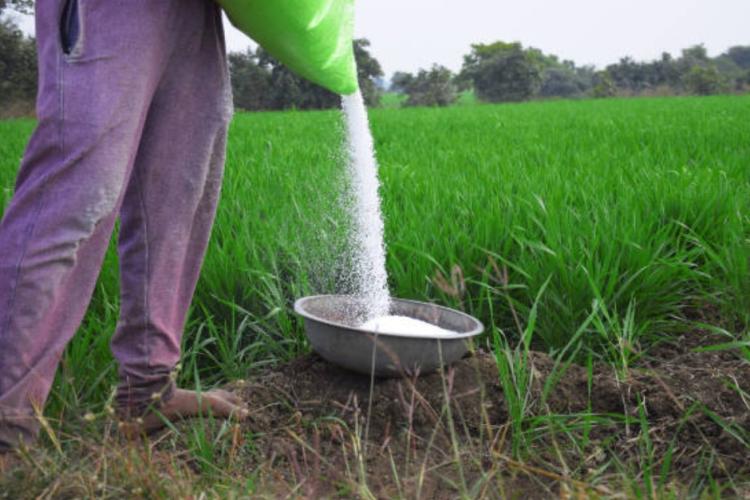
The latest geopolitical shock could once again swell India’s fertiliser subsidy bill. The conflict in West Asia has pushed up global prices of fertilisers and their feedstocks. That matters because the Union Budget for FY27 has provided about Rs 1.7 trillion for fertiliser subsidies, lower than the revised estimate of Rs 1.86 trillion for FY26. If higher international prices persist, that arithmetic will come under pressure.
India’s fertiliser economy is structurally exposed to global markets. The country depends on imports for a large share of its urea, DAP and ammonia needs. It also relies on imported natural gas, including LNG from the Gulf, for fertiliser production. That creates a direct link between geopolitical disruption, energy prices and subsidy costs.
READ | India’s fertiliser policy: How subsidies carry strategic risks
Nitrogen fertilisers are especially vulnerable to movements in gas prices because natural gas is the main feedstock. When gas becomes expensive or hard to source, global production costs rise quickly. The recent conflict has already driven up urea prices by about $100 a tonne to around $600. DAP prices have also risen, from roughly $650-670 a tonne to $750-770. Since India keeps farm-gate fertiliser prices largely insulated from such swings, the burden shifts to the exchequer.
This is not new. The Russia-Ukraine war showed how quickly energy and fertiliser markets can feed into each other. Russia and Belarus are major suppliers in global fertiliser trade, especially potash, while Russia is also important in nitrogen and phosphate markets. The disruptions of 2022 sent prices soaring and forced India to raise subsidies sharply to protect farmers. A similar dynamic is now visible again.
Urea pricing and subsidy design
The fiscal risk is sharper because India does not subsidise all fertilisers in the same way. Urea is sold to farmers at a statutorily fixed MRP of Rs 242 for a 45 kg bag, unchanged since March 2018. The gap between the delivered cost and that retail price is paid out as subsidy. Phosphatic and potassic fertilisers operate differently. They fall under the nutrient-based subsidy regime, with subsidy rates revised by the Centre for each season. That means a shock in global prices can hit the budget through both channels, though not in the same way.
That also explains why governments have repeatedly resorted to ad hoc support when global prices rise sharply. The nutrient-based subsidy rates have been revised upward in the past, and special support for DAP has been used to prevent a sudden jump in retail prices. So the issue is not only whether India has enough fertiliser in stock. It is whether the Centre can continue to absorb imported inflation without reopening the subsidy bill.
READ | Fake fertilisers threaten crop yields, food security
Kharif buffer, medium-term risk
There is no immediate supply crisis. Domestic stocks are comfortable, and prior imports provide a cushion. Fertiliser companies also maintain inventories ahead of the kharif season, so short-term availability should remain manageable even if global markets stay volatile.
The problem lies beyond the next few months. Fertiliser use in India continues to rise, driven by crop patterns and policy incentives. Rice and wheat remain input-intensive. Urea consumption has risen, and imports have had to bridge the gap. That raises the fiscal cost of insulating farmers from global price movements.
India’s pricing system magnifies the problem. Urea remains heavily price-controlled, while phosphatic and potassic fertilisers are subsidised through the nutrient-based subsidy regime. The result is a distorted pattern of use, with nitrogen applied more heavily than agronomy justifies. That is not merely a pricing problem. It is the source of India’s chronic N:P:K imbalance. The subsidy system encourages farmers to overuse urea, weakens fertiliser efficiency and damages soil health, while keeping fiscal costs high. Efforts such as nano-fertilisers and more judicious nutrient use have been discussed precisely because this structural distortion has become too large to ignore.
READ | From urea glut to cash in hand: Can fertiliser subsidy go direct?
Domestic capacity is not enough
India has tried to reduce this exposure through domestic capacity expansion. Six new urea plants have been commissioned in recent years, adding 76.2 lakh metric tonnes of capacity, and domestic output has risen. That is important, but it does not settle the problem. India still depends on imported gas and on imported raw materials such as phosphate rock and potash. Even a larger domestic manufacturing base remains tied to global commodity cycles through feedstock dependence.
Direct benefit transfer and balanced nutrient use
The government is exploring ways to contain the subsidy bill. Direct benefit transfer for fertilisers is back in discussion. So is some rationalisation of subsidies to encourage balanced nutrient use. These are necessary conversations, though politically difficult ones.
There is also a technology route. Nano-fertilisers, precision agriculture and better farm-level nutrient management can reduce wasteful application. But these are complements, not substitutes, for pricing reform. Without correcting the price bias in favour of urea, efficiency gains will remain marginal.
The current rise in global fertiliser prices should therefore be read as more than a temporary budget risk. It is a reminder that India’s farm economy still rests on imported inputs and fiscally expensive price suppression. As long as that remains true, every geopolitical shock will travel quickly from distant battlefields to the Union government’s balance sheet.