


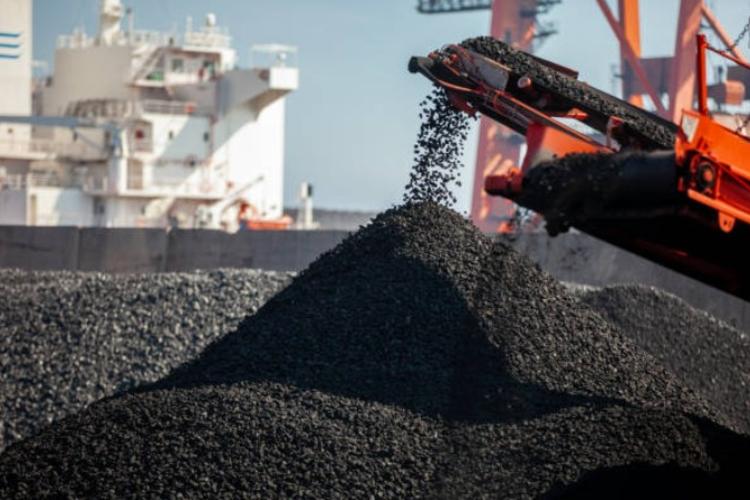
India’s energy security: The escalation of the Iran conflict is a reminder of how quickly geopolitics can reshape economics. Energy markets reacted at once. European thermal coal prices rose to their highest level since October 2023. Newcastle coal futures, the global benchmark, jumped more than 13% in a week. Coal India’s shares rose as investors bet that utilities, faced with costly or scarce LNG from West Asia, would fall back on coal.
That market reaction is understandable, but it captures only part of India’s vulnerability. The first and biggest risk from any prolonged disruption in West Asia is oil, not coal. Oil still drives India’s import bill, transport costs, inflation pressures and current account stress. A supply disruption or even a sustained price spike would hit the rupee, raise subsidy pressures and complicate macroeconomic management far more quickly than any move in coal prices.
READ | Coal block timelines: Can strict deadlines fix production delays?
Iran conflict exposes India’s oil and gas risk
The widening conflict has again drawn attention to the Strait of Hormuz, one of the world’s most critical energy chokepoints. Roughly one-fifth of global petroleum consumption and a significant share of LNG trade pass through it. India remains heavily dependent on Gulf suppliers for crude and gas. Any disruption there would be felt almost immediately in import costs, shipping rates and market sentiment.
That is how geopolitical shocks spread through an economy. Physical damage to energy infrastructure is not necessary. Fear alone can delay cargoes, lift insurance costs, raise freight rates and tighten supply conditions. For India, the result would be visible in the import bill, the current account deficit, inflation management and pressure on the rupee.
The gas channel matters too, but in a more specific way than the draft initially suggested. A disruption in LNG supplies would not upend the entire power system at once. The sharper pain would be felt in fertiliser plants, city gas distribution, gas-based industry and other users exposed to imported gas prices. Some power producers may switch to coal if gas becomes uneconomic, but the broader economic effect would still come through higher energy costs.
Coal still anchors India’s power system
Coal remains central to India’s electricity system. Despite years of policy emphasis on clean energy, it still accounts for roughly 70% of power generation. Coal India produces around three-fourths of domestic coal output. Renewable capacity has grown rapidly, but coal continues to provide the baseload stability that solar and wind cannot yet deliver at scale.
READ | India bets on carbon capture to offset coal reliance
That explains why investors turn to coal in moments of geopolitical stress. When gas becomes scarce or expensive, coal-fired generation looks more attractive. Higher global coal prices can also improve Coal India’s auction realisations, even though most of its output is sold at regulated domestic prices. Domestic industries such as cement and steel may also rely more on local coal when imported fuel becomes costly.
Coal has limits as crisis insurance
But coal cannot serve as India’s energy insurance policy without qualification.
Production constraints remain real. Coal India had set a target of 875 million tonnes for the current financial year, but output in the first nine months was just over 529 million tonnes, down 3% year-on-year. Full-year production is now expected to fall well short of target. Even when coal is available, logistics remain a binding constraint. Coal does not move frictionlessly from mines to generators. Rail bottlenecks and supply-chain frictions limit how quickly domestic coal can absorb a sudden shift in demand.
There is also a longer-term constraint. India has committed to net-zero emissions by 2070. Coal will remain part of the energy mix for years, but it cannot be treated as an unlimited strategic hedge. Excessive dependence would raise environmental costs and expose Indian exporters to future carbon-border measures and trade restrictions. India cannot ignore climate commitments every time imported energy turns expensive.
Renewables reduce exposure, but not yet enough
Renewables offer the strongest long-term answer to geopolitical energy risk because they are generated at home. Every unit of solar or wind reduces dependence on imported fuel.
But renewables cannot yet replace fossil fuels entirely. Solar and wind are intermittent. They depend on weather conditions and require storage, transmission upgrades and backup generation. India’s battery storage capacity is still developing. Grid integration remains uneven. Until these constraints ease, renewables alone cannot guarantee the reliability that a fast-growing economy requires.
READ | Climate change: India’s just transition faces coal reality
Energy security needs two strategies, not one slogan
India therefore needs to separate short-term shock management from long-term energy strategy.
In the short term, the priority is to manage disruption: diversify crude and LNG sourcing, protect shipping routes, build larger strategic reserves and retain flexibility in procurement. Indian refiners have already increased crude purchases from Russia, the United States and West Africa. That reduces dependence on any one region, but it does not eliminate vulnerability to a major Gulf disruption.
In the longer term, the answer is to reduce structural exposure. That means stronger domestic coal output where feasible, faster renewable expansion, better storage, improved grid integration and lower energy intensity across industry and transport. Energy security is not just about securing more supply. It is also about using energy more efficiently and reducing the economy’s sensitivity to imported fuel shocks.
The lesson of the 2020s is now plain. The Russia-Ukraine war showed how quickly energy markets can tighten. The tensions in West Asia are doing so again. For India, the answer is not to place fresh faith in coal every time a crisis erupts. It is to build an energy system resilient enough to survive repeated shocks.
A balanced energy policy is no longer a matter of prudence. It is the core of energy security.