


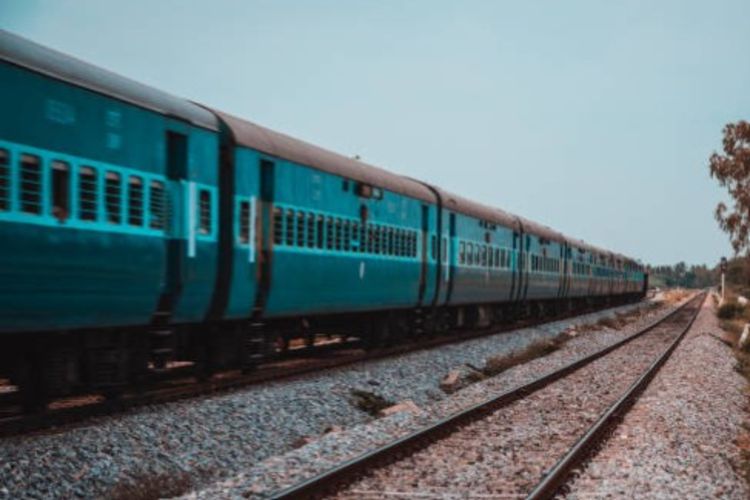
Indian Railways runs as a monopoly, and often feels like one. Budget 2026’s push on asset monetisation is meant to change at least the financing side of that story. The government plans to raise about ₹80,000 crore over FY27–FY30 by selling portions of its holdings in seven listed rail PSUs. Done right, this could be the most consequential financial restructuring of the rail ecosystem since liberalisation.
The proposed stake sales cover IRFC, IRCTC, RVNL, Ircon, RailTel, RITES and CONCOR. Together they have a market capitalisation of roughly ₹3.5 trillion. In most of them, the government holds comfortably above the 51% needed for operational control. The route under discussion is gradual offer-for-sale dilution.
READ | Indian Railways need accountability, not slogans
Even a 15–20% sell-down across these entities can plausibly unlock ₹70,000–₹80,000 crore—without giving up managerial control. That is the attraction. It also explains why this cannot be treated as a routine “target-meeting” exercise under a forthcoming National Monetisation Pipeline 2.0. It is a chance to loosen constraints that have kept the rail system modernising slower than demand.
Operating ratio and the capex squeeze
Indian Railways have the second-highest capital expenditure allocation among central ministries: ₹2.78 trillion for 2026–27. Tracks are being built, routes electrified, stations redeveloped, and new services added. Yet the financial engine remains weak. The operating ratio still hovers around 98%—meaning that for every ₹100 earned, almost ₹98 is absorbed by working expenses: salaries, pensions, fuel, maintenance.
With such thin internal surplus, “transformational” investment ends up depending on borrowing and budgetary support. That is a fragile base for a network that is expected to carry more passengers, more freight, and higher-quality services, all at once.
Freight cross-subsidy is the old trap
The core revenue model remains the enduring problem. Passenger fares recover barely over half of operating costs. Loss-making passenger services are cross-subsidised through freight, which is priced at a premium. Industry responds rationally: it shifts cargo to roads even when rail is more energy-efficient and cleaner.
The result is perverse. A system meant to be the backbone of logistics keeps ceding ground to highways. The current model ends up short-changing industry and weakening Indian Railways’ own finances.
READ | Vande Bharat trains redefine Indian railways – but at what cost?
What stronger rail subsidiaries could do
One argument for wider shareholding is operational. These companies are profitable, professionally managed and already subject to market discipline because they are listed. They borrow, build, consult, cater, digitise and lease. But so long as the parent ministry remains the dominant owner, capital-raising flexibility and governance autonomy stay bounded by public-sector templates.
A dilution closer to 51%—and potentially lower if the Economic Survey suggestion on redefining a “government company” translates into a Companies Act amendment—could change incentives. Greater public float typically brings harder questions, tighter disclosure, and less tolerance for opaque operational decisions.
The potential gains are not abstract:
RailTel can scale digital connectivity and monetise fibre assets more aggressively.
IRCTC can expand tourism and catering products beyond conventional ceilings.
IRFC can design financing instruments that reduce reliance on sovereign comfort.
RITES and Ircon can pursue global contracts with greater operational independence.
CONCOR can sharpen logistics competitiveness if freed from recurring policy ambiguity.
Outcomes, not just proceeds
The real test is not whether the exchequer can raise ₹80,000 crore, but whether the transaction is tied to measurable rail outcomes. Unless the proceeds are explicitly linked to a few hard targets—track renewal and signalling upgrades, coach augmentation on the most crowded corridors, station decongestion, and safety works—the exercise risks becoming a fiscal event rather than an operational reset. Stake sales in subsidiaries do not, by themselves, fix delays, crowding, or accidents. They only create room to fund fixes—and the link has to be made visible.
The familiar objection is that selling stakes in profitable PSUs is like selling the family silver. CONCOR’s long-delayed strategic divestment is often offered as proof that the process invites uncertainty.
But the harder fact is this: the state does not need super-majority ownership in commercially viable subsidiaries to retain managerial command. In a capital-scarce country with large infrastructure needs, tying up public equity in businesses that can attract market capital is not an obviously prudent allocation of resources. The question is not sentiment. It is opportunity cost.
READ | Indian railways: Transparency, technology missing links in modernisation push
Modernisation needs more than monetisation
The institutional problem is visible on the ground. Many stations still look like arrested time: overcrowded platforms, waitlisted tickets that do not clear, ticketless travel, ageing coaches, and demand that routinely overwhelms capacity. The operating ratio is one symptom; institutional fatigue is another.
Past committees—including those led by Bibek Debroy—have pointed to the same direction: unbundle core and non-core functions, rationalise tariffs, and invite private participation under regulatory oversight. The analogy often used is highways: the state owns the asset, multiple operators compete to provide services.
Reforms abroad have ranged from full privatisation to structured public-private partnerships. China’s experience is frequently cited for separating commercial arms and investing relentlessly in high-speed and freight corridors. The point is not imitation. It is that governance structure and financing model determine whether a rail system stays agile.
None of this removes the basics. India still needs safer tracks, less crowded coaches, and safer trains overall. For that, fiscal headroom matters. If stake sales can unlock ₹80,000 crore, they can ease borrowing pressure and fund modernisation without pushing deficits higher.
These sales are not privatisation in the classical sense. But if they are followed through—and paired with deeper changes in tariffs, accountability and operating autonomy—they could be the push Indian Railways needs to start behaving like a modern network rather than a 1970s monopoly.