


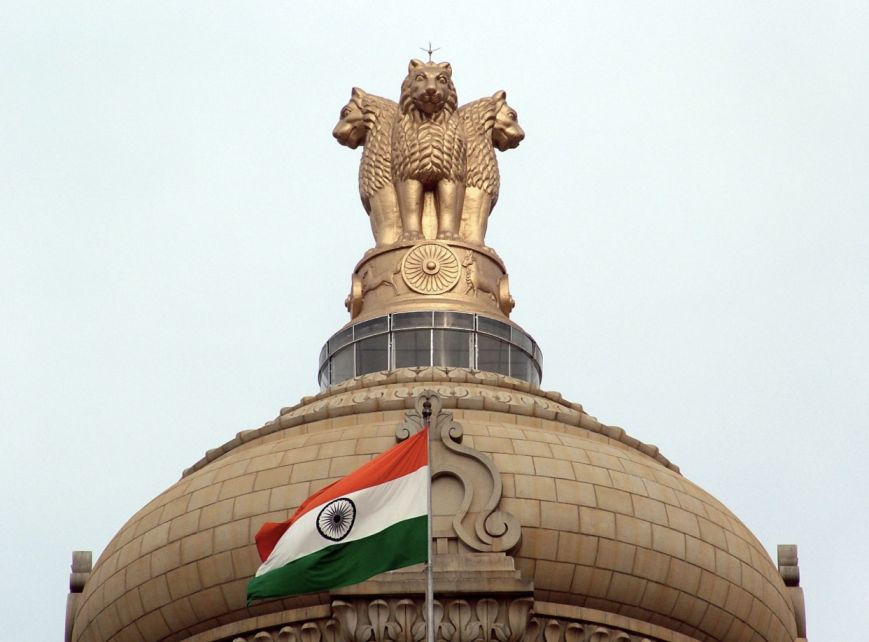
Civil services reform: India inherited the steel frame of colonial administration in 1947 but gave it a different purpose. The bureaucracy would no longer collect revenue and enforce the authority of the Raj. It was expected to serve an elected government, maintain administrative continuity and help build a new republic.
That settlement worked reasonably well when the state controlled much of the economy and administration was organised around rules, files and permissions. India now has a far larger economy, complex financial markets, digital public infrastructure and extensive welfare programmes. Yet the basic architecture of the civil services has changed far less than the country it governs.
READ | Eighth Pay Commission needs reform, not just a pay hike
Former Administrative Reforms Commission chairman M Veerappa Moily recently put the problem plainly: reforms have taken place at the periphery, while “wholesale changes” have not. His criticism deserves attention because the commission he headed was established in 2005 to prepare a blueprint for revamping public administration. It submitted 15 reports, including detailed proposals on personnel administration, local governance, e-governance and the structure of government.
The question is no longer whether India has capable civil servants. Many of them work under difficult conditions and carry responsibilities that would test any organisation. The question is whether recruitment, incentives, accountability and the distribution of power allow them to use their abilities well.
Administrative reform needs devolution
One of the enduring principles of administrative reform is subsidiarity: a decision should be taken at the lowest level of government capable of handling it. A district administration will usually understand a local infrastructure problem better than a Union ministry. A state government knows its industrial constraints better than a central department. A municipality is better placed to manage local waste collection than officials in New Delhi.
India has accepted this principle in its Constitution but applied it unevenly. The 73rd and 74th Constitutional Amendments created a framework for elected panchayats and municipalities. Much of the authority they require, however, depends on state governments transferring functions, funds and staff.
That transfer remains incomplete. States seek greater fiscal and administrative space from the Centre but are often reluctant to extend the same autonomy to local bodies. Consequently, the institution held responsible for water supply, sanitation or local roads may have little control over its budget, personnel or project approvals.
READ | India’s social sector spending burden is shifting to states
Devolution cannot consist of passing responsibility downwards while retaining money and authority at a higher level. Local governments must also be subject to audit, service standards and public scrutiny. Greater autonomy without institutional capacity could merely relocate poor administration.
Generalists need specialist support
Recruitment and career progression present another problem. The civil services examination continues to attract talented young people, but success in a competitive examination cannot confer lifelong competence across every field of government.
Public administration now requires knowledge of financial regulation, artificial intelligence, climate policy, public health, energy markets, urban transport and data protection. No administrator can master all these fields. Nor should specialist advice remain subordinate merely because it comes from outside the established service hierarchy.
India should retain generalist administrators who can coordinate departments, manage competing interests and work across levels of government. They need to operate alongside professionals with credible domain expertise. This requires more systematic lateral recruitment, specialist cadres and career paths that do not penalise officers for spending time in a particular field.
The Union government has made a start. The 2024 Economic Survey argued that lateral entry into senior positions should be expanded and that civil-service training should be redesigned around the competencies needed for particular roles. Mission Karmayogi, approved in 2020, is intended to shift capacity building from a rule-based to a role-based system. By August 2026, the government said its iGOT platform had more than 1.7 crore registered users and over 5,600 courses. Mission Karmayogi has therefore achieved scale. Whether online training changes appointments, incentives and performance inside departments is a more demanding test.
Transfers reward administrative caution
The central defect in the system lies in its incentives. An officer who takes a difficult decision may face an inquiry years later. An officer who delays the same decision can often cite procedure. Caution then becomes a rational response, particularly when political support is uncertain.
Frequent transfers deepen the problem. Officers moved before they understand a department or district cannot be held meaningfully responsible for outcomes. Ministers also lose the benefit of institutional memory. Minimum tenure rules have limited value when exceptions are routine and reasons are not disclosed.
The recent resignation of Uttar Pradesh cadre IAS officer Divya Mittal has renewed discussion about administrative careers. Mittal announced that she was leaving after 13 years but did not publicly state a reason. Claims that her resignation resulted from political pressure or a period without a posting therefore remain unsubstantiated. Her departure cannot carry the weight of a general argument about the civil services.
The larger issue does not depend on any single case. Transfer and posting decisions should follow published criteria. Key assignments should carry a reasonable minimum tenure. Performance assessments should examine decisions and results rather than rely heavily on confidential impressions within the hierarchy.
READ | Civil service training in India needs a second reform
Protection from arbitrary interference must not become immunity from scrutiny. Poor performance, misconduct and wilful delay require consequences. The challenge is to distinguish an honest decision that produced a disappointing result from negligence or abuse of office. A system unable to make that distinction will encourage either paralysis or impunity.
Civil services reform: Government data must inform decisions
A modern civil service must also use the information that government already collects. Departments possess large datasets on taxation, health, education, welfare payments, infrastructure and public expenditure. Most can report how much money has been spent or how many beneficiaries have been enrolled. Fewer can show whether the programme changed the outcome it was designed to address.
Officers need timely data that can identify stalled payments, regional disparities and implementation failures. They also need the authority to respond. A dashboard is of little use if a district official must seek several approvals before correcting an evident problem.
India has repeatedly shown that it can alter institutions when economic circumstances demand it. The Planning Commission gave way to NITI Aayog. Licensing regimes were dismantled, tax administration was reorganised and public services moved online. Yet administrative reform has remained concentrated on technology and training.
The harder task concerns power: who decides, who has the required expertise, who is answerable for failure and who bears the risk of acting. Unless India addresses those questions, it will continue to train civil servants for roles that the system does not permit them to perform.