


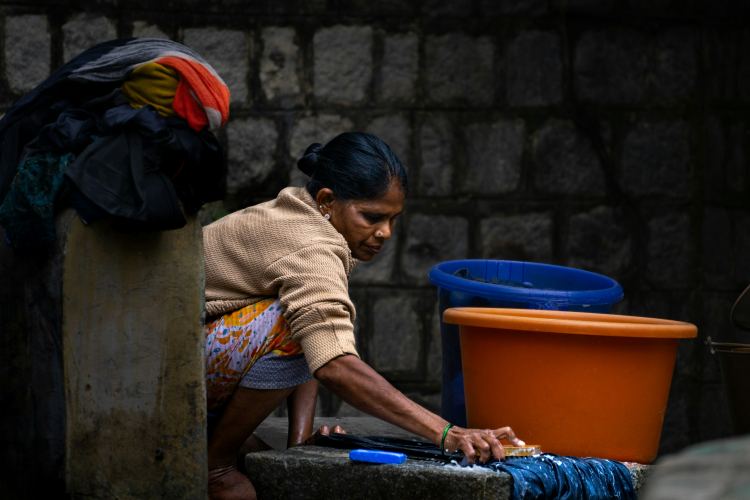
Homemaker compensation: The Supreme Court’s June 11 judgment in Shishu Pal @ Shish Ram & Ors. v. Surjeet & Ors. came after a delay almost as striking as the eventual award. The Motor Accident Claims Tribunal, Sirsa, awarded ₹2.42 lakh in 2003 for the accident occurred in November 2001. The Punjab and Haryana High Court raised the amount to ₹8.43 lakh in December 2024. And the Supreme Court finally assessed compensation at ₹62.78 lakh. The most consequential part of the ruling was the calculation behind it: ₹30,000 a month under a new head called “loss of domestic care”.
Homemaker compensation gets a ₹30,000 benchmark
The Court identified three components: the homemaker’s contribution to running the household, maternal support for children, and spousal support or care provided to parents. Where these heads are present, ₹30,000 will serve as the basic monthly stand-in for a homemaker with no conventional monetary income. The amount will rise by 10% cumulatively every three years. Where the homemaker also earned an income, compensation for domestic care will be added to the income proved before the tribunal or court.
READ | Maternal mortality rate falls, but hospitals still fail women
This marks a substantial departure from the numbers courts have worked with in the past. In Lata Wadhwa v. State of Bihar, decided in 2001, ₹3,000 a month was treated as adequate for homemakers aged 34 to 59. Nine years later, in Arun Kumar Agrawal v. National Insurance Co. Ltd., the Supreme Court described the practice of valuing a wife or mother by comparison with a housekeeper or servant as “unfair, unjust and inappropriate”. Yet the problem remained: tribunals had no common income base for work that generated no payslip.
The June judgment supplies one. The Court itself calls ₹30,000 a “stand-in”, rather than an attempt to calculate every service performed inside a home. That distinction matters. A homemaker may cook, manage expenses, supervise children, care for elderly relatives and organise the household. Pricing each activity separately would turn compensation proceedings into another exercise in approximation. A common monthly figure gives tribunals a starting point.
The judgment also separates domestic care from consortium. Compensation for consortium addresses the loss of companionship and affection suffered by family members. The Court found that this did not adequately capture the economic contribution of a homemaker. “Loss of domestic care” is therefore a separate head.
READ | Childcare infrastructure needed to lift women’s employment
Unpaid care work remains outside GDP
The legal change exposes a problem that national accounting has long lived with. The System of National Accounts excludes most unpaid household services, including childcare, meal preparation and cleaning, from its core production boundary. The 2025 SNA retains that treatment. It provides for extended accounts that can measure unpaid household service work alongside the conventional national accounts. It does not add this work to headline GDP.
India now has better evidence on the scale of the work involved. The 2024 Time Use Survey, the country’s second all-India survey, found that female participants aged six years and above who performed unpaid domestic services spent an average 289 minutes a day on them. The corresponding figure for males was 88 minutes. Female participants in unpaid caregiving spent 137 minutes a day, against 75 minutes for males.
The numbers also explain why attaching domestic care mechanically to the wage of a maid or housekeeper produces a poor estimate. Household work combines tasks that would otherwise be spread across several paid occupations. More important for accident compensation, the work does not disappear when the homemaker dies. Somebody else in the family must perform it, buy it from the market or go without it.
The Supreme Court has dealt with that problem within the limits of motor accident law. Its ₹30,000 figure should therefore be read as a compensation benchmark, rather than as an official estimate of the market value of unpaid care.
READ | Cash transfers to women are working; it’s time to take them up a notch
India needs regular accounts for unpaid care work
There is a statistical route available. India’s Time Use Survey can support regular extended household accounts that measure unpaid domestic and care services alongside GDP. The 2025 SNA provides an international framework for doing this without changing the production boundary used for headline GDP.
Policy has also started moving towards treating care as economic infrastructure. A 2026 Economic Advisory Council to the Prime Minister working paper argues for a larger role for organised care services and sets out proposals covering finance, workforce development, policy reform and quality standards.
That agenda is wider than the case before the Supreme Court. The immediate consequence of the judgment is more specific. Motor Accident Claims Tribunals have been directed to add “loss of domestic care” in cases involving the death of a homemaker, and the judgment has been sent to all High Courts for onward compliance by tribunals.
The 10% cumulative revision every three years is important for another reason. It reduces the risk that ₹30,000 becomes another figure left unchanged for decades. The ₹3,000 benchmark survived long after prices, wages and household costs had moved on. If the new direction is applied as written, compensation for a homemaker will at least cease to begin with an arbitrary token income.
Krishang Worah and Gopikrishnan Annamalai are research students, and Dr Savitha KL Assistant Professor at Department of Economics, CHRIST University, Bangalore Yeshwanthpur Campus.