


The Union government faces a familiar subsidy squeeze, but this time the pressure is sharper. Food subsidy in FY27 was budgeted at about ₹2.28 lakh crore but it could move towards ₹2.5 lakh crore because of higher minimum support prices, larger procurement and free grain distribution. Fertiliser subsidy, budgeted at about ₹1.71 lakh crore, could also overshoot if West Asia keeps energy and input prices elevated. Together, food and fertiliser subsidies may push the subsidy bill close to ₹6 lakh crore.
This is not a new problem. It is the old food economy at work. Raise MSPs, expand procurement, keep issue prices unchanged, and the subsidy burden rises almost automatically. The question is no longer whether food security matters. It does. Rather, the question is whether India can afford a welfare system that grows by procurement momentum rather than by need.
READ | Govt extends free ration scheme despite food subsidy concerns
Food subsidy and fiscal pressure
India’s food subsidy programme is among the world’s largest social protection interventions. Under the National Food Security Act, the Centre provides subsidised foodgrains to about 80 crore people. Since January 2023, beneficiaries have received rice and wheat free of cost under the Pradhan Mantri Garib Kalyan Anna Yojana, now integrated with the NFSA framework and extended for five years from January 2024.
The scheme helped protect poor households during and after the pandemic. That achievement should not be underplayed. But the fiscal arithmetic has changed. A programme designed around low issue prices has become a zero-price programme for most beneficiaries. The gap between procurement cost and distribution price is now borne almost entirely by the Budget.
The Food Corporation of India and state agencies procure wheat and rice at MSP, incur costs on storage, handling, transport and distribution, and release grain through the public distribution system. The Centre reimburses the gap as food subsidy. That gap has widened because MSPs, procurement volumes and logistics costs have risen while issue prices have not.
This is the central weakness of the system. The subsidy bill rises with procurement, not necessarily with better nutrition, better targeting or lower poverty.
FCI financing must stay transparent
There is another fiscal lesson. Food subsidy pressures were earlier pushed partly off the Budget through FCI borrowings from the National Small Savings Fund. That window helped defer the burden, but it weakened transparency. The subsequent decision to provide for FCI’s subsidy requirement through the Budget and clear past dues was a necessary correction.
That discipline must not be diluted. A rising food subsidy bill is a problem. A hidden food subsidy bill is a bigger one. If procurement and distribution costs rise, they should be fully provided for in the Budget rather than parked in FCI borrowings or delayed reimbursements. Fiscal prudence begins with honest accounting.
READ | Fertiliser subsidy bill shows need for policy reform
MSP procurement drives costs
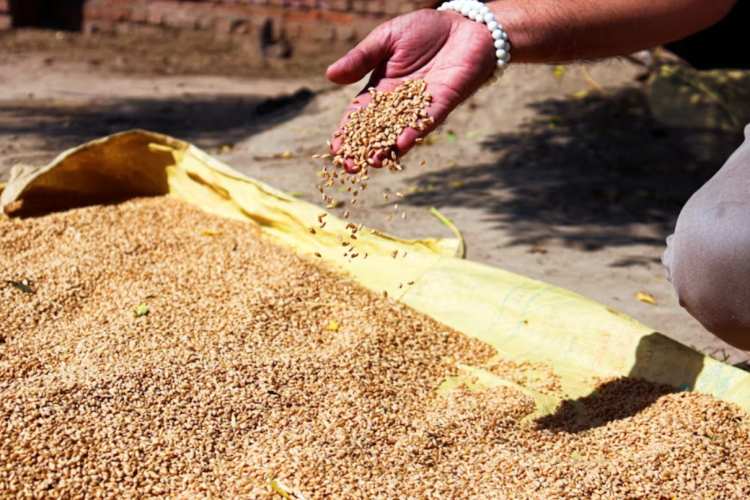
Wheat procurement in FY27 is expected to be higher than earlier assumptions. Estimates of about 35 million tonnes have been discussed, against earlier expectations of around 30 million tonnes. The reasons are clear: higher MSPs, state bonuses in some markets, and softer open-market prices that make sale to government agencies attractive.
Higher procurement improves public stocks and supports farm incomes. But it also increases the fiscal cost. That cost is often hidden behind the political comfort of full granaries.
Rice presents a bigger problem. India routinely procures more rice than required for welfare schemes and buffer norms. The result is excess stock, higher carrying cost and ageing grain. The government has had to liquidate surplus rice through open-market sales, welfare allocations, ethanol diversion and other channels. These are useful correctives, but they are not substitutes for procurement discipline.
Food security cannot mean indefinite accumulation of grain. Buffer stocks are insurance. Beyond a point, they become a fiscal liability.
Procurement reform cannot wait
The first reform must be better procurement verification. Farmer registration, Aadhaar-linked identity checks and integration of land records with procurement databases can reduce the role of intermediaries and traders posing as cultivators. Such systems are not perfect, but they are better than open-ended procurement based on weak verification.
This matters because procurement is no longer a narrow farm operation. It is a fiscal decision. Every excess tonne bought by government agencies adds to storage, movement and subsidy costs. Procurement must therefore be linked more closely to actual welfare requirements, buffer norms and regional production realities.
Inventory management also needs urgency. If stocks exceed buffer norms, timely liquidation should become routine, not an emergency response. Delayed liquidation worsens quality and raises carrying cost. It also distorts private trade.
The government’s move to reduce the share of broken rice supplied through the PDS from 25% to 10% points in the right direction. It can improve grain quality for beneficiaries and free broken rice for animal feed, food processing and ethanol. The gain, however, will depend on execution. A quality reform that merely shifts stocks from one official account to another will not solve the subsidy problem.
Rice-wheat bias distorts farming
The deeper reform lies in agricultural policy. The present procurement system favours rice and wheat, especially in Punjab, Haryana, Telangana and Chhattisgarh. It has encouraged monocropping, groundwater stress and excessive use of fertiliser and power. These costs do not appear fully in the food subsidy bill, but they are real.
There is also a design flaw. India is using one instrument, MSP procurement, for two objectives: consumer food security and farmer income support. The first requires reliable distribution to vulnerable households. The second requires remunerative farm incomes. Combining the two has locked public policy into rice and wheat procurement.
If farmers need income support, that support should be designed more directly. Price deficiency payments, crop-neutral transfers, or state-specific income support may be debated. But using PDS procurement as an income-support instrument is fiscally expensive and environmentally damaging. It also narrows crop choice.
Millets offer a partial correction. The government’s Shree Anna push recognises that millets are more nutritious, less water-intensive and better suited to many dryland regions. Procurement of millets has risen from negligible levels, though it remains small compared with rice and wheat.
The point is not to replace rice and wheat overnight. That would be neither practical nor desirable. The point is to stop treating rice and wheat procurement as the default instrument of food security. A welfare system that ignores nutrition, climate stress and regional crop suitability will become more expensive and less effective over time.
READ | Why fertiliser subsidy reform is vital for Indian agriculture
NFSA targeting after Census
The NFSA still uses coverage limits based on the 2011 Census. It legally covers up to 75% of the rural population and 50% of the urban population, amounting to 81.35 crore people under that population base. India has changed substantially since then. Migration, urbanisation, income mobility and demographic shifts have altered the welfare map.
Successive governments have avoided reopening coverage and eligibility because food security is politically sensitive. That hesitation is understandable. It is also costly. Once the new Census data are available, NFSA coverage and targeting should be revisited.
Better targeting need not mean weakening the food security net. It should mean removing ineligible beneficiaries, adding excluded poor households, giving states more flexibility, and using technology to reduce duplication and leakage. A static beneficiary list cannot serve a changing economy.
DBT cannot be a shortcut
Direct benefit transfer is often proposed as a way to reduce leakages and give households more choice. India has already used cash transfer of food subsidy in Chandigarh, Puducherry and part of Dadra & Nagar Haveli. Such pilots are useful. They can work better in urban areas and in markets where grain availability is reliable.
But DBT cannot be treated as a national shortcut. Cash loses value when food inflation rises. Poor households may face weak markets, delayed transfers or intra-household pressures over spending. In many regions, assured grain still provides stronger protection than cash.
The prudent course is therefore not an abrupt shift from grain to cash. It is controlled experimentation. Urban pilots, digital tracking, portable entitlements and limited choice-based models can be expanded where conditions permit. For poorer and food-deficit regions, grain entitlements should remain the anchor.
The Centre must also decide what the food subsidy is meant to achieve. If the objective is hunger prevention, targeting and nutritional adequacy matter. If the objective is farm income support, procurement policy is doing the work of an income-transfer scheme. Mixing the two has made the system expensive and opaque.
India should not dilute food security. But it cannot keep expanding procurement, freezing issue prices and postponing targeting reform. The result will be a larger subsidy bill, crowded fiscal space and a food system that buys more grain than it needs.
The reform agenda is clear: procure less indiscriminately, keep FCI financing transparent, manage stocks better, diversify crops, improve PDS quality, test DBT cautiously, and revise NFSA targeting after the Census. None of this is radical. It is basic fiscal housekeeping. Delaying it will only make the next subsidy shock harder to manage.