



Childcare infrastructure: India has spent years worrying about the low proportion of women in paid work. The usual explanations are poor skills, low wages, unsafe workplaces and restrictive social attitudes. For mothers of young children, however, the calculation can be much simpler. If nobody can look after the child at a reasonable cost, taking a job becomes difficult or impossible.
Parliament has already recognised this constraint. The Maternity Benefit (Amendment) Act, 2017 required establishments with 50 or more employees to provide a crèche and allowed women four visits to it during the working day. The provision now forms part of the labour-code regime that took effect in November 2025.
READ | Motherhood penalty keeps Indian women out of work
What the government cannot say with any confidence is whether employers obey the law. The Centre has told Parliament that it does not maintain national data on establishments providing the mandated crèche facility or on those violating the requirement. Enforcement lies substantially with state governments, but that does not explain why the Union government has no consolidated picture of compliance with a national labour entitlement.
Workplace crèches without reliable compliance data
A statutory obligation becomes difficult to enforce when the government does not know how many establishments are covered or how many have complied. Nearly nine years after Parliament created the entitlement, there is still no reliable national measure of its reach.
This gap deserves more attention because India’s female labour force participation remains low even after improving sharply in recent years. World Bank estimates put the rate at 22.9% in 2018 and 35.3% in 2025. The Bank has estimated that raising it to 50% could add about one percentage point to annual GDP growth. That would be a substantial contribution in an economy that has to sustain unusually high growth for decades if it is to reach high-income status by 2047.
Childcare influences that participation through ordinary household arithmetic. A woman considering a job has to compare her wages with the cost of daycare, domestic help and travel. Working hours have to fit school or crèche timings. Somebody must be available when a child falls ill or school closes early. A ₹25,000 monthly salary loses much of its attraction if childcare consumes ₹10,000 and the commute takes several hours.
Families with grandparents nearby or enough income to hire reliable help can manage these constraints. Many others cannot. The decision to work therefore depends partly on services that lie outside the labour market itself.
READ | Care economy jobs can solve two labour failures
Childcare and women’s employment
Cross-country research by the World Bank has found that childcare laws are associated with higher female labour force participation. Its estimates suggest an average increase of about 2%, rising to around 4% five years after enactment. The effect was stronger where childcare was accessible and affordable.
India’s experience exposes the distance between legislation and delivery. Parliament created a workplace entitlement in 2017, yet the government still lacks the basic data required to judge how widely it is available.
Employer-provided crèches also leave out a large part of India’s female workforce. Domestic workers, farm workers, street vendors and many gig workers cannot depend on an establishment covered by the statutory requirement. Their access to paid work depends more heavily on community or publicly supported childcare.
The government has a programme intended to provide some of that support. Under Palna, Anganwadi-cum-Crèche centres are meant to extend daycare facilities to young children. Progress has been slow. A parliamentary standing committee reported that 2,820 such centres were operational by January 2026 against a target of 17,000 for the Fifteenth Finance Commission period.
The difference between the target and the number actually functioning leaves millions of families to make private arrangements or keep one adult at home. Since women still perform most unpaid childcare, they bear most of the employment cost.
READ | Unpaid care work is the missing link of GDP debate
Childcare infrastructure: The care economy extends beyond offices
The Economic Advisory Council to the Prime Minister has argued for treating care services as part of India’s economic infrastructure. That view reflects changes already visible in Indian families. Urban households are smaller than before, adult children often live far from their parents and full-time family care is becoming harder to arrange.
Childcare services can also create paid employment. Work now performed without pay inside households can, in part, move into organised care services. That would give parents more scope to take jobs while creating demand for trained caregivers.
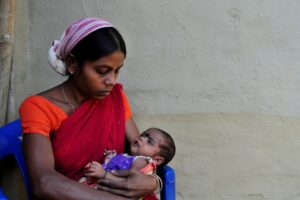

Making employers bear the entire cost would create another problem. Firms facing additional costs linked specifically to women employees could become more reluctant to hire them, especially where enforcement is weak and avoidance is easy. Public crèches, common facilities shared by several establishments and employer contributions can spread the cost more widely. Informal workers will in any case require provision that does not depend on a formal employer.
Quality cannot be treated as an afterthought. Allegations of serious abuse at a daycare facility on Capgemini’s Bengaluru campus in July illustrated why parents judge childcare by more than its physical availability. Staff competence, supervision, safety procedures and workable operating hours determine whether a parent will leave a young child there.
A crèche that exists on an employer’s compliance register but is unsafe, inconvenient or poorly staffed does little to help a mother remain in employment.
The government’s own parliamentary answers point to the immediate failures. It cannot say how widely the workplace entitlement is being observed, while the public crèche programme remains far short of its stated target. India has already written childcare into labour law. It now needs to find out where that law is being followed and expand public provision for the far larger number of women who work outside establishments covered by it.