


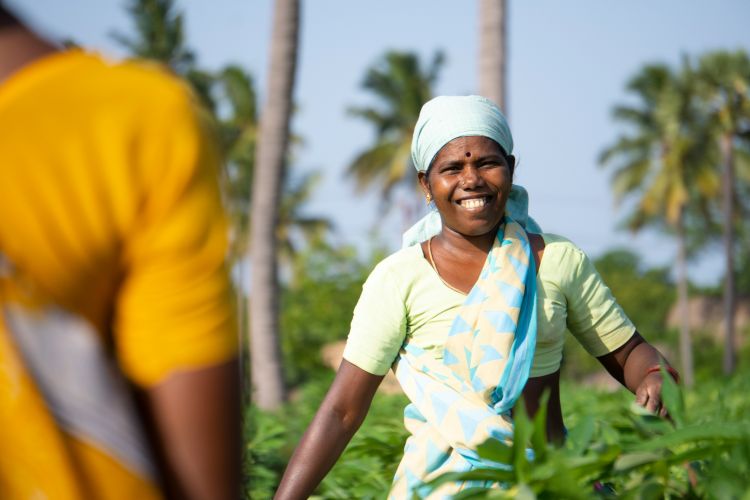
Cash transfers to women were once viewed as an election time gimmick but over the years, they have become one of the most successful segments of India’s welfare programme. Now, they are a permanent budget commitment across states. West Bengal’s Lakshmir Bhandar, Madhya Pradesh’s Ladli Behna, Maharashtra’s Ladki Bahin, Haryana’s Deen Dayal Lado Lakshmi Yojana and similar initiatives in Karnataka, Tamil Nadu and Delhi have shown how direct income support for women is the most durable welfare instrument of the decade. Around 15 states have cash support schemes, covering nearly 120 million women with a combined outlay of ₹2.46 trillion in 2025.
However, the debate around the cash transfer schemes oscillates between two extremes. Some dismiss them as irresponsible freebies meant to attract voters, but supporters believe it has contributed to women’s empowerment. The evidence from India and across the world shows that unconditional cash transfers is neither a magic bullet nor an election gimmick. The success is in their designing and whether they help in expanding women’s economic opportunities.
READ | Social registries cannot settle women’s cash transfers
Why cash transfers to women work
DBT works because there are no leakages or subsidies routed through multiple intermediaries. Nobel laureate economist Esther Duflo had once famously argued that money reaching a woman’s hands tends to generate larger welfare gains for the household than the same amount given to men. Studies across countries have repeatedly shown that women are more likely to spend additional income on food, children’s education, healthcare and productive household investments. If women are given more control over household resources, they tend to spend it on household consumption.
A recent working paper by the Economic Advisory Council to the Prime Minister (EAC-PM) titled ‘Unconditional women cash transfer programmes in India: Evidence from Maharashtra and Odisha’ has also given some insights into the impact of two such schemes. There are two different models and their returns are entirely different.
Until now, discussions around cash transfer programmes have revolved around financial costs. The data from these two states brings up another question – How do we judge success of financial inclusion? Is it by the size of the cheque or by the financial behaviour it changes?
The EAC-PM study examined Maharashtra’s Mukhyamantri Majhi Ladki Bahin Yojana and Odisha’s Subhadra Yojana. Unlike earlier evaluations that were based on household surveys, the researchers analysed anonymised bank transaction data for this study. This has given valuable insights into how are the beneficiaries actually spending money.
In Maharashtra, beneficiaries recorded an average increase of nearly ₹6,900 in month-end bank balances which is an 84% jump over pre-scheme levels. Their monthly expenditure also increased by around ₹1,350 or roughly 46% higher than before.
Odisha displayed a similar pattern. Bank balances rose by around ₹6,900 while spending increased by nearly ₹1,900 a month. In both states, women were not choosing between spending and saving. They were doing both.
With welfare schemes, it was always thought cash impacts immediate consumption outcomes as with extra cash, households buy more food, pay school fees or meet healthcare expenses. The new evidence shows cash transfers may also be building household liquidity. Poor households often survive one emergency at a time. A medical bill, crop failure or job loss can push them into expensive informal borrowing. However, with cash assistance scheme, women are also able to park some money in banks which will improve their cushion.
READ | e-Shram data shows women workers were never absent
Different women, different outcomes
The study also demonstrates why a one-size-fits-all welfare model rarely works. Older women in Odisha between 45 and 59 years, accumulated the largest savings and they viewed the transfers primarily as financial security. Younger beneficiaries spent a larger share of the money on current household needs.
Educational background also affects how money gets spent. Women with lower levels of education showed the largest improvements in both spending and savings. For them, tighter liquidity constraints before the programme made even small transfers difficult. The evidence for now indicates that unconditional transfers generate the greatest returns among financially constrained households rather than uniformly across all beneficiaries.
Such insights are helpful in policy design. Instead of expanding coverage indiscriminately, governments can achieve better outcomes by identifying women facing the greatest financial vulnerability and tailoring complementary interventions accordingly.
Cash is only the beginning
Cash transfers are laudable but financial inclusion remains incomplete. Owning a Jan Dhan account is not the same as exercising financial agency. For many women, the accounts are only a withdrawal point. Savings, insurance, pensions and formal credit remain underutilised. In several households, male family members continue to influence or control financial decisions. Direct benefit transfers have improved access to finance, but not necessarily financial agency.
Economists hence advocate for a cash-plus model. Income support should become the entry point rather than the end goal. Linking beneficiaries to financial literacy programmes, self-help groups, micro-insurance, pension schemes, entrepreneurship support and livelihood opportunities can transform periodic transfers into long-term economic capability. As the EAC-PM paper argued, the next generation of welfare must combine income support with investments in nutrition, education, healthcare and productive employment.
Financial costs of these schemes
While welfare schemes are undoubtedly a burden on the exchequer, the current evidence presents a more nuanced picture. Several of the largest programmes are being implemented by states that have comfortable revenue positions. Every investment made in public wellbeing will generate dividends across health, education and female empowerment, even if the results are not apparently visible.
However, the next generation of reforms can aim to plug the existing issues. 29-year-old Rajni, a househelp in Rohtak, Haryana, does not know about Deen Dayal Lado Lakshmi Yojana at all. Nor is she aware as to how to receive the benefits of it and complains about how tedious and taxing getting paperwork done in India is. So, while the government can claim that such schemes have had enormous success, policymakers should also think about the women left behind and how to bring them under the scheme’s ambit. Improving targeting and measuring long-term outcomes remain a wishlist for the success of welfare schemes.