


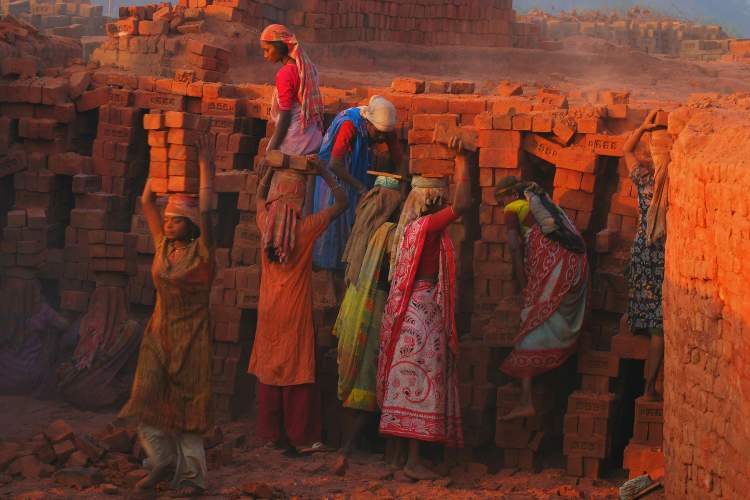
The Labour Ministry has begun work on India’s first binding national floor wage. Officials are revising the consumption basket used to estimate workers’ minimum needs, while the Centre is constituting a Central Advisory Board to recommend the rate.
The old National Floor Level Minimum Wage was advisory. States could ignore it and they did. It was last raised to ₹176 a day in June 2017 and has remained there. Under the Code on Wages, 2019, no state or Union Territory can set minimum wages below the new floor. A state paying more cannot cut its rate after the floor is notified.
READ | Caste wage gap weakens India’s education push
The law does not require one rate for the entire country. Section 9 allows the Centre to fix different floors for different geographical areas. Without that proviso, it would have to choose between a wage too low for expensive cities and one that many firms in poorer districts would evade.
National floor wage and regional prices
Rent and transport costs in Mumbai, Bengaluru or Gurugram bear little resemblance to those in rural Bihar or Odisha. Food prices also vary, as do the wages and the output of workers.
The current exercise is expected to use the 2021 recommendations of a group headed by economist and statistician S P Mukherjee. The panel proposed calculating basic household requirements while allowing for regional differences in prices. The consumption basket is now being updated for subsequent inflation.
An earlier committee chaired by Anoop Satpathy reached a similar fork in 2019. It calculated an all-India minimum of ₹375 a day at July 2018 prices. It also offered five regional rates ranging from ₹342 to ₹447. The regional option used one national food basket but priced it separately in each group of states.
The Code has left the choice open. The final rules say the floor should cover food, clothing and housing, and provide for periodic cost-of-living adjustments. They do not prescribe a formula or explain how geographical differences will be measured.
Rural wage rates show the regional divide
The rural employment guarantee offers a useful comparison. In 2025-26, notified wages under MGNREGA ranged from ₹241 a day in Arunachal Pradesh and Nagaland to ₹400 in Haryana. Karnataka paid ₹370, Kerala ₹369 and Bihar ₹255. The Centre revised these rates annually using the Consumer Price Index for Agricultural Labour.
READ | Wage growth freeze is hurting India growth story
MGNREGA was replaced by the Viksit Bharat Guarantee for Rozgar and Ajeevika Mission (Gramin) in July 2026. The new programme has introduced an interim base of ₹300, but it retains state-wise rates. Haryana pays ₹409, Goa ₹406 and Kerala ₹401. The rate for three high-altitude gram panchayats in Sikkim is ₹450.
The Centre has therefore accepted regional wages even within a national employment programme. A statutory floor for the wider labour market will face greater variation because it must cover factories, farms, construction sites, shops and service firms.
The floor wage can become a ceiling
A low floor will change little in states that already prescribe higher minimum wages. In poorer states, however, employers may begin treating the central rate as an adequate wage rather than the lowest permissible one.
The Code prevents states from cutting existing minimum wages. It cannot stop a low national floor from influencing future revisions. The ₹176 advisory rate failed partly because it was allowed to lose value for nine years.
READ | Rethinking rural inflation: New CPI series could boost MGNREGA wages
A floor set far above prevailing wages creates another problem. Small firms in low-productivity districts may under-report working hours, outsource more work or remain outside formal payrolls. A wage notification cannot raise the value of what each worker produces.
The Centre must therefore distinguish between a subsistence standard, which workers should not fall below, and the wage differences arising from local prices and productivity. The law’s provision for geographical floors was written for this purpose.
National floor wage needs enforcement
ILOSTAT estimates that 87.2% of Indian employment was informal in 2025. Many workers have no written contracts, wage slips or reliable record of the hours worked. For them, the immediate problem is often the enforcement of an existing minimum wage rather than the absence of one.
A new national floor will have to be enforced largely by state labour departments. These departments already administer thousands of wage categories divided by occupation, skill and location. A central rate that bears little relation to local labour markets will add another notification without necessarily changing the amount paid.
The Central Advisory Board will include employers, employees, independent members and representatives of five state governments. Its discussions will involve more than the cost of a consumption basket. States will contest a rate they consider unaffordable or one that restricts their control over wage policy.
India needs a statutory wage guarantee, but it does not need one ceremonial number. Section 9 permits regional floors, while the rules allow cost-of-living adjustments and revision within five years. A floor that inspectors cannot enforce, or that states and employers treat as a ceiling, will repeat the failure of ₹176.