


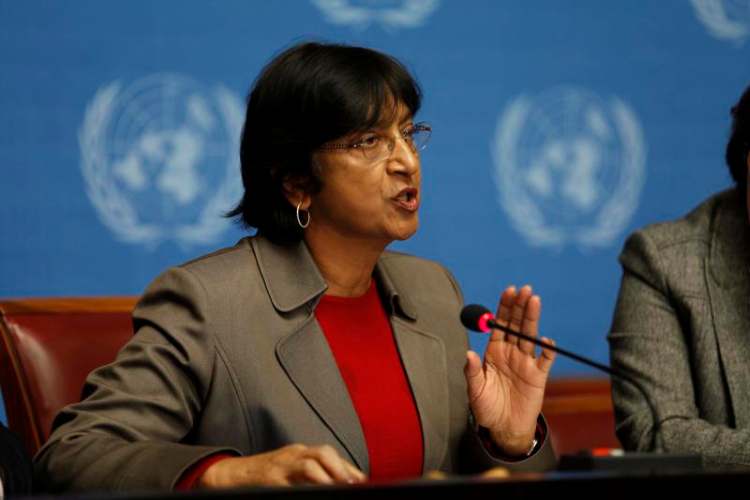
Only hours after the former International Criminal Court (ICC) Jurist Navanethem ‘Navi’ Pillay was awarded the 2026 Nobel Peace Prize, the United States imposed sanctions on the institution. Secretary of State Marco Rubio stated that the Trump administration would ban transactions with what he called a “rogue court”.
The press release from the Norwegian Nobel Committee stated that this year awarding was used to remind the importance of the rule of law to build the system that ensures peace and resolves conflicts non-violently. Countries such as Japan, Canada, the United Kingdom and several European countries criticised the US over the sanction announcement.
The Trump administration claims that the ICC overstepped its jurisdiction by targeting non-member countries. In 2024, the government condemned the tribunal for issuing arrest warrants against Israeli leaders over Gaza and previously, for probing US troops in Afghanistan.
Not only does the high tension reveal the reality of the deeply fragmented world, it also underscores the increasingly significant role that the Nobel Prize plays in contemporary world affairs.
READ I Provoking Iran raises questions of UN Charter violations
Nobel Peace and the global order
The selection of Navi Pillay adds another significant, and more critical, function that the Nobel Committee attaches to the Nobel Peace Prize, namely as an instrument of global advocacy and an active guardian of moral values.
In selecting Pillay, the Committee clearly referred to the reality of today’s fragmented world politics. Amid the tendency toward the return of power politics and unilateralism, this year’s awarding serves as an active support or advocate for a rules-based international order.
Traditionally, the Nobel Peace Prize is associated with a celebration of a completed and tangible diplomatic achievement in peace or conflict resolution.
For example, the awards to Henry Kissinger and Le Duc Tho in 1973, Nelson Mandela and F.W. de Klerk in 1993 and Yasser Arafat, Shimon Perez and Yitzhak Rabin in 1994 were given for their contributions in the successful negotiation or the signing of peace agreements.
The Nobel Prize for the European Union in 2012 is another example of how the prize was used to award and recognise the success of the union to advance ‘peace, reconciliation, democracy and human rights in Europe.’
However, the Nobel Committee does not only look to completed works, achievement and contribution to peace. It also grants the awards with the intention to accelerate the peace process or to prevent the process from stalling.
Granting a Nobel Peace Prize to a marginalised movement will overcome the pressure and cover-up of the state to the movement and make them global spotlights, such as the awards to the 14th Dalai Lama in 1989, to Roman Catholic Bishop Carlos Filipe Ximenes Belo and to Ramos Horta in 1996 and to John Hume and David Trimble in 1998.
The selection of Bishop Bello and Horta surprised many as other prominent figures were also considered as potentials to receive the Nobel Peace Prize due to their contribution to conflict settlements, such as Jimmy Carter and Richard Holbrooke.
The granting of the 2026 Nobel Peace Prize has moved the pendulum from serving as a historical recognition for those with significant contribution to peace to acting as a catalyst for peace, and as a more powerful instrument of global advocacy and a vigilant guardian of moral values.
The three functions that the Nobel Peace Prize serves, however, are not mutually exclusive. Nor do they reflect a historical transformation of the award. They exist simultaneously or parallelly, although with more weight given to a particular function depending on the situation that the Nobel Committee believes in need of support.
The role of the Nobel Peace Prize as an active support and advocate can also be seen in the granting of the award to Carl von Ossietzky in 1935, Andrei Sakharov in 1975 as well as Liu Xiaobo in 2010.
All those Nobel Laureates were selected to provide moral support and legitimacy of their resistance to the authoritarian governments.
Undoubtedly the function of the Nobel Peace Prize as an instrument of global advocacy has put the decision to controversies or even backlashes, especially when the selection of the Nobel Laureate touches upon the interests of mighty powers.
The selection of Carl von Ossietzky, Andrei Sakharov, Liu Xiaobo and, now, Navi Pillay has been met not only with condemnation, but also political opposition.
However, all these oppositions or backlashes to the selection of the Nobel Peace Prize reflect more the power and the legitimacy of the award as a moral guardian of global values, not its weakness or irrelevance.
By swinging the pendulum from recognising and accelerating functions toward more advocating and legitimising functions, the Nobel Peace Prize increasingly serves as a barometer of values that none can simply ignore, especially in such a fragmented world as we are having today (AS).
Muhadi Sugiono is a lecturer at the Department of International Relations, Universitas Gadjah Mada, Campaigner at the International Campaign to Abolish Nuclear Weapons (ICAN), and Nobel Peace Prize winner 2017. Originally published under Creative Commons by 360info
