


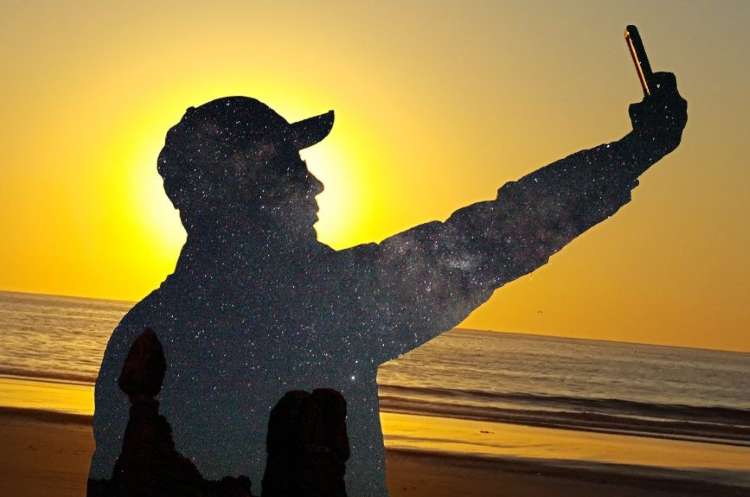
Growing concerns about the effects of social media on young people have become a global policy issue, prompting governments around the world to act. Australia has introduced a social media ban for under-16s, with numerous other countries considering similar restrictions. France and Norway have also moved to increase transparency, requiring influencers and advertisers to disclose digitally altered images.
As social media is fundamentally an environment of self-representation, much of this debate has focused on how these platforms affect the way young people see their appearance and value their bodies. Yet appearance is only one dimension of how people experience themselves. This raises a broader question: what if body satisfaction is not the only important change taking place?
A less explored question is whether repeated interactions with Stories, selfies, filters and digital versions of ourselves could influence the processes through which we develop a sense of identity.
READ I How social media turns attention and data into profit
Identity – beyond appearance
Identity is often thought of as an abstract, psychological or social concept. Neuroscience, however, suggests it is also rooted in the body. To perceive ourselves as unique individuals, we must first recognise our bodies as our own and distinguish ourselves from others.
This sense of bodily identity emerges from the brain’s continuous integration of internal signals, such as heartbeat, posture and bodily sensations, with information from the external world. Together, these processes create the feeling that we inhabit our own body, control our actions and occupy a distinct place in the world.
When this integration becomes disrupted, people may rely more heavily on external information – such as how they appear in photos or how many reactions a post receives – when constructing a sense of self. Such alterations have been linked to conditions including eating disorders and dissociative symptoms, prompting questions about whether image-based digital environments could also influence how people experience themselves.
The debate may be particularly relevant for adolescents and young adults. Adolescence is the period in which people develop a sense of who they are, define their relationship with their bodies and learn to distinguish themselves from others. Unlike previous generations, however, much of this process now unfolds in digital environments where self-presentation and self-recognition are increasingly mediated by screens.
READ I India’s social media ban debate is really about enforcement
Testing the boundaries between self and others
How can researchers study something as complex as bodily identity? One approach comes from the science of body illusions. Over the past two decades, neuroscientists have shown that the feeling that a body belongs to us is surprisingly flexible. Under carefully controlled conditions, people can temporarily perceive a rubber hand, a virtual body or even another person’s face as part of themselves. These illusions provide a unique window into the mechanisms through which the brain distinguishes the self from others and generates the feeling that a certain body is ours.
Researchers from the Humane Technology Lab (HTLab) at the Catholic University of the Sacred Heart used this approach to investigate whether Instagram use might be associated with differences in bodily identity.
Their attention focused in particular on the face, because of its unique position in human identity. More than any other part of the body, the face is central to how people recognise themselves and are recognised by others. It is through the face that people identify themselves in the mirror, communicate emotions and express their individuality. Much of bodily identity begins with the ability to look at a face and immediately know: “This is me.”
To test how stable this sense of self might be in Instagram users, participants were immersed in a virtual reality illusion designed to blur the boundary between their own face and that of a stranger. Through synchronised sensory stimulation, some participants began to experience aspects of the unfamiliar face as their own. In everyday life, people rarely confuse their own face with someone else’s. Embodying a stranger’s face and feeling it as one’s own means that the line separating the self from others has become temporarily more permeable, allowing aspects of another person to be incorporated into one’s own self-representation. For a moment, the certainty that you are you becomes less certain.
The HTLab researchers found that participants who had spent more years using Instagram were more likely to perceive ownership of the stranger’s face and to feel located within it. In other words, the longer participants had been exposed to Instagram, the more plastic their facial self-representation – and, with that, their bodily identity – appeared to become.
This result does not suggest that social media causes people to lose their identity. However, it raises a question that has received relatively little attention: could the years spent interacting with online personas, edited images and curated digital self-representations subtly influence how people experience themselves as unique individuals?
READ I Karnataka’s social media ban idea misses the crisis in childhood
A new hypothesis about social media and identity
A possible explanation lies in the Digital Erosion of Bodily Identity Hypothesis. Never before have people spent so much time looking at images of themselves and others: smartphones and social media have transformed visual self-representation into a routine part of everyday life. Photos that once captured occasional moments are now produced, edited, shared and compared continuously.
This shift may have consequences that extend beyond appearance. In particular, repeated exposure to social media could gradually alter the balance between two sources of information that contribute to identity: as noted earlier, the body’s internal signals and its external image. While people have always relied on both, image-based platforms may give unprecedented importance to the latter, potentially weakening the integration of these sources into a coherent sense of self.
Why younger generations matter
The findings invite a broader discussion about how younger generations may experience digital environments. The participants in the HTLab study belonged to one of the first cohorts to spend much of late adolescence and early adulthood on social media. Today’s adolescents, however, are encountering these platforms earlier, spending more time on them and integrating social media more deeply into everyday life.
Recent evidence suggests that nearly two-thirds of children younger than 13 already use social media despite age restrictions, with appearance-based platforms such as TikTok and Instagram among the most widely used. This means, first, that exposure increasingly begins during particularly sensitive periods of identity development and, second, that many of today’s children are growing up in a world where social media has always been present, developing their sense of self in environments saturated with curated and idealised digital self-representations.
Researchers do not yet know whether these changes represent a risk, an adaptation to digital life, or a combination of both. Answering that question will require additional studies capable of tracking how social media use and self-perception evolve over time.
As policymakers, educators and families continue to debate the role of social media in young people’s lives, understanding how digital technologies shape not only how people present themselves, but also how they experience themselves, may become an increasingly important area of research, particularly for generations who have never known a world without them.
Dr Maria Sansoni is a Postdoctoral Research Fellow at the Humane Technology Lab (HTLab) and Adjunct Professor of General Psychology at the Catholic University of the Sacred Heart in Milan, Italy. Her research focuses on body image, embodiment, bodily self-consciousness and the psychological effects of digital technologies. Originally published under Creative Commons.