


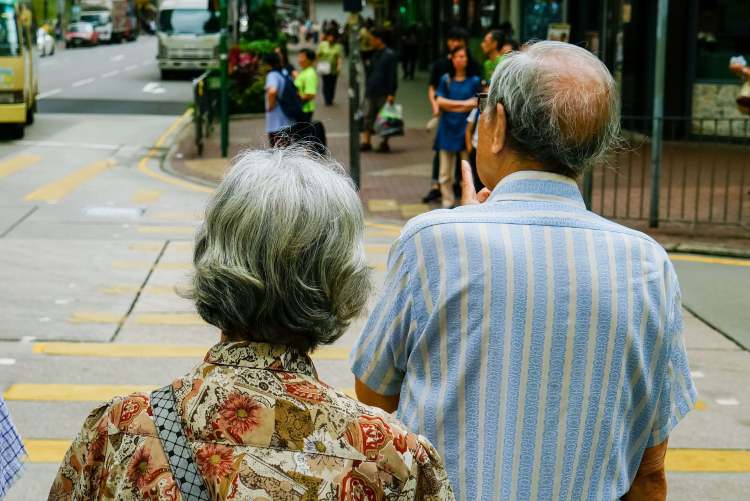
Kerala Chief Minister and Finance Minister VD Satheesan’s Budget announcement of a department of elderly welfare, with ₹10 crore for its initial functioning, marks a necessary shift in Kerala’s welfare machinery. The state is no longer dealing with old age as a marginal social welfare subject. It is dealing with a demographic condition that will shape health spending, local government, migration policy, and the household economy.
Official projections used in Kerala’s Elderly Budget put the share of people aged 60 and above at 18.7 per cent in 2026, against 11.4 per cent for India. By 2036, Kerala’s share is projected at 22.8 per cent. The old-age dependency ratio rose to 26.1 per cent in 2021 and is projected to reach 34.3 per cent by 2031, far above the all-India figure.
Ageing in Kerala is also gendered. Elderly women live longer, and widowhood adds economic and social vulnerability. Dr B Ekbal has pointed out that widows form 58.6 per cent of Kerala’s population above 60, compared with 9.7 per cent widowers in that age group.
The new department of elderly welfare should therefore not become another desk that releases grants and reviews schemes. Its value lies in assigning responsibility. Kerala can no longer treat elder care as an issue to be handled separately by families, the Social Justice Department, Health, Finance and local bodies.
READ I Kerala ageing population needs rights-based elder care
Kerala ageing and migration
Migration has exposed the weakness of Kerala’s family-based care system. Malayali mobility to the Gulf, Europe, North America and other Indian states financed education, housing and health. It also left many older parents alone in large houses, often with money but without daily support.
A video call cannot take an elderly parent to hospital. A remittance cannot manage medicines, check blood sugar, negotiate with a home nurse, prevent a fall, or deal with a medical emergency at midnight. The emotional bond between migrant children and parents may remain strong, but distance changes the mechanics of care.
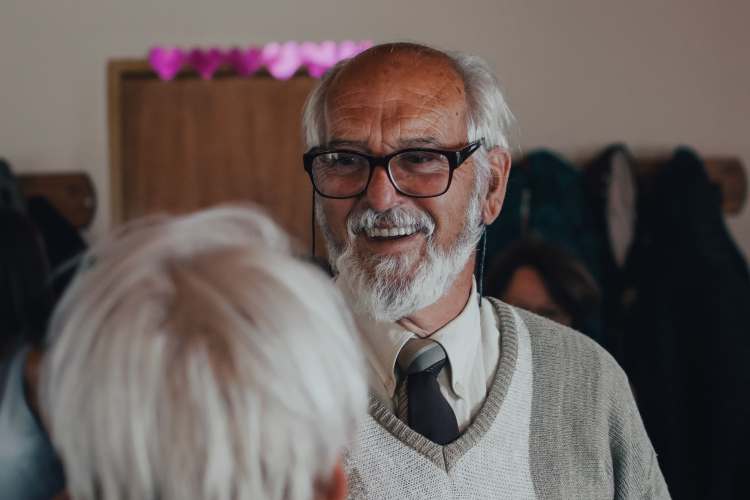

This is not a case against migration. Mobility has been central to Kerala’s development. Nor is it fair to blame migrant children. Many call regularly, visit when they can, and pay for medical care. Their constraint is physical absence, made worse by visa rules, work contracts, school calendars and the cost of emergency travel. Remittances also vary sharply by job, country and income.
The result is a care gap. Older people living alone depend on neighbours, relatives, home nurses, local volunteers, ASHA workers, palliative care networks and private agencies. For elders with dementia, Alzheimer’s, Parkinson’s disease, depression, mobility limits or multiple chronic illnesses, informal arrangements quickly break down.
READ I Kerala’s ageing crisis needs a governance reset
Too many schemes for elderly welfare
Kerala begins with an advantage. It introduced an Old Age Policy in 2006 and revised it in 2013. It also notified the Kerala Maintenance and Welfare of Parents and Senior Citizens Rules in 2009 under the 2007 central law. The Social Justice Department records 27 Maintenance Tribunals, 14 Appellate Tribunals and 14 Maintenance Officers under this system.
The state also has a long list of programmes: Vayomithram, Sayamprabha, Vayoraksha, Vayoamrutham, Mandahasam, Vayomadhuram, day-care centres, old-age homes and dementia support. The 2026-27 Elderly Budget records 95 Vayomithram units and allocations for health, pensions, old-age homes and the Kerala State Elderly Commission.

The fiscal number is large, but it needs careful reading. Kerala’s Elderly Budget for 2026-27 puts the consolidated outlay at ₹46,236.52 crore, or 19.07 per cent of the total state Budget. Most of this is non-plan spending, including service pensions, social security pensions and welfare board pensions. Plan spending for elderly welfare is much smaller.
Kerala has also set up a State Elderly Commission, described in the Budget document as a statutory body for the welfare, protection and rehabilitation of senior citizens. With the department of elderly welfare, Kerala may become the first state to have both a dedicated department and an elderly commission.
The problem is not absence of schemes. It is dispersal. Programmes sit across departments, local bodies and agencies. Families often do not know which office to approach. Local governments lack money and staff. Private care providers operate with uneven standards. The new department should consolidate, audit and regulate.
READ I India’s ageing population demands a universal pension plan
Senior citizen registry for Kerala elder care
The first administrative task should be a statewide senior-citizen registry linked to local self-government institutions. Panchayats and municipalities should maintain updated lists of older persons living alone, especially parents of migrants, widows, disabled elders and those with dementia or chronic illness.
Such a registry should not become a paper exercise. It should feed emergency response, home visits, medicine support, hospital referral, property-risk alerts and neighbourhood monitoring. Local bodies are closest to elderly citizens; they should be funded and staffed as care coordinators, not treated as last-mile contractors.
Kerala should also enlarge door-to-door geriatric services through palliative care networks, ASHA workers, mobile medical units and telemedicine. Senior activity centres, volunteer visits and college-linked community programmes can reduce isolation, but they should be tied to named local institutions and monitored.
The paid care market needs rules. Home nurses, caregiver agencies, assisted-living facilities and old-age homes should be registered, inspected and graded. Pricing, staff training, grievance redress and abuse reporting need standard rules. Fraudulent agencies thrive where families are distant and verification is weak.
A professional care economy can also create jobs. Kerala should invest in caregiver training institutes, certification for home nurses and geriatric aides, and ethical standards for home-based care. This can employ women, return migrants and young people while giving migrant families verified local support.
A Migrant Family Support Cell would fit Kerala’s reality. It can help overseas Malayalis coordinate emergency care, verified caregivers, hospital admission and official paperwork for ageing parents. NORKA, local bodies and the Elderly Welfare Department can build that channel without creating a new bureaucracy for every request.
Kerala’s future will remain mobile and transnational. The state cannot ask families to recreate old joint households. It can build care systems around the families that exist: older parents in Kerala, children elsewhere, local bodies nearby, and paid caregivers who need rules. That is the work before the Elderly Welfare Department.
Dr Divya Balan teaches Migration Studies at FLAME University, Pune, Maharashtra.